


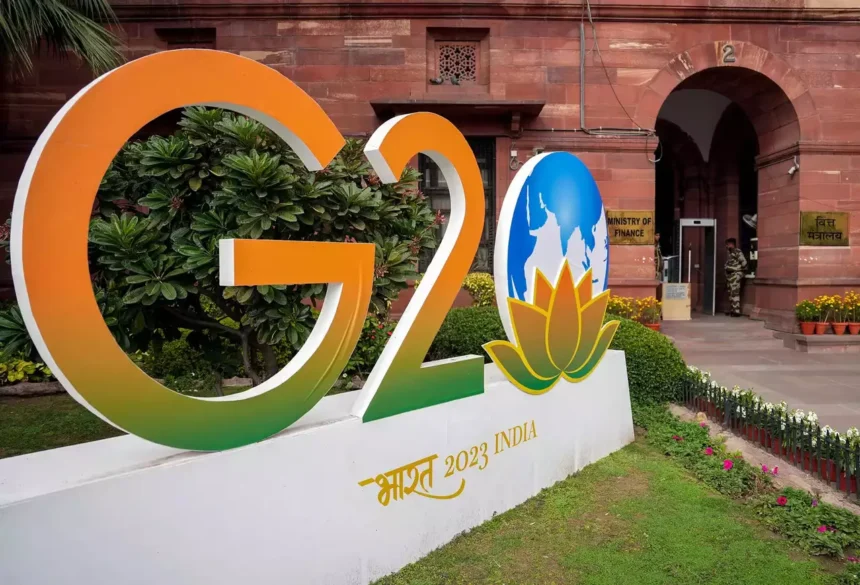
A group of G20 delegates recently embarked on a cultural excursion to the historic Basilica of Bom Jesus in Old Goa, a renowned UNESCO World Heritage site that houses the sacred relics of St. Francis Xavier. The visit took place a day after the conclusion of the significant G20 Tourism Ministerial Meeting held in the same city. The delegates, including Sir John Whittingdale, the UK’s Minister of State for Media, Tourism, and Creative Industries, and Cameron MacKay, the Canadian Ambassador in India, were treated to a guided tour of this remarkable precinct, which also included visits to the Museum of Christian Art and a Portuguese-era mansion dating back to 1590. The event concluded with a grand luncheon held in their honor.
The Basilica of Bom Jesus, a magnificent church constructed in the 16th century, is one of the most prominent landmarks in Goa, a coastal state in western India. It holds immense historical and religious significance, being the final resting place of St. Francis Xavier, a revered Catholic missionary known for his contributions to the spread of Christianity in Asia. The delegates marveled at the architectural marvels of the basilica and had the opportunity to pay homage to the relics of St. Francis Xavier, which are enshrined in a silver casket within the church.
Continuing their exploration of Goa’s rich heritage, the delegates proceeded to the Museum of Christian Art, located nearby. The museum showcases an impressive collection of Christian artifacts, including paintings, sculptures, and religious objects from the Portuguese colonial period. The delegates admired the intricate craftsmanship and artistic expression displayed in these historical pieces, gaining insights into the cultural fusion between European and Indian artistic traditions during the colonial era.
To further immerse the delegates in the Goan heritage, a visit to a Portuguese-era mansion was organized. This beautifully preserved mansion, dating back to 1590, provided a glimpse into the opulent lifestyle of the Portuguese nobility during their rule in Goa. The delegates strolled through the elegant halls, adorned with ornate furniture and exquisite Portuguese tiles, absorbing the grandeur and charm of the bygone era. The mansion served as a splendid backdrop for a sumptuous luncheon, where the delegates had the opportunity to savor traditional Goan cuisine while engaging in discussions on tourism and cultural exchange.
The G20 delegates expressed their appreciation for the cultural excursion, acknowledging the significance of preserving and promoting cultural heritage within the tourism sector. The visit served as a platform for dialogue and collaboration between representatives from various G20 member and guest countries, fostering mutual understanding and strengthening relationships.
The inclusion of cultural excursions in such diplomatic gatherings highlights the importance of recognizing and celebrating the rich heritage of host nations. It provides an opportunity for delegates to witness firsthand the historical, artistic, and cultural treasures that a country has to offer. In turn, these experiences contribute to promoting cultural tourism and fostering cross-cultural understanding among nations.
As the G20 delegates concluded their visit to the historic precinct of Goa, they left with a deeper appreciation for the cultural legacy of the region. The journey to the Basilica of Bom Jesus, the Museum of Christian Art, and the Portuguese-era mansion provided a window into Goa’s vibrant past, leaving a lasting impression on the delegates and paving the way for future collaborations in preserving and promoting cultural heritage worldwide.