







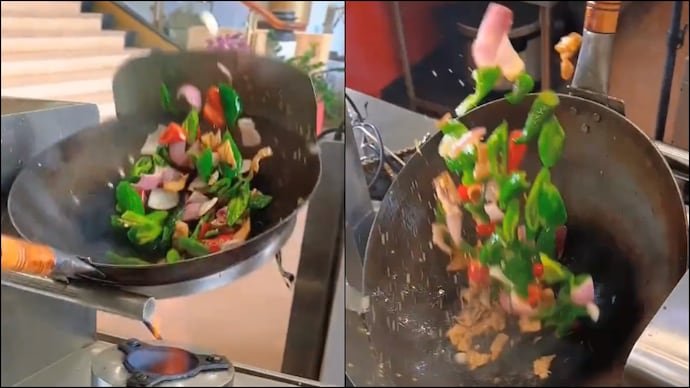
Artificial Intelligence (AI) continues to impress the world with its remarkable capabilities, and a recent video shared on Twitter by The Figen has taken the internet by storm. In the video, a machine can be seen autonomously preparing food without any human intervention, showcasing the potential of AI in the culinary domain.
The footage features a wok attached to a machine, which skillfully sautés and cooks vegetables to perfection. What’s even more astonishing is that the machine executes a flawless flambé, a technique that often takes chefs months to master. The precision and finesse displayed by the machine left viewers in awe, and the video quickly gained over 5.6 million views along with numerous reactions and comments.
The machine’s ability to autonomously prepare food is attributed to the power of AI. Artificial Intelligence has made significant strides in various fields, including natural language processing, image recognition, and now, culinary arts. Through advanced algorithms and machine learning techniques, AI systems can analyze and understand complex recipes, cooking methods, and ingredient combinations to replicate human-like culinary skills.
The emergence of AI-powered machines in the food industry has raised questions and concerns about potential job displacement. As AI continues to advance, there is a possibility that certain tasks traditionally performed by chefs and cooks could be automated. While this may lead to increased efficiency, reduced costs, and improved consistency in food preparation, it also presents challenges for human workers in the industry.
It is important to note that AI in the culinary domain is not intended to replace chefs entirely but rather to augment their skills and capabilities. AI-powered machines can assist chefs in repetitive and time-consuming tasks, allowing them to focus on creativity, innovation, and the overall dining experience. By automating certain processes, chefs can dedicate more time to experimenting with new flavors, developing unique recipes, and providing personalized service to customers.
Moreover, AI technology can be a valuable resource for aspiring chefs and culinary enthusiasts. With AI-powered platforms and applications, individuals can access a wealth of culinary knowledge, recipes, and techniques, empowering them to enhance their cooking skills and explore new culinary horizons. AI can serve as a virtual mentor, providing guidance, recommendations, and personalized feedback to individuals at any skill level.
While the advancements in AI have the potential to revolutionize the food industry, it is crucial to approach the integration of AI and human expertise thoughtfully. Collaboration between humans and AI systems can lead to remarkable culinary experiences that blend innovation, precision, and creativity. The goal should be to leverage AI as a tool that complements human skills and enhances the culinary landscape, rather than a means of completely replacing human involvement.
As AI continues to evolve, it is likely that we will witness further advancements in the culinary field. From automated cooking processes to intelligent food preparation systems, the possibilities are vast. However, it is important to maintain a balance between technological progress and preserving the essence of human touch and creativity in the culinary arts.
In conclusion, the viral video showcasing a machine autonomously preparing food highlights the impressive capabilities of AI in the culinary domain. While AI has the potential to streamline certain aspects of food preparation, it should be seen as a tool that enhances human skills and creativity rather than a replacement for chefs. The integration of AI in the food industry can lead to increased efficiency, improved consistency, and enhanced culinary experiences, but it is essential to approach its implementation with careful consideration and collaboration between humans and technology.

