




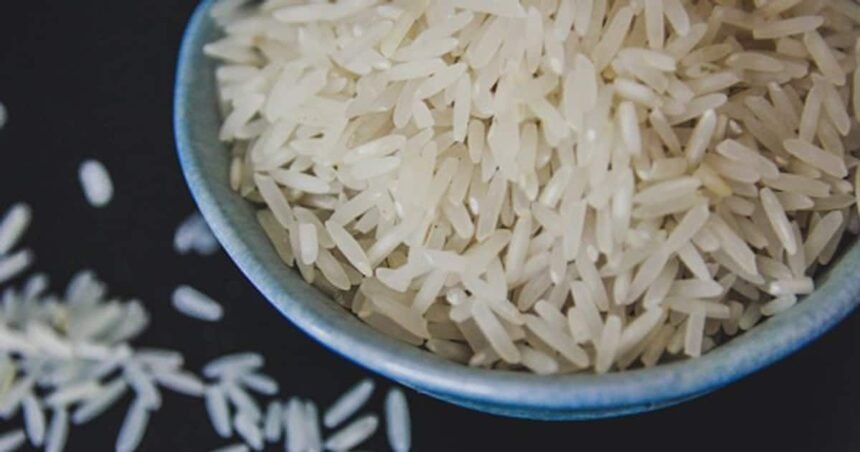
In a move to regulate the country’s rice trade, the Indian government has taken decisive action to prohibit the export of non-basmati white rice. The decision was announced on Thursday through a notification issued by the Directorate General of Foreign Trade (DGFT). The new policy amendment categorizes non-basmati white rice, including semi-milled or wholly milled rice, whether polished or glazed, as prohibited for export. This marks a significant shift from the previous classification, which allowed such rice to be exported freely.
The government’s decision comes amid an evolving economic landscape and an ongoing drive to manage the availability and prices of essential commodities within the country. By imposing restrictions on non-basmati white rice exports, the authorities seek to stabilize the domestic market and ensure an adequate supply of this staple food for the Indian population.
As per the DGFT notification, there are certain exceptions to the prohibition. Consignments of non-basmati white rice that have already commenced the loading process on ships before the notification date will be allowed to proceed with their export. This measure allows exporters who were already in the process of shipping the rice to fulfill their contractual obligations while preventing any sudden disruptions to ongoing trade agreements.
The decision to limit the export of non-basmati white rice could have far-reaching implications for the agricultural sector and international trade dynamics. India is one of the world’s largest producers and exporters of rice, with non-basmati white rice constituting a significant portion of its total rice exports. The move to restrict its export is expected to impact both global rice prices and the economies of rice-importing nations that heavily rely on India’s supplies.
While the government’s decision is aimed at securing food security and ensuring an adequate rice supply for domestic consumption, it could potentially lead to a shift in rice trade dynamics within the country. With non-basmati white rice now restricted for export, there may be increased demand for basmati rice, a premium variety, both domestically and internationally. This, in turn, could lead to adjustments in prices and trade volumes of different rice varieties in the coming months.
The rice export policy change may also encourage rice millers and exporters to explore alternative markets for their non-basmati white rice. As the demand for this variety diminishes within the country due to export restrictions, traders may look to establish new trade channels in regions where non-basmati rice is still in high demand.
It is worth noting that this is not the first time India has implemented such restrictions on agricultural commodities. In the past, the country has occasionally imposed export bans or quotas on rice, wheat, and other essential goods to mitigate potential food crises and stabilize prices. While these measures can have short-term benefits for domestic consumers, they have also sparked debates on their long-term impact on India’s reputation as a reliable supplier in the international market.
The government’s decision to limit non-basmati white rice exports underscores the delicate balance between national food security and the country’s commitments as a key player in the global food trade. Striking the right equilibrium in managing exports while ensuring ample supply for domestic consumption remains a complex challenge for policymakers.
The Indian government’s prohibition on the export of non-basmati white rice signifies a strategic step to manage the country’s rice trade amid economic uncertainties. While the move may have repercussions on the international rice market, the exceptions provided in the notification offer some flexibility to ongoing trade commitments. As the situation unfolds, stakeholders in the agricultural sector will closely monitor market dynamics to adapt to the new export policy and explore alternative opportunities.