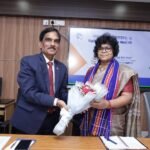





Martin Luther Christian University (MLCU) in Shillong has released a powerful new book that puts the spotlight on tribal health in Meghalaya. This publication is more than just an academic milestone—it’s a cultural reckoning that acknowledges the critical role of indigenous healing practices in remote tribal communities.
At a time when public health systems are under scrutiny for failing to address the unique challenges of marginalized groups, this MLCU book on tribal health comes as a timely intervention. It redefines how health, culture, and policy intersect in the northeastern state of Meghalaya.
Why the MLCU Book on Tribal Health Matters
Tribal communities in India, particularly in the Northeast, face unique health challenges. Often geographically isolated, these populations contend with limited access to modern healthcare, high rates of malnutrition, and a complex web of communicable and non-communicable diseases. Their reliance on indigenous healing methods—although rich in traditional wisdom—remains under-documented and poorly integrated into mainstream health systems.
MLCU’s latest book attempts to fill this critical void. The book not only documents common illnesses, treatments, and health perceptions among tribal groups, but also explores the spiritual, environmental, and sociopolitical factors affecting their well-being.
For readers interested in cross-cultural medicine and inclusive public health policy, the book provides rare insights backed by years of field research and community engagement.
A Closer Look at the Book’s Content
The book delves deep into the health practices of various indigenous groups, focusing primarily on communities in Meghalaya such as the Khasi, Garo, and Jaintia tribes. It highlights how these communities rely on nature-based remedies and community healers to manage ailments ranging from fever to chronic diseases.
Moreover, it features chapters authored by local scholars, healthcare practitioners, and tribal elders, making it an interdisciplinary text. This holistic approach adds credibility and authenticity to the academic discourse, something that’s often missing in top-down health publications.
In addition to cataloguing illnesses and cures, the book examines barriers to healthcare access, such as geographic remoteness, language differences, and distrust of modern medical practices. These insights are crucial for both policymakers and NGOs working on public health initiatives in Northeast India.
To understand how traditional practices are adapting—or resisting—modern medical interventions, the book also includes comparative studies and case narratives that reveal the tension and potential synergy between the two systems.
Bridging Two Worlds: Modern Medicine and Indigenous Wisdom
The importance of this publication lies in its ability to build bridges—between policy and people, doctors and shamans, data and storytelling. By integrating tribal voices into academic discourse, MLCU has set a new benchmark in community-led health research.
The book argues for a dual-approach to healthcare in tribal areas, advocating for policy reforms that incorporate indigenous knowledge systems into India’s broader public health framework. This includes training for health workers on cultural sensitivity, multilingual health education, and support for community-based healers.
The initiative aligns with the Ayushman Bharat mission’s objectives but goes a step further by recommending a bottom-up model of healthcare planning. The authors propose that without recognizing indigenous epistemologies, healthcare in tribal areas will remain ineffective and underutilized.
Reaction from the Academic and Medical Communities
The book’s launch has sparked positive reactions across academic circles and healthcare networks. Institutions such as North Eastern Hill University (NEHU) have praised MLCU’s effort as a milestone in regional health literature.
Dr. Linda Marbaniang, one of the co-authors and a leading community health researcher, noted, “This book is more than just an academic exercise—it’s a documentation of identity, culture, and survival. Our hope is that it inspires more grassroots research and shapes inclusive healthcare policies.”
Several NGOs working in tribal health, including SESTA, have expressed interest in using the book as a resource for training community health volunteers in the region.
What This Means for Public Health Policy
The publication holds strong implications for national and state-level health governance. As Meghalaya and other Northeastern states continue to lag behind national averages in maternal and child health indicators, this book presents actionable insights that can inform targeted interventions.
Health departments could use the findings to design more inclusive health programs, especially in hard-to-reach areas where tribal customs strongly influence health behaviors. Moreover, by recognizing the role of traditional healers and integrating them into referral systems, healthcare delivery can become both culturally resonant and more effective.
READ MORE: Assam Flood Crisis 2025: Rising Waters Displace Thousands
The Need for Continued Dialogue
MLCU’s release of this book is not just a single academic event—it’s a call to action. A call for researchers, policymakers, healthcare professionals, and community leaders to join hands in crafting a healthcare system that respects diversity while delivering equity.
As climate change, pandemics, and migration further complicate health outcomes, the wisdom embedded in tribal traditions could offer sustainable solutions that modern systems often overlook.