




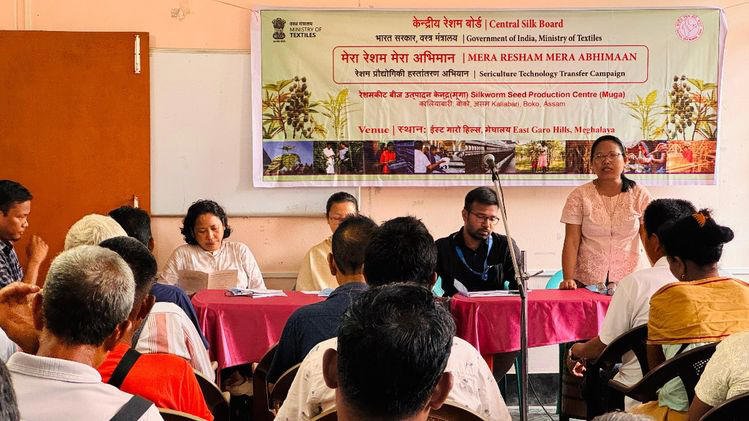
Farmers in East Garo Hills district of Meghalaya are being encouraged to adopt scientific sericulture practices. This initiative aims to modernize traditional silk farming, increase yields, and improve the livelihoods of local farming communities.
The promotion of East Garo Hills sericulture practices is part of the state government’s broader strategy to develop sustainable agriculture and agro-based industries.
Read More: Tripura Gas Turbine Plant to Launch 120 MW CCGT Project
Importance of Sericulture in East Garo Hills
Sericulture, or silk farming, has long been a traditional occupation in East Garo Hills. The district’s favorable climate and natural resources make it ideal for cultivating mulberry plants and rearing silkworms.
Silk production not only provides income to farmers but also supports related industries such as weaving and handicrafts, contributing to the local economy.
Introducing Scientific Practices
The government and sericulture departments have launched programs to educate farmers on scientific methods of sericulture. These include improved techniques for mulberry cultivation, silkworm rearing, disease control, and post-cocoon processing.
Scientific practices aim to increase the quality and quantity of silk produced while reducing risks associated with traditional methods.
Training and Capacity Building
Farmers receive hands-on training through workshops, demonstrations, and field visits. Experts teach best practices such as selecting disease-resistant silkworm breeds, maintaining hygiene in rearing houses, and using balanced nutrition for mulberry plants.
Capacity building helps farmers shift from conventional to modern methods, ensuring higher productivity and sustainability.
Benefits of Modern Sericulture
Adopting scientific sericulture practices offers multiple benefits:
- Higher Silk Yield: Improved rearing techniques increase cocoon production and silk filament quality.
- Disease Management: Scientific approaches reduce losses caused by silkworm diseases.
- Economic Upliftment: Increased production translates to better income for farmers and their families.
- Employment Generation: Sericulture creates jobs beyond farming, including processing and weaving sectors.
Role of Government Support
The Meghalaya government supports sericulture development through subsidies, provision of quality seeds and equipment, and financial assistance schemes.
Additionally, collaboration with research institutes ensures access to the latest technologies and innovations in sericulture.
Encouraging Youth Participation
To sustain the sector, the government encourages youth involvement in sericulture. Training programs specifically target young farmers, promoting entrepreneurship in silk farming and allied industries.
Youth participation is vital for adopting new technologies and expanding sericulture’s reach in the district.
Challenges in Sericulture Development
Despite its potential, sericulture faces challenges such as pest attacks, lack of quality inputs, and market fluctuations.
However, ongoing efforts to educate farmers and improve infrastructure aim to overcome these obstacles.
Community Involvement
Local communities actively participate in sericulture initiatives. Cooperative societies help farmers pool resources, share knowledge, and collectively market their silk products.
Community-driven models foster mutual support and strengthen the sector’s sustainability.
Promoting Value-Added Products
Beyond raw silk production, there is growing emphasis on developing value-added silk products such as handwoven fabrics, garments, and handicrafts.
This approach helps maximize returns for farmers and artisans, promoting Meghalaya’s unique textile heritage.
Environmental Benefits
Sericulture promotes sustainable land use and biodiversity conservation. Mulberry cultivation prevents soil erosion and supports ecological balance in hilly areas like East Garo Hills.
Moreover, it offers an eco-friendly alternative to chemical-intensive farming.
Market Expansion Efforts
To expand market access, the government facilitates participation in trade fairs, exhibitions, and e-commerce platforms.
These efforts help farmers connect with buyers nationally and internationally, increasing demand for Meghalaya silk.
Future Prospects
With increased adoption of scientific sericulture practices, East Garo Hills is poised to become a major silk-producing hub in Northeast India.
Continuous government support, research advancements, and community participation will drive this growth.
The push to encourage East Garo Hills farmers to adopt scientific sericulture practices marks a positive step towards sustainable rural development in Meghalaya.
By modernizing traditional silk farming methods, improving yields, and expanding markets, this initiative promises better livelihoods for farmers and contributes to the region’s economic progress.
Read More: Meghalaya Assembly Panel Inspects Ri-Bhoi Industrial, Agricultural Sites