



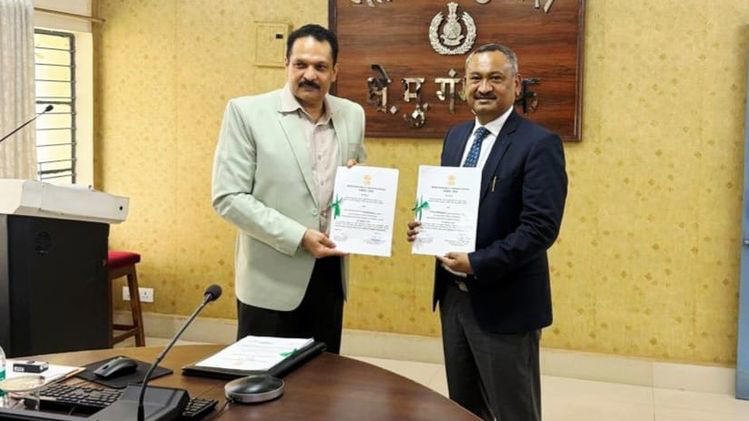
The Department of Agriculture, Cooperation, and Sustainability (DACS) in Sikkim has signed a historic Memorandum of Understanding (MoU) with the Indo-Tibetan Border Police (ITBP). The agreement will enable ITBP personnel to receive locally grown produce while supporting Sikkimese farmers. Officials believe this partnership strengthens both local agriculture and institutional food supply.
Strengthening cooperation between DACS and ITBP
The MoU was signed at a ceremonial event at Raj Bhawan. Senior government officials, ITBP representatives, and leaders of farmers’ cooperatives attended the event. The partnership highlights Sikkim’s commitment to organic and sustainable agriculture.
DACS officials stated that the initiative will improve the livelihoods of local farmers. It also ensures ITBP personnel get fresh and nutritious food regularly. By connecting local production with institutional demand, the project provides benefits for both sides.
Read More: Nagaland, Assam CMs Pledge Joint Action to Ease Border Tensions
Objectives of the MoU
The agreement prioritizes sourcing from Sikkim’s organic farms. It encourages farmer cooperatives to supply vegetables, fruits, and other produce directly to ITBP units. Officials expect this approach to create a stable market for farmers, reducing price volatility and wastage.
Dr. Rinchen Pempa, DACS Secretary, said, “This MoU empowers our farmers. At the same time, it ensures ITBP personnel get high-quality produce consistently.” He added that the initiative aligns with Sikkim’s long-standing focus on sustainable and organic farming practices.
Benefits for local farmers
Local farmers will gain access to a reliable market, which helps them plan crops and reduce losses. The program also encourages cultivation of high-demand produce such as leafy vegetables, organic fruits, and traditional Sikkimese crops.
Cooperative societies will handle production, collection, and distribution efficiently. Officials assured that training programs and quality checks will guarantee that the produce meets ITBP standards. Farmers expressed optimism, noting that institutional support provides security and confidence in their livelihoods.
ITBP’s perspective
ITBP officers welcomed the initiative, emphasizing the importance of fresh and locally sourced food. They pointed out that personnel in border regions often face limited access to commercial markets. This MoU ensures consistent supply and contributes to their health and operational readiness.
A senior ITBP official said, “Receiving fresh produce from Sikkim helps us stay healthy. It also strengthens our connection with local communities.” Officials added that this model could inspire similar collaborations across the country.
Promoting sustainable and organic farming
Sikkim is renowned for its organic agriculture. The MoU emphasizes sourcing produce exclusively from certified organic farms. Officials stated that this approach encourages environmentally friendly farming. It also protects biodiversity, improves soil health, and reduces chemical use.
By linking ITBP procurement to organic produce, the state reinforces its vision of sustainable agriculture. Farmers, officials, and ITBP personnel all stand to benefit from a system that supports quality, health, and environment simultaneously.
Strengthening local supply chains
The partnership also improves local supply chains. DACS will coordinate logistics, storage, and transport to ensure timely delivery. This reduces wastage and guarantees quality while providing farmers with steady demand.
Experts noted that institutional partnerships like this enable smallholder farmers to plan effectively. They can invest in better inputs, adopt modern techniques, and increase productivity. Over time, this initiative may contribute to regional economic stability.
Future prospects
Officials hope to expand the program to include other government departments, educational institutions, and security forces. Scaling the initiative could increase opportunities for farmers and strengthen the state’s economy further.
Dr. Pempa suggested that the MoU could serve as a model for other northeastern states. “By linking local agriculture with institutional demand, we create a win-win for farmers and government agencies,” he said.
Political and social significance
Political leaders, civil society groups, and farmer organizations have widely praised the MoU. Lawmakers called it a landmark step that integrates local agriculture with national priorities. Activists emphasized that institutional procurement empowers farmers while promoting community welfare.
The initiative also demonstrates Sikkim’s proactive approach to rural development. By creating reliable markets for organic produce, the state supports both economic growth and social well-being.
The MoU between DACS and ITBP marks a historic step in promoting local agriculture and institutional collaboration in Sikkim. Farmers gain a stable market, ITBP personnel receive fresh and nutritious food, and the state strengthens its reputation for organic and sustainable agriculture.
Officials hope that careful implementation and future expansion will make this initiative a benchmark for similar partnerships in other northeastern states. By linking local production to institutional demand, Sikkim demonstrates how governments can create mutually beneficial programs that empower communities and ensure quality supply.
Read More: Himanta Warns of Soft Power Shift in Assam