





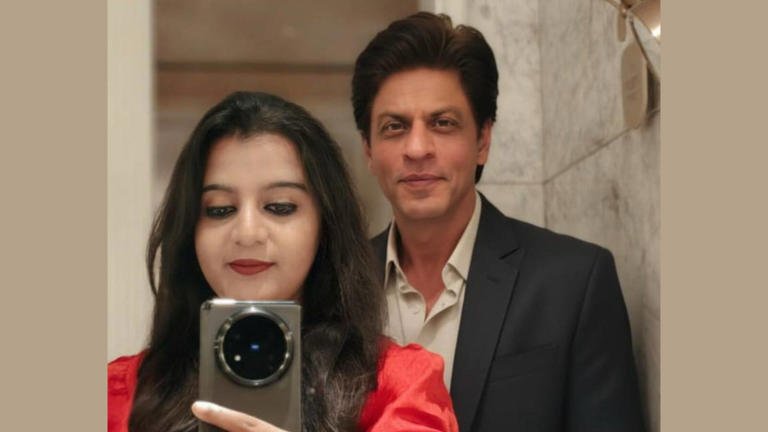
Now selfie with Shah Rukh Khan is possible without actually meeting the Bollywood superstar, thanks to Gemini’s new Nano Banana feature. This advanced tool has taken the internet by storm, giving fans a once-unimaginable chance to generate ultra-realistic selfies with their favorite celebrity. The launch highlights how artificial intelligence is transforming the relationship between stars and their admirers in ways that were once restricted to fan clubs, autograph sessions, or chance encounters.
Read More: Hidden Health Risks of Citrus Fruits
A new era of fan engagement
For decades, Shah Rukh Khan has reigned as the king of Bollywood, attracting millions of fans across the globe. Until now, capturing a photo with him required attending events, film promotions, or waiting for a rare public appearance. With Gemini’s Nano Banana update, that barrier has vanished. Fans can now open their phone, access the AI tool, and create a stunningly real image with SRK in just seconds.
This development marks a new chapter in fan engagement. Technology has given people the ability to connect virtually, breaking down geographical and logistical limitations. In today’s digital culture, where social media presence often matters as much as real experiences, the opportunity to post a selfie with Shah Rukh Khan without leaving home has an obvious appeal.
How Gemini’s Nano Banana works
Gemini’s Nano Banana is a generative AI feature designed to replicate lifelike human imagery. By uploading a selfie, users can place themselves next to a digital recreation of celebrities, including Shah Rukh Khan. The tool ensures high precision, blending facial angles, skin tones, and lighting conditions to create a natural look. Unlike earlier editing apps that left blurry edges or artificial appearances, this technology produces an image so authentic that casual viewers cannot tell it is generated.
For fans of SRK, this means no awkward Photoshop or suspiciously fake edits. Instead, it feels like they stood beside the star himself, smiling for the camera. The feature also provides options to adjust poses, backgrounds, and even wardrobe themes, making the experience more interactive and fun.
Social media buzz and fan reactions
Unsurprisingly, the launch has sparked a frenzy across Instagram, X, and Facebook. Hashtags such as #SRKSelfie and #NanoBanana are trending as fans proudly share their AI-generated photos. Many describe it as a dream come true, especially for those who may never get the opportunity to meet Shah Rukh Khan in person.
Celebrities have always held an aspirational aura. By enabling virtual interaction, Gemini’s Nano Banana gives everyday people the sense of being closer to their idols. However, it also raises questions about the difference between digital and real connections. Despite this, the overwhelming sentiment remains excitement, as people from different countries now post “memories” with SRK that feel surprisingly real.
The technology behind the magic
The innovation powering Nano Banana lies in its ability to combine generative AI with advanced personalization models. Gemini designed it to function smoothly on mobile devices without draining resources. By focusing on nanotechnology-inspired architecture, the system runs faster and delivers higher resolution outputs.
What sets it apart is the emotional impact. Rather than just being a tech gimmick, it allows users to capture a moment that feels personal. Whether it’s a selfie at a film set, a red-carpet appearance, or a casual candid, the AI ensures that the resulting picture mirrors what could happen in real life.
Broader cultural significance
Now selfie with Shah Rukh Khan is possible through AI, but the cultural impact goes beyond one celebrity. This technology reflects a growing trend where artificial intelligence is shaping entertainment, fandom, and even celebrity branding. Actors, musicians, and sports stars may soon rely on such tools to maintain fan loyalty, especially in an age where direct human interactions are limited by security, travel, and time constraints.
For fans, it means accessibility. For stars, it means building engagement at scale without physically being present. This balance may redefine the concept of fan-celebrity relationships. The digital selfie becomes a new autograph—easily shareable, instantly recognizable, and deeply personal to those who create it.
Ethical and creative concerns
While the excitement is undeniable, the rise of AI-generated celebrity images also brings ethical challenges. Critics argue that it blurs the line between reality and digital fabrication, potentially misleading audiences. Others fear misuse, such as creating inappropriate or unauthorized content featuring celebrities.
Gemini has addressed these concerns by adding watermark systems and clear usage guidelines. The company emphasizes that the Nano Banana feature is intended for harmless fan enjoyment and should not replace genuine interactions or professional endorsements. Users must also acknowledge the digital nature of these selfies when posting online.
What this means for the future
The success of Nano Banana suggests that AI will continue to influence how people experience entertainment. Tomorrow, we may see interactive concerts, personalized film cameos, or even custom video calls with AI avatars of celebrities. Shah Rukh Khan’s digital presence is just the beginning of a much larger movement.
From a marketing perspective, brands may also explore partnerships. Imagine product promotions where fans generate selfies holding items “with” their favorite stars. The potential is vast, and Nano Banana provides the foundation for such ideas.
Now selfie with Shah Rukh Khan is possible, not by waiting outside film studios or booking expensive meet-and-greet tickets, but through the simple power of Gemini’s Nano Banana. The technology not only thrills fans but also illustrates how artificial intelligence is reshaping human experiences in entertainment. For admirers of SRK, it is nothing less than magic—a digital dream come true.
Read More: Sikkim Bhutia Association Seeks Sensible Tribal Status Approach