




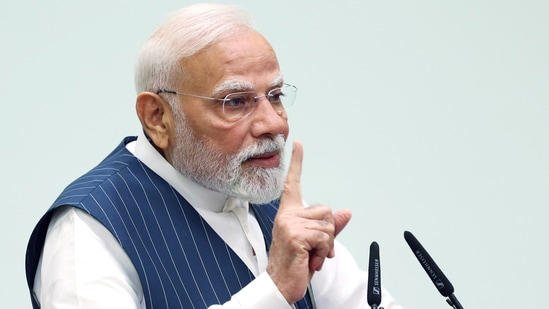
Prime Minister Narendra Modi has spoken out on the government’s new steps to regulate the fast-growing online gaming sector. In a recent statement, he clarified that the purpose of the PM Modi online gaming law is not to demonize gaming itself but to address the growing concerns of addiction, financial risks, and the wellbeing of youth. His remarks have sparked widespread debate on how India should balance innovation in digital entertainment with social responsibility.
Read More: Assam Forest Staff Get Geospatial Training from Balipara Foundation
Why the Law Was Introduced
The online gaming industry in India has seen rapid expansion in recent years. With millions of young people playing on smartphones and laptops, gaming has become a mainstream form of entertainment. However, this growth has also raised concerns about excessive screen time, gambling-like practices, and financial losses among players.
The PM Modi online gaming law was introduced to regulate these issues. According to the Prime Minister, the government recognizes that gaming itself can be positive when approached responsibly. It can encourage creativity, skill development, and even career opportunities in e-sports. Yet, when addiction takes over, the consequences can be severe. Families have reported rising cases of debt and mental stress linked to online gaming, making regulation essential.
Safeguarding Youth from Addiction
During his remarks, Modi emphasized that the main objective of the PM Modi online gaming law is to safeguard youth. He pointed out that the line between entertainment and obsession has blurred for many, with children and young adults spending excessive hours gaming.
The law sets boundaries to protect players, particularly minors. It introduces age restrictions, spending limits, and guidelines to ensure that addictive features are minimized. By doing so, the government aims to allow healthy engagement with games while preventing harmful patterns. Modi stressed that the law is not against technology but seeks to create a safer digital environment for the next generation.
Balancing Innovation and Responsibility
Another key aspect of the PM Modi online gaming law is its attempt to balance innovation with responsibility. The Prime Minister noted that India cannot afford to stifle a growing sector that offers significant economic potential. The gaming industry contributes to job creation, software development, and global competitiveness.
To encourage growth, the law provides clarity for companies operating in India. It outlines clear rules on permissible games, advertising standards, and monetization methods. This framework allows developers to innovate while staying within boundaries that protect consumers. According to Modi, the goal is to ensure that India becomes a hub for responsible gaming, attracting investments without compromising social values.
Addressing Gambling and Financial Risks
The PM Modi online gaming law also tackles the financial risks tied to gaming. Many apps and platforms include features similar to betting, leading to addictive spending patterns. In some cases, individuals have lost significant amounts of money, pushing families into financial distress.
Modi stated that this law is designed to distinguish between skill-based games and gambling-like activities. By creating this legal clarity, the government aims to prevent exploitation while still supporting skill-oriented gaming. Strict penalties will apply to platforms that violate these norms, ensuring accountability in the sector.
Reactions from Industry and Civil Society
The introduction of the PM Modi online gaming law has received mixed responses. Industry leaders welcomed the clarity, noting that regulations provide stability and attract investors. Many game developers see this as an opportunity to align their platforms with international standards.
Civil society groups and parents have expressed relief that the government is addressing addiction concerns. They believe the law will help protect young players from falling into harmful habits. However, some critics argue that the regulations must be carefully enforced to avoid unnecessary restrictions on creative content.
Future of Online Gaming in India
Looking ahead, the PM Modi online gaming law is expected to reshape the industry. With clear rules, legitimate companies will thrive, while exploitative platforms may be forced out of the market. This shift could enhance the reputation of Indian gaming, opening doors to global collaboration.
At the same time, policymakers are aware that the gaming landscape evolves quickly. Modi acknowledged that the law will require constant review and updates to stay relevant with new technologies such as virtual reality and blockchain-based games.
The Prime Minister also urged parents and educators to play an active role. While the government can regulate platforms, families must guide young people toward responsible digital habits. Community awareness campaigns are expected to accompany the law, promoting balanced use of gaming in daily life.
Prime Minister Narendra Modi’s remarks clarified the intent behind the PM Modi online gaming law. Gaming itself, he emphasized, is not inherently bad. It can be a source of entertainment, learning, and even opportunity. However, unchecked addiction and exploitative practices pose risks that cannot be ignored.
By introducing this law, the government seeks to strike a balance: protecting young people from harm while encouraging responsible growth in the industry. As India positions itself as a global digital leader, the framework ensures that progress in online gaming does not come at the cost of society’s wellbeing.
Read More: Singapore PM’s India Visit Aims to Strengthen Economic Partnership