



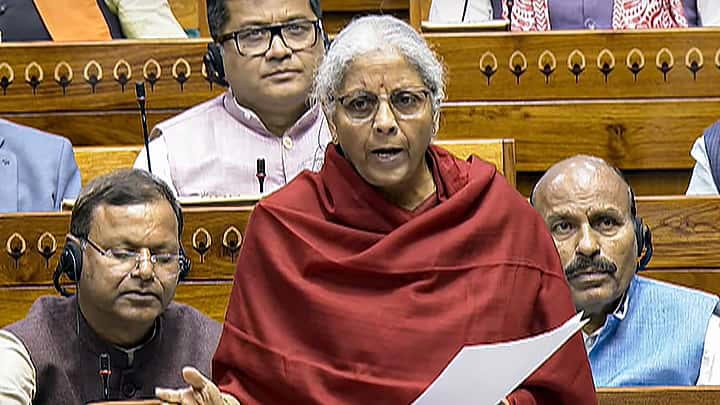
Union Finance Minister Nirmala Sitharaman launched a strong attack on the Opposition for repeatedly skipping discussions on the Manipur crisis in the Rajya Sabha. She accused Opposition leaders of displaying “crocodile tears” while avoiding meaningful debate inside Parliament. Because the issue has remained politically sensitive for months, the Sitharaman Manipur criticism has added new intensity to ongoing parliamentary tensions. Therefore, her remarks drew immediate reactions from both sides of the political spectrum.
Sitharaman spoke during a heated session in the Upper House, where MPs were expected to engage in a structured debate on Manipur. According to her, the Opposition kept pressing for discussions but did not participate when the opportunity finally arrived. She said this behaviour proved that the Opposition wanted drama instead of solutions.
Read More: Tripura Gets Clearance for Rs 140-Crore Ayurveda and Homoeopathy Colleges
Opposition Accused of Double Standards in Sitharaman Manipur Criticism
Sitharaman argued that the Opposition had used the Manipur issue to target the government for months. However, when the Rajya Sabha listed the topic for debate, several key leaders were absent. She said their absence reflected a lack of genuine concern for the people of Manipur.
Furthermore, she highlighted that the government was ready to answer every question raised in the House. According to her, the Opposition skipped the debate because it did not want the government to present facts that counter their narrative. She added that the Opposition’s repeated walkouts showed disrespect toward parliamentary procedures.
Many ruling party MPs supported her remarks and said the Opposition has been blocking important legislative business. They claimed that debates were delayed because the Opposition insisted on conditions that were not part of the rules. As a result, the Sitharaman Manipur criticism became a central point of discussion throughout the session.
Government Highlights Its Work in Manipur
During her speech, Sitharaman also highlighted the government’s work in Manipur. She said the Centre had taken several steps to restore peace and improve security in the state. Additionally, she mentioned that rehabilitation programmes were underway and that officials were working closely with local communities.
She also reminded the House that the Prime Minister and Home Minister regularly reviewed the situation. By skipping the debate, she said, the Opposition prevented the government from giving a detailed update on the relief efforts. Because of this, the public continued to hear only selective statements from political leaders instead of a complete picture.
Moreover, Sitharaman urged MPs to approach the issue with sensitivity. She said political point-scoring weakens trust and slows down recovery on the ground. Her appeal aimed to hold the Opposition accountable for its absence while encouraging a more responsible approach to national issues.
Sitharaman Manipur Criticism Triggers Sharp Reactions
Opposition parties dismissed Sitharaman’s remarks and said the government was trying to shift focus away from its own failures. They claimed that the ruling party did not want an honest discussion about the violence and displacement in Manipur. However, ruling party MPs argued that the Opposition was avoiding a debate because they feared exposure of false claims.
The sharp exchanges reflected the broader divide inside Parliament. Since the Monsoon Session, both sides have clashed repeatedly over issues related to national security and federal governance. The Sitharaman Manipur criticism added another layer to these ongoing conflicts.
Debate Over Manipur Expected to Continue
Although the session ended without a full debate, parliamentary observers believe the Manipur issue will return in future discussions. The ruling party is expected to push for another round of debate, while the Opposition may demand new conditions.
For now, the Finance Minister’s remarks have reset the tone of the conversation. Her accusation of “crocodile tears” has intensified political discomfort for the Opposition and strengthened the government’s counterattack.
Read More: Russia–India Military Deal Signals Stronger Power Shift in Region