





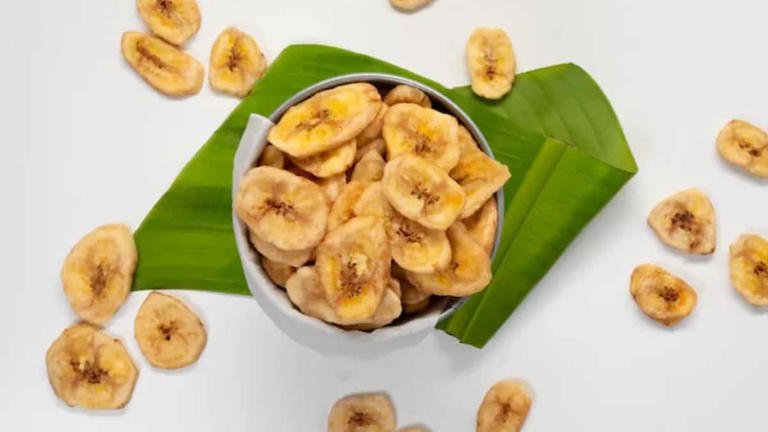
South Indian banana chips are a beloved snack known for their crisp texture, mild sweetness, and irresistible flavour. Traditionally prepared in Kerala using raw nendran bananas and coconut oil, these chips are enjoyed across India as a tea-time snack or festive treat. While store-bought versions are popular, making them at home ensures freshness, hygiene, and authentic taste.
With the right ingredients and technique, South Indian banana chips can be prepared easily in your own kitchen. Therefore, understanding a few essential tips can make all the difference between soggy slices and perfectly crisp chips.
Read More: Tripura Assembly Speaker Biswabandhu Sen Dies in Bengaluru
Why South Indian Banana Chips Are Special
South Indian banana chips stand apart because of their ingredients and cooking method. Unlike sweet banana chips, these are made from raw bananas, preferably nendran variety. Moreover, coconut oil is traditionally used, which adds a distinct aroma and flavour.
Additionally, the chips are lightly seasoned with salt, allowing the natural taste of banana to shine. As a result, they offer a balanced snack that is neither overly sweet nor spicy.
Another reason for their popularity is versatility. They can be enjoyed plain or paired with spicy dishes as a crunchy side.
Choosing the Right Bananas
Selecting the right banana is crucial for making authentic South Indian banana chips. Raw nendran bananas are ideal because they are firm and starchy. Therefore, they hold their shape well during frying.
Avoid ripe or semi-ripe bananas, as they tend to absorb excess oil and turn soft. Moreover, the banana should have a thick peel and pale flesh, indicating the correct stage of ripeness.
If nendran bananas are unavailable, other raw plantains may be used. However, the taste and texture may vary slightly.
Preparation Tips for Perfect Crispiness
Proper preparation ensures evenly fried South Indian banana chips. First, peel the bananas and immediately soak them in water mixed with turmeric. This step prevents discolouration and adds a subtle flavour.
Next, slice the bananas thinly and uniformly. Using a mandoline slicer helps achieve consistent thickness. Consequently, even slices fry at the same rate, avoiding burnt or undercooked chips.
Before frying, pat the slices dry to remove excess moisture. Therefore, splattering during frying is reduced, and crispiness improves.
The Importance of Oil and Temperature
Oil selection plays a key role in making authentic South Indian banana chips. Traditionally, coconut oil is used because it enhances flavour. Moreover, it withstands deep-frying temperatures well.
Heat the oil to a medium-high temperature. If the oil is too hot, the chips will brown quickly without cooking inside. On the other hand, low heat results in greasy chips.
To test oil readiness, drop a small slice into the oil. If it sizzles steadily without browning instantly, the temperature is ideal.
Step-by-Step South Indian Banana Chips Recipe
Ingredients
Raw nendran bananas – 3
Coconut oil – for deep frying
Salt – to taste
Water – 2 tablespoons
Turmeric – a pinch
Method
Peel and slice the bananas thinly. Soak slices in turmeric water for a few minutes. Drain and pat dry thoroughly.
Heat coconut oil in a deep pan. Carefully add banana slices in small batches. Fry on medium heat, stirring occasionally to prevent sticking.
Mix salt with water and sprinkle lightly over the frying chips. Be cautious, as oil may splutter. Continue frying until the chips turn golden and crisp.
Remove using a slotted spoon and drain on paper towels. Allow them to cool completely before storing.
Common Mistakes to Avoid
Overcrowding the pan is a common mistake. Therefore, always fry in small batches to maintain oil temperature. Another error is uneven slicing, which causes inconsistent cooking.
Additionally, adding salt directly can cause excessive spluttering. Hence, dissolving salt in water ensures even seasoning.
Finally, storing chips before cooling traps moisture. As a result, they lose their crunch quickly.
Storing Homemade Banana Chips
Once cooled, store South Indian banana chips in an airtight container. Keep them away from moisture and heat. Proper storage helps retain crispiness for up to two weeks.
If stored correctly, these chips remain fresh and flavourful. Therefore, they are perfect for festive preparations or snack cravings.
Why Homemade Is Always Better
Homemade South Indian banana chips offer better control over ingredients and oil quality. Moreover, they are free from preservatives and artificial flavours.
Preparing them at home also allows customisation. You can adjust salt levels or experiment with light spices while keeping the traditional base intact.
Ultimately, making South Indian banana chips at home is a rewarding experience. With simple tips and patience, you can recreate this classic snack and enjoy authentic flavours straight from your kitchen.
Read More: State BJP Executive Backs Himanta on Illegal Foreigners