





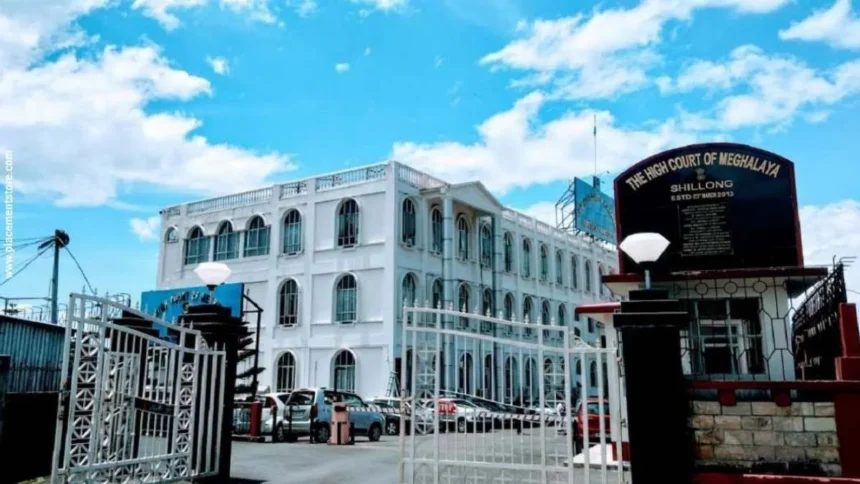
The Meghalaya High Court has upheld a five-year debarment imposed on a joint venture between M/s BSCPL Infrastructure Ltd and M/s C&C Constructions by the Public Works Department (PWD) Roads. The ban relates to allegations of corrupt practices during the execution of a major highway project in the state.
Justice H.S. Thangkhiew dismissed multiple writ petitions filed by the joint venture, ruling that the blacklisting was lawful, proportionate, and aligned with public interest.
Read More: OIL Pipeline Burst Causes Crude Oil Spill in Dibrugarh
Court Finds No Violation of Natural Justice
In its judgment, the High Court held that the state government acted within its legal authority while issuing the debarment order. The court found no breach of the principles of natural justice and rejected claims of procedural unfairness.
Justice Thangkhiew observed that the Public Works Department possessed the power to blacklist contractors under the terms of the contract. The court also stated that the decision-making process followed due procedure and allowed the contractor an opportunity to respond.
Case Linked to 2011 National Highway Project
The case stems from a 2011 infrastructure project involving the two-laning of National Highway-44E and the Nongstoin–Rongjeng–Tura road. The project was originally awarded at a cost of ₹1,303.83 crore.
However, additional works, scope changes, and price adjustments significantly escalated the project cost. As a result, the total expenditure crossed ₹2,400 crore, leading to disputes between the contractor and the state government.
Arbitration Led to Examination of Financial Records
Due to ongoing disputes, the matter was referred to arbitration. During the arbitration proceedings, the state government examined the contractor’s financial ledgers and supporting documents.
According to the government, the records revealed repeated payments for gifts, liquor, hospitality, and other benefits allegedly extended to public officials, engineers, and members of the Dispute Resolution Board. The state described these transactions as evidence of “outright and rampant corruption.”
Debarment Issued After Show-Cause Notice
Following these findings, the PWD Roads department issued a show-cause notice to the joint venture in September 2024. After considering the response submitted by the contractor, the department issued a debarment order on December 3, barring the JV from participating in government contracts for five years.
By that time, the joint venture had already received payments totaling ₹2,523 crore for the project. In addition, it secured ₹94 crore through arbitral awards.
JV Challenged Order as Mala Fide
The joint venture challenged the debarment before the High Court, alleging that the decision was mala fide and prejudicial. The petitioners argued that the state relied on unproven allegations and that the blacklisting would cause irreparable harm to their business.
However, the court rejected these claims. It noted that the contractor had been given sufficient opportunity to respond to the allegations and failed to provide a satisfactory explanation for the disputed expenses.
Court Cites Public Interest and Proportionality
Upholding the debarment, the High Court emphasized the importance of public interest in matters involving large-scale infrastructure projects and public funds. The court held that the five-year ban was proportionate, considering the size of the project, the amount of public money involved, and the seriousness of the alleged misconduct.
Justice Thangkhiew further ruled that the state had the authority under contract Clause 59.2(h) to take such action. The judgment also reaffirmed the government’s discretion in selecting contractors and safeguarding transparency in public works.
Verdict Reinforces Accountability in Public Projects
The ruling reinforces the state’s commitment to accountability and integrity in public infrastructure projects. The court concluded that public interest must prevail over private commercial concerns, especially in cases involving alleged corruption and misuse of public funds.
Also Read: Chabimura “Mini Amazon” to Become World-Class Eco-Tourism Hub

