





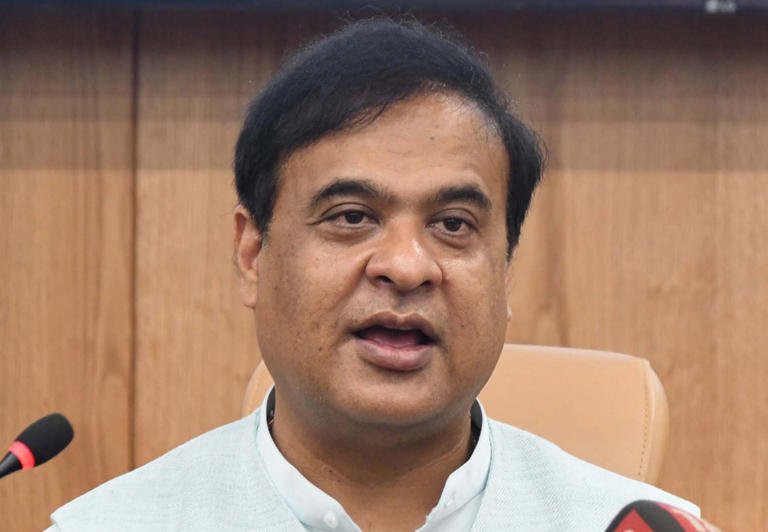
Assam Chief Minister Himanta Biswa Sarma on Tuesday clarified that his recent remarks were directed against “Bangladeshi infiltrators” and not against Muslims, responding sharply to criticism from AIMIM leader Asaduddin Owaisi. The clarification came amid a political row over alleged communal targeting, with Sarma insisting that his stand relates strictly to illegal immigration and national security.
The chief minister said attempts were being made to misrepresent his comments for political gain. He stressed that his government has always distinguished between Indian citizens and illegal infiltrators, irrespective of religion.
Himanta remarks on Bangladeshi infiltrators have once again brought the issue of illegal immigration to the centre of political debate in Assam.
Read More: Tripura CM Warns of Exposing ‘Unethical’ Conduct of TTAADC
Himanta remarks on Bangladeshi infiltrators, not religion
Responding to Owaisi’s criticism, Sarma said his statements should not be viewed through a communal lens. He asserted that the issue concerns illegal entry into India from Bangladesh and its impact on Assam’s demography, resources, and security.
According to the chief minister, illegal infiltration poses challenges that the state cannot ignore. Therefore, he said firm language is sometimes necessary to highlight the seriousness of the issue.
He reiterated that Indian Muslims have nothing to fear from the government’s actions or statements.
Response to Owaisi’s allegations
Asaduddin Owaisi had accused Sarma of targeting Muslims through his remarks and demanded accountability from constitutional authorities. He said such statements risk deepening social divisions and marginalising minority communities.
In response, Sarma said Owaisi was deliberately conflating illegal immigration with religion. The Assam CM said this narrative misleads the public and diverts attention from the real issue.
Himanta remarks on Bangladeshi infiltrators, he said, must be understood in the context of law and citizenship, not identity.
Illegal immigration a long-standing Assam issue
Illegal immigration has remained a sensitive and long-standing issue in Assam, shaping politics for decades. Concerns over demographic change, land pressure, and cultural identity have repeatedly surfaced in public discourse.
Sarma said successive governments failed to address the issue decisively. His administration, he added, has chosen to confront it openly through policy and enforcement.
The chief minister said clarity and firmness are essential when dealing with such a complex problem.
Distinguishing citizens from infiltrators
The Assam CM emphasised that the government makes a clear distinction between Indian citizens, including Muslims, and illegal infiltrators. He said citizenship defines rights and responsibilities, not religion.
Himanta remarks on Bangladeshi infiltrators, he said, reflect this distinction. He warned against narratives that portray lawful action against illegal immigration as communal targeting.
According to him, confusing the two harms both governance and social harmony.
Political reactions and counter-claims
The controversy triggered sharp political reactions. BJP leaders defended Sarma, saying his position aligns with national interest and constitutional provisions.
Opposition leaders, however, accused the chief minister of using provocative language that could inflame tensions. They argued that public office holders must exercise restraint.
The exchange between Sarma and Owaisi has thus widened into a broader debate on speech, responsibility, and political intent.
Impact on Assam’s political climate
The issue has further polarised Assam’s political climate, where immigration remains a defining concern. Supporters of the government see Sarma’s stance as bold and necessary.
Critics argue that repeated emphasis on infiltration risks alienating sections of society. However, the chief minister said silence or ambiguity would be more damaging in the long run.
Himanta remarks on Bangladeshi infiltrators continue to resonate strongly among voters.
Legal and policy framework
Sarma said action against illegal infiltrators follows constitutional and legal procedures. Detection, verification, and deportation, he said, operate within the rule of law.
He added that courts and administrative processes ensure that genuine citizens are protected. Therefore, claims of indiscriminate targeting, he argued, lack factual basis.
The chief minister said political debate should not undermine lawful governance.
Debate on language and leadership
The controversy has also sparked debate over the language used by political leaders. While supporters view Sarma’s words as direct and honest, critics call them polarising.
Political analysts said strong rhetoric often appeals to core constituencies but can deepen divisions. Balancing clarity with sensitivity, they said, remains a challenge.
The Sarma–Owaisi exchange reflects this broader tension in Indian politics.
National resonance of the issue
Illegal immigration from Bangladesh remains a national issue, particularly in eastern and northeastern states. Sarma’s remarks have therefore drawn attention beyond Assam.
Supporters see his stance as aligned with broader national policy on border management and citizenship. Critics view it as part of a wider pattern of confrontational politics.
The debate underscores how regional issues can quickly acquire national significance.
What lies ahead
As political exchanges continue, the focus may shift to policy outcomes rather than rhetoric. The Assam government is expected to continue its measures against illegal infiltration.
Meanwhile, opposition leaders are likely to keep pressing for accountability and restraint in public discourse. The issue may resurface in parliamentary and legal forums.
Himanta remarks on Bangladeshi infiltrators will likely remain a point of contention.
Conclusion
Assam Chief Minister Himanta Biswa Sarma’s clarification that his remarks targeted “Bangladeshi infiltrators” and not Muslims represents an attempt to reframe a heated political controversy. By responding directly to Asaduddin Owaisi, Sarma sought to separate illegal immigration from religious identity.
Whether this clarification eases tensions or fuels further debate will depend on political responses and public perception. What remains clear is that the issue of illegal infiltration continues to shape Assam’s politics, discourse, and governance in powerful ways.
Read More: Maoist Issue Not Linked to Development: Amit Shah in Chhattisgarh