







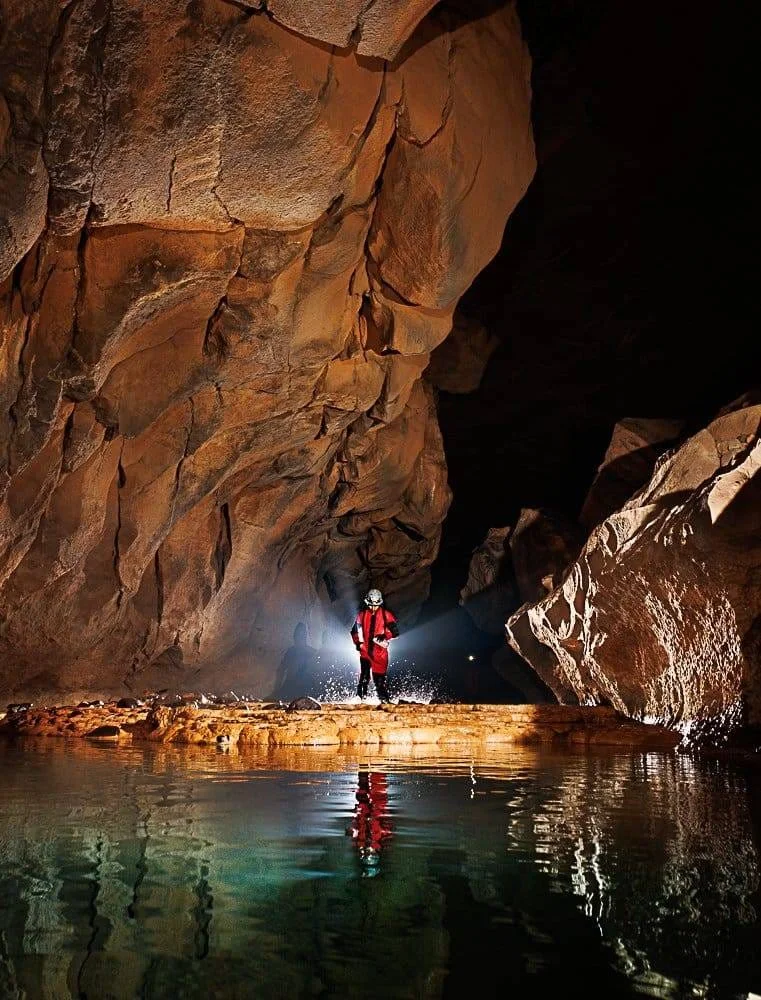
A multinational expedition has mapped over 22 km of new cave passages in Meghalaya during February 2025. The discovery includes Lungchung Khur, now among India’s longest caves, significantly expanding the state’s known cave network.
Read More: U-23 Championship Arunachal Pradesh Kicks Off – Hindustan Pioneer
Key Facts
- Expedition Name: Caving in the Abode of the Clouds Expedition 2025
- Duration: February 2–28, 2025
- New Cave Length Mapped: 22,663 metres
- Participants: 24 cavers from 7 countries
- Major Discovery: Lungchung Khur (13,618 metres)
- Supporting Body: Meghalaya Adventurers Association
- Total Cave Length in Meghalaya: 573.6 km
Major Cave Discoveries in Meghalaya
A multinational team of explorers has mapped more than 22 km of previously uncharted cave passages in Meghalaya. The expedition, conducted throughout February 2025, has significantly expanded the understanding of the region’s underground systems.
The initiative, titled “Caving in the Abode of the Clouds Expedition 2025,” brought together 24 cavers from countries including Austria, Germany, India, Ireland, the Netherlands, Poland, and the United Kingdom. Moreover, the Meghalaya government funded the project, while the Meghalaya Adventurers Association provided logistical support.
Exploration Across Key Regions
Before the main expedition, teams surveyed caves in East Khasi Hills district. As a result, they mapped 6,210 metres of passages across eight caves.
These surveys extended known sections of caves such as Krem Riblai, Krem Khla, Krem Wallang, and Krem Shanguh 1. Consequently, researchers gained deeper insights into existing cave systems.
During the main phase, explorers focused on the Jongria and Muallian Spur areas near Tangnub village. In addition, they recorded 16,453 metres of new cave passages in these regions.
Lungchung Khur Emerges as Key Discovery
Among the findings, Lungchung Khur stands out as a major discovery. Measuring 13,618 metres, it now ranks as the 10th longest cave in India and the ninth longest limestone cave.
Furthermore, the cave features extensive river passages and impressive calcite formations. As a result, it holds both geological and scientific significance.
Out of 27 caves explored during the expedition, 18 were newly documented. Therefore, the expedition has added substantial new data to India’s cave mapping efforts.
Scientific Findings and Ongoing Research
In addition to mapping, researchers collected samples of Neolissochilus pnar, a rare blind cave fish species. Scientists will study these samples for conservation and ecological research.
Meanwhile, exploration continues in South West Khasi Hills district. The length of Krem Amarsang cave has already extended to 1,564 metres, and teams expect further discoveries.
Long-Term Caving Project Progress
This expedition forms part of the long-running “Caving in the Abode of the Clouds” project, which began in 1992. Over the years, the initiative has played a crucial role in documenting Meghalaya’s vast cave systems.
With the latest findings, the total mapped cave length in the state has reached 573.6 km. Therefore, Meghalaya continues to strengthen its reputation as one of India’s प्रमुख caving destinations.
Question & Answer Section
Q1: What was discovered in Meghalaya?
Explorers mapped over 22 km of new cave passages and identified major cave systems.
Q2: What is Lungchung Khur?
It is a newly mapped cave measuring 13,618 metres, now among India’s longest caves.
Q3: How many caves were explored?
A total of 27 caves were explored, including 18 newly documented ones.
Q4: Who supported the expedition?
The Meghalaya government funded it, and the Meghalaya Adventurers Association supported it.
Q5: Why is this discovery important?
It enhances geological knowledge and supports biodiversity research in cave ecosystems.
Location Context
Meghalaya is globally known for its extensive limestone cave systems and unique biodiversity. Therefore, such discoveries strengthen its importance in scientific research and eco-tourism in Northeast India.

