





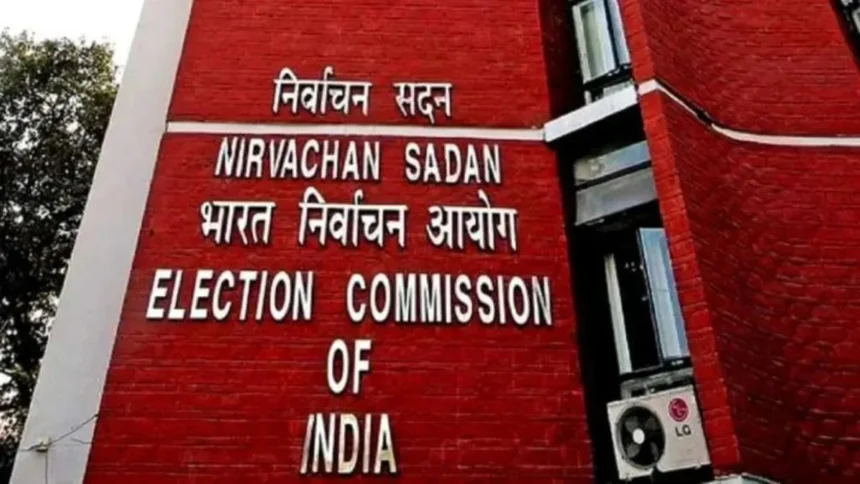
The Election Commission of India has ordered the enforcement of ‘dry days’ in poll-bound states and union territories during the 2026 Assembly elections. Authorities will ban the sale and distribution of liquor for 48 hours before polling ends in each constituency.
Additionally, officials will observe May 4, the vote counting day, as a dry day. The move aims to ensure free and fair elections and prevent undue influence on voters. States including Assam, Tamil Nadu, and West Bengal will follow the directive.
Read More: Guwahati Woman Dies After Falling into Open Drain
Key Facts
- Authority: Election Commission of India
- Law Invoked: Representation of the People Act, 1951 (Section 135C)
- Restriction: Ban on sale and service of liquor
- Dry Period: 48 hours before polling ends
- Counting Day: May 4, 2026 (Dry Day)
- States Involved: Assam, Kerala, Tamil Nadu, West Bengal, Puducherry
ECI Enforces Strict Election Guidelines
The Election Commission of India has introduced strict measures to maintain transparency in the 2026 Assembly elections. It has directed all states and union territories involved in the polls to enforce dry days during critical election periods.
Under Section 135C of the Representation of the People Act, 1951, authorities must stop the sale, distribution, and serving of liquor 48 hours before polling concludes. Moreover, officials must implement the same restrictions in case of re-polling.
Wide-Ranging Restrictions on Liquor Sales
The directive applies to liquor shops, hotels, restaurants, clubs, and bars. In addition, it covers star hotels and non-proprietary clubs that operate under excise licences.
Authorities have also asked enforcement agencies to monitor liquor storage closely. They will act against illegal stocking and unlicensed sales. Therefore, officials aim to prevent any misuse of alcohol during the election period.
Focus on Free and Fair Elections
The Commission has emphasized that dry days play a crucial role in ensuring fair elections. By restricting alcohol availability, officials reduce the risk of voter manipulation and maintain public order.
Furthermore, such measures help create a neutral environment where voters can exercise their rights without external influence. As a result, the integrity of the electoral process remains intact.
Polling Schedule Across States
The election process will take place in multiple phases. Polling in Tamil Nadu and the first phase in West Bengal will begin on April 23. Subsequently, the second phase in West Bengal will take place on April 29.
Finally, authorities will conduct vote counting across all states and union territories on May 4. This day will also remain a dry day as per the Commission’s directive.
Location Context
States like Assam and other parts of Northeast India hold strategic importance in India’s electoral landscape. Therefore, strict enforcement of election rules in these regions strengthens democratic processes and ensures peaceful voting.
Q&A Section
What did the Election Commission announce?
The Commission ordered dry days in poll-bound states during the 2026 elections.
When will liquor sales be banned?
Liquor sales will stop 48 hours before polling ends and on May 4, the counting day.
Which law supports this decision?
Section 135C of the Representation of the People Act, 1951 supports the directive.
Which states are affected?
States include Assam, Kerala, Tamil Nadu, and West Bengal, along with Puducherry.
Why are dry days important during elections?
They help prevent voter influence and ensure free and fair elections.
Also Read: Tripura Temple Redevelopment Boost: CM Reviews Tripura Sundari Project Plans – Borok Times