




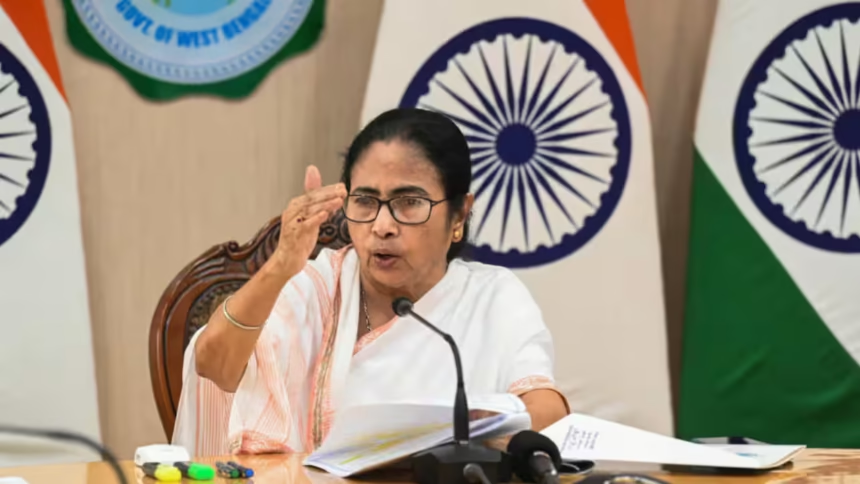
Bureaucratic Reshuffle Moves Officials into key administrative positions in West Bengal after the state government transferred 10 senior bureaucrats on 10 May, including nine officers posted directly to the Chief Minister’s Office. The large-scale administrative reshuffle has drawn significant attention because it signals the early restructuring of the government’s decision-making and governance framework.
Arms Recovery Operation Conducted At Langol
Agricultural Development Supports Tripura Farmer Growth
Major Administrative Changes Announced
Government officials confirmed that the transfers involved several high-ranking bureaucrats from different departments and administrative units. Authorities moved nine officers to the Chief Minister’s Office to improve coordination, policy monitoring, and departmental communication.
According to administrative sources, the new government carried out the reshuffle to streamline governance and improve efficiency across departments. As a result, officials expect faster coordination between key administrative units.
Meanwhile, transferred officers immediately started handling new assignments linked to policy execution, administrative review, and strategic planning.
Chief Minister’s Office Gains Expanded Role
Political analysts observed that the transfer of multiple senior officers into the Chief Minister’s Office signals a stronger centralized administrative structure under the leadership of Suvendu Adhikari.
Consequently, Bureaucratic Reshuffle Moves Officials became a major topic in political circles because large-scale transfers often influence governance speed and policy implementation.
Experts also noted that the expanded administrative team at the CMO may accelerate project approvals, monitor welfare programmes, and improve communication between district administrations and the state government.
Governance Priorities Likely To Influence Transfers
Administrative observers believe the reshuffle reflects the government’s effort to align senior bureaucrats with immediate policy priorities. In particular, sectors such as infrastructure, investment, healthcare, public welfare, and digital governance may receive stronger administrative attention.
Officials indicated that the newly transferred officers may play important roles in reviewing departmental performance and ensuring timely execution of state projects.
At the same time, analysts stressed that governments often use bureaucratic restructuring during the early phase of administration to strengthen operational control and improve institutional coordination.
Opposition Parties React To Administrative Changes
Opposition leaders closely monitored the reshuffle and questioned whether the transfers focused more on administrative reform or political consolidation.
Meanwhile, representatives from All India Trinamool Congress stated that the performance of the reorganized administration would determine public response to the changes.
In addition, Bureaucratic Reshuffle Moves Officials triggered debate among political commentators because bureaucratic appointments frequently shape policy direction and governance outcomes over time.
Bureaucrats Expected To Begin New Responsibilities
Senior officials transferred to the Chief Minister’s Office are expected to oversee interdepartmental coordination, project monitoring, and policy communication. Furthermore, administrative insiders said regular performance reviews and strategic planning sessions may become more frequent under the reorganized structure.
Meanwhile, district administrations have reportedly received instructions to maintain close coordination with the CMO regarding development projects, welfare implementation, and emergency response systems.
Experts believe stronger administrative integration could speed up decision-making and improve public service delivery if authorities manage it effectively.
Public Attention On Government Restructuring
The reshuffle quickly attracted attention across regional media and social media platforms. Discussions mainly focused on the political and administrative impact of the transfers.
Business groups and policy observers welcomed efforts aimed at improving governance efficiency. However, some analysts cautioned that long-term success would depend on execution and coordination between departments.
In addition, academic experts highlighted that bureaucratic continuity and institutional experience remain important during major administrative transitions.
Conclusion
The transfer of 10 senior bureaucrats, including nine officers assigned to the Chief Minister’s Office, marks a major administrative development in West Bengal. Overall, the reshuffle reflects the government’s attempt to strengthen coordination and streamline governance during the early phase of the new administration. As the newly assigned officials begin their responsibilities within the CMO, attention will remain focused on policy implementation, administrative efficiency, and the overall functioning of the state government.
FAQs
1. What happened on 10 May in West Bengal?
The government transferred 10 senior bureaucrats as part of a major administrative reshuffle.
2. How many officers were moved to the Chief Minister’s Office?
Nine bureaucrats were directly assigned to the Chief Minister’s Office.
3. Why are bureaucratic reshuffles important?
Such transfers can influence governance coordination, policy implementation, and administrative efficiency.
4. Who leads the current government in West Bengal?
The government is led by Chief Minister Suvendu Adhikari.
5. What roles will the transferred officers perform?
The officers are expected to assist in coordination, project monitoring, and administrative planning.
6. How did opposition parties respond?
Opposition leaders stated that they would monitor the effectiveness and impact of the administrative changes.