




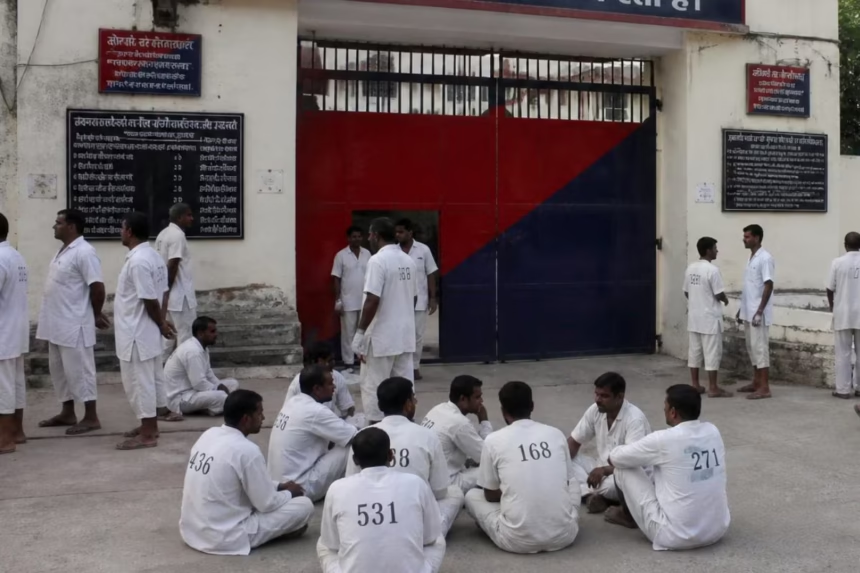
Mizoram Fake Court Orders case has shocked legal and administrative authorities after investigators uncovered forged judicial documents that allegedly enabled 17 convicted prisoners to walk out of jail illegally in Mizoram. Officials confirmed that the fake release orders were used to secure the unauthorized release of inmates from correctional facilities, triggering a large-scale investigation involving police, prison authorities, and judicial officials.
The case emerged after discrepancies were noticed in official court communication records linked to prisoner release procedures. Authorities stated that forged signatures, fabricated court directives, and manipulated legal documentation were allegedly used to mislead jail authorities and facilitate the illegal release of convicts.
Exclusive: IED Defused Near Indo Myanmar Border
IMD Severe Weather Alert Across Northeast
Investigation Begins After Record Verification
According to officials, the fraud surfaced during an internal verification exercise involving prison release records and court-issued warrants. Authorities found inconsistencies between actual court documents and the release orders submitted to prison officials.
The Mizoram Fake Court Orders investigation intensified after officials confirmed that several release directives did not match records maintained by district courts. Police launched inquiries to determine how the forged documents entered official administrative channels.
Investigators suspect that individuals familiar with legal and prison procedures operated the scheme. Authorities are now examining whether prison staff, legal intermediaries, or external criminal networks participated in the alleged scam.
Seventeen Convicts Released Illegally
Officials confirmed that forged court orders helped secure the release of 17 convicted prisoners before authorities detected the fraud. Some of the released individuals had been serving sentences in serious criminal cases.
Police teams have started tracing and re-arresting the released convicts. Security agencies also circulated alerts to neighboring states and law enforcement units to monitor the movement of the individuals involved.
The Mizoram Fake Court Orders case has raised serious concerns about the security of judicial communication systems and prison verification mechanisms.
Forged Judicial Documents Under Examination
Forensic experts and investigators are examining the fake release documents to determine how the forged papers were created and submitted. Officials stated that the documents carried fabricated seals, signatures, and court references designed to resemble authentic judicial orders.
Authorities are also reviewing digital communication records and administrative files to trace the origin of the forged instructions. Investigators believe the fraud may have operated for an extended period instead of being an isolated incident.
The Mizoram Fake Court Orders probe has expanded into a wider investigation involving cyber analysis, document verification, and institutional review procedures.
Judiciary and Prison Authorities Respond
Senior judicial officials expressed concern over the misuse of court identities and legal procedures in the scam. Authorities stated that they may introduce stronger verification systems to prevent similar misuse in the future.
Meanwhile, prison officials confirmed that internal inquiries are examining whether officials ignored verification lapses before approving prisoner releases.
The Mizoram Fake Court Orders incident also triggered discussions about digitized judicial communication systems and stricter authentication procedures for prison-related court directives.
Police Intensify Search Operations
Law enforcement agencies intensified operations to locate the released convicts and identify those responsible for creating the forged documents. Police officials stated that teams are conducting raids and searches in multiple locations linked to the case.
Authorities are also questioning prison staff, clerical personnel, and individuals connected to legal document processing. Investigators believe the scam involved organized coordination between multiple individuals.
The Mizoram Fake Court Orders investigation is being treated as a serious criminal conspiracy because it directly affected the integrity of the judicial and correctional system.
Legal Experts Raise Institutional Concerns
Legal experts stated that forged court order cases can seriously damage public trust in the justice system when verification safeguards remain weak. Specialists emphasized the importance of secure digital record systems, direct court-to-prison communication channels, and stricter procedural checks.
Analysts also noted that prison administrations often depend heavily on official documentation for inmate release procedures. This makes document authentication critically important.
The Mizoram Fake Court Orders case has triggered wider debate regarding judicial security, administrative accountability, and the modernization of legal record systems across states.
Government Orders Administrative Review
State authorities reportedly directed departments connected to prisons, law enforcement, and judiciary coordination to conduct administrative reviews after exposing the scam. Officials stated that departments may implement additional safeguards for prisoner release verification procedures.
Authorities also indicated that disciplinary action could follow if investigators establish negligence or collusion by officials.
The Mizoram Fake Court Orders case remains under close investigation as police attempt to identify the full network behind the forged judicial release system.
Conclusion
The exposure of forged judicial documents used to release 17 convicts illegally from jail has created major concern within Mizoram’s legal and prison administration systems. Investigators are tracing the released prisoners while examining how fake court orders bypassed official verification procedures. The Mizoram Fake Court Orders case has emerged as a significant legal and administrative scandal, prompting demands for stronger judicial safeguards, digital verification systems, and stricter oversight mechanisms.
FAQs
What is the Mizoram Fake Court Orders case?
It is a case involving forged judicial documents used to illegally release convicted prisoners from jail.
How many convicts were released illegally?
Officials confirmed that 17 convicted prisoners walked out of jail using fake release orders.
How was the fraud discovered?
Authorities found discrepancies during verification of prison and court records.
Are police searching for the released convicts?
Yes, law enforcement agencies launched search operations and issued alerts to trace the individuals.
What kind of documents were forged?
Investigators found fake court seals, signatures, and fabricated judicial release directives.
What actions may follow the investigation?
Authorities may introduce stricter verification systems and take disciplinary action if negligence is proven.