



Chin Refugee Influx Raises fresh concerns in Mizoram as border towns in Champhai district prepare for a possible large-scale arrival of refugees fleeing renewed violence in neighboring Myanmar. Officials and local community leaders confirmed that intense clashes have erupted again near the Indo-Myanmar border after Myanmar Junta forces launched operations to regain control of the key trading outposts of Rihkhawdar and Khawmawi.
Meanwhile, humanitarian organizations and local volunteers have started reviewing emergency preparedness plans amid fears that thousands of civilians could cross into Indian territory if fighting escalates further. Authorities stated that the security situation along the border remains tense because artillery fire and armed confrontations continue near civilian settlements on the Myanmar side.
District Shutdowns Imposed After Kangpokpi Killings
Austerity Mandate Introduces State Staff Rotation
Fresh Fighting Erupts Near Indo-Myanmar Border
According to local sources, heavy clashes resumed after Myanmar military forces intensified attempts to recapture strategic border areas currently influenced by anti-junta resistance groups. Consequently, residents living close to the conflict zone have reportedly started fleeing toward safer regions.
Rihkhawdar and Khawmawi hold major strategic importance because the towns serve as critical trade and transportation links between Myanmar and Mizoram. Additionally, both locations have witnessed repeated confrontations since political instability deepened in Myanmar following the military takeover in 2021.
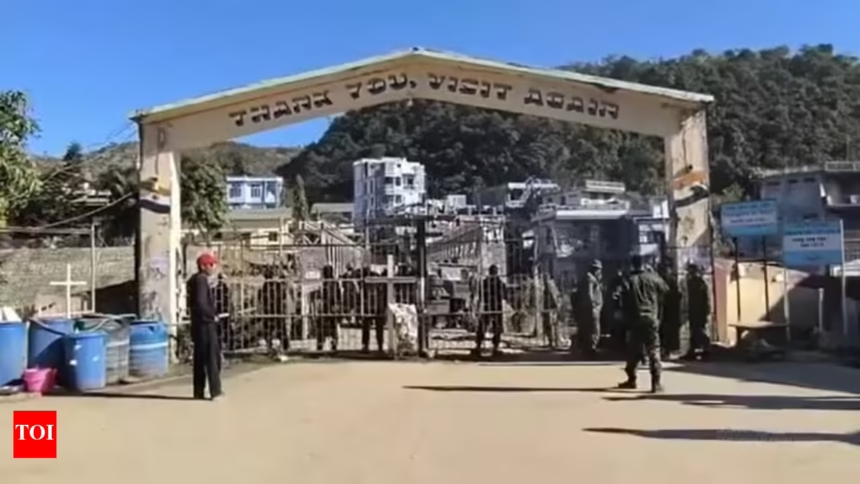
Officials in Champhai district stated that sounds of gunfire and explosions were reportedly heard from several areas close to the international border. Furthermore, local authorities have increased monitoring activities as concerns grow over civilian displacement and humanitarian pressure on border communities.
Champhai District Reviews Emergency Preparedness
The Chin Refugee Influx Raises urgent humanitarian questions for local administrations already managing previous refugee settlements in Mizoram. Therefore, community leaders, civil society organizations, and village authorities have begun discussions regarding shelter arrangements, food distribution, and medical support systems.
According to officials, several border villages in Champhai district have experience handling refugee arrivals because earlier waves of displaced Chin civilians entered Mizoram during previous phases of conflict in Myanmar. However, local leaders warned that existing resources may face severe strain if violence intensifies further.
Additionally, volunteers associated with churches and community organizations have started identifying buildings and public spaces that could temporarily accommodate incoming refugees. Medical teams are also reviewing emergency supply availability, particularly for children, elderly individuals, and injured civilians.
At the same time, residents expressed concern over the possibility of overcrowding in already stretched relief facilities. Consequently, local groups have urged authorities to ensure coordinated planning before refugee numbers increase significantly.
Myanmar Junta Intensifies Military Operations
Security observers noted that the Myanmar military has recently stepped up operations in western border regions as resistance movements continue expanding their influence. Moreover, clashes near Rihkhawdar and Khawmawi have reportedly disrupted transportation routes and commercial activity across the region.
According to regional analysts, the junta considers control of border trading points strategically important because such areas influence supply chains, revenue movement, and military positioning. However, resistance groups operating in Chin State have continued challenging military authority despite repeated offensives.
Furthermore, reports from across the border indicated that civilians remain trapped between advancing military forces and ongoing armed confrontations. As a result, fears of additional displacement have increased sharply among communities living near conflict-prone zones.
Earlier refugee inflows into Mizoram included thousands of Chin civilians seeking safety from violence, military crackdowns, and political instability in Myanmar. Therefore, renewed fighting has revived concerns about another prolonged humanitarian crisis along the border.
Local Communities Prepare Humanitarian Response
The Chin Refugee Influx Raises pressure on local support systems because border communities in Mizoram have historically played a major role in assisting displaced Chin refugees. Community organizations stated that preparations are underway to coordinate food supplies, sanitation measures, and temporary housing support if the situation deteriorates rapidly.
Meanwhile, church groups and humanitarian volunteers have started informal consultations with district officials regarding relief logistics. Additionally, social organizations are monitoring developments across the border to assess the scale of possible displacement.
Several local leaders emphasized that humanitarian assistance would remain necessary regardless of political developments in Myanmar. However, they also warned that sustained refugee arrivals could place economic pressure on smaller border towns with limited infrastructure and resources.
Furthermore, residents in Champhai district expressed solidarity with displaced civilians while simultaneously urging authorities to strengthen healthcare facilities and essential services. Consequently, discussions regarding state-level coordination have intensified over recent days.
Security and Humanitarian Challenges Continue
Officials stated that authorities are closely monitoring cross-border movement while maintaining coordination with security agencies stationed near the Indo-Myanmar frontier. Additionally, border surveillance has reportedly increased because instability in Myanmar continues affecting nearby Indian regions.
Experts noted that prolonged conflict in Chin State may further complicate humanitarian management efforts in Mizoram. Besides refugee accommodation challenges, local administrations could also face pressure related to healthcare access, sanitation, education, and food distribution.
According to observers, Mizoram has maintained strong ethnic and cultural ties with Chin communities in Myanmar for decades. Therefore, local populations have often extended humanitarian support during previous refugee crises despite resource limitations.
Nevertheless, policy experts stressed the importance of structured relief planning and long-term coordination between local administrations, civil society groups, and central authorities. They argued that organized preparedness could reduce humanitarian risks if refugee arrivals increase suddenly.
Regional Stability Remains Uncertain
The Chin Refugee Influx Raises broader regional concerns as instability in Myanmar continues affecting neighboring areas across South and Southeast Asia. Analysts believe that ongoing armed conflict near international borders may further disrupt trade routes, local economies, and civilian safety.
Moreover, humanitarian groups warned that continued military escalation could deepen displacement patterns already affecting thousands of families inside Myanmar. Consequently, international attention on the border situation may increase if violence spreads further.
Meanwhile, officials in Mizoram continue assessing ground conditions while preparing for potential emergency scenarios. Local organizations also stated that relief coordination efforts would likely expand depending on the intensity and duration of fighting near Rihkhawdar and Khawmawi.
Conclusion
Chin Refugee Influx Raises serious humanitarian and security concerns in Mizoram as renewed clashes in Myanmar push border communities into emergency preparedness mode. Meanwhile, local leaders, volunteers, and district authorities in Champhai continue reviewing relief strategies amid fears of a fresh refugee surge from conflict-hit Chin State.
Furthermore, the evolving situation near Rihkhawdar and Khawmawi highlights the continuing impact of Myanmar’s internal conflict on neighboring regions. As fighting persists near the border, humanitarian organizations and local communities are expected to remain on high alert for possible large-scale civilian displacement.
FAQs
Why are refugees expected to enter Mizoram?
Fresh clashes between Myanmar Junta forces and resistance groups near border towns have forced civilians to flee conflict-affected areas.
Which areas are witnessing intense fighting?
Heavy clashes have reportedly intensified around Rihkhawdar and Khawmawi near the Indo-Myanmar border.
Why is Champhai district important in this situation?
Champhai district shares a border with Myanmar and often serves as an entry point for displaced Chin refugees seeking safety.
What preparations are local groups making?
Community leaders and volunteers are reviewing shelter arrangements, food supplies, medical support, and emergency relief plans.
Why are Rihkhawdar and Khawmawi strategically significant?
The towns function as important trading outposts and transportation links between Myanmar and Mizoram.
Why is the Chin Refugee Influx Raises issue significant?
The Chin Refugee Influx Raises concerns because renewed violence could trigger another major humanitarian crisis along the Indo-Myanmar border.