




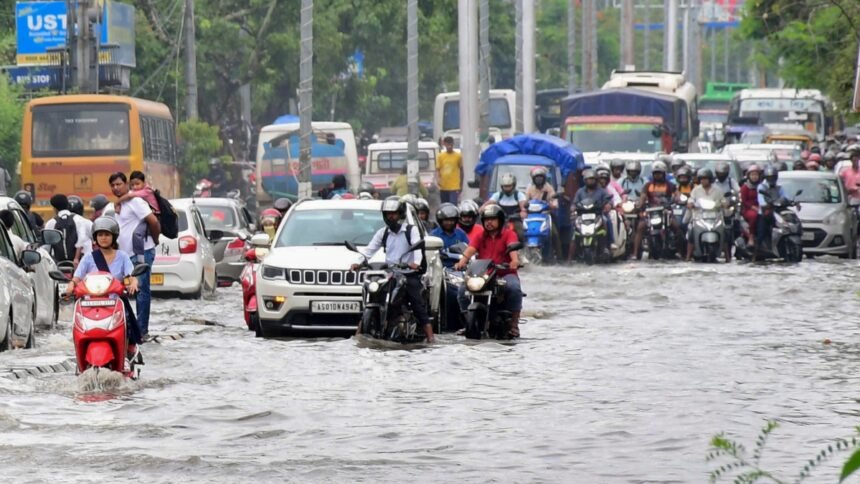
Assam Storm Flooding Disrupts transportation and daily movement after heavy rainfall triggered severe waterlogging across parts of Guwahati and Sribhumi. According to officials, intense rain spells linked to warnings issued by the India Meteorological Department flooded several urban roads and disrupted public transit operations during peak travel hours.
Meanwhile, residents faced major commuting difficulties as water accumulated in low-lying areas and key traffic corridors. Consequently, transport delays, traffic congestion, and localized disruptions intensified across affected districts.
Mamata Banerjee Wears Lawyer Robes In Court
Imphal Blast Kills Local Market Merchant
Heavy Rainfall Floods Urban Areas
According to officials, continuous rainfall inundated several roads, residential pockets, and market areas in Guwahati and Sribhumi.
Additionally, drainage systems struggled to manage the sudden increase in rainwater levels during the storm activity. Consequently, waterlogging disrupted vehicle movement and slowed daily operations in multiple urban zones.
Meanwhile, commuters reported long traffic delays and overcrowded public transportation services during the rainfall spell.
Furthermore, local authorities started monitoring flood-prone locations and drainage channels to prevent further urban flooding.
Meteorological Department Issued Alerts
The Assam Storm Flooding Disrupts situation followed weather alerts issued by the India Meteorological Department regarding severe rain and storm activity in parts of Assam.
According to meteorological officials, changing atmospheric conditions and moisture buildup contributed to the intense rainfall affecting the region.
Additionally, authorities warned residents about possible localized flooding, reduced visibility, and temporary transportation disruptions. Consequently, disaster management agencies and municipal bodies remained on alert across vulnerable urban areas.
Meanwhile, weather experts advised residents to avoid unnecessary travel during periods of intense rainfall and thunderstorm activity.
At the same time, officials urged people living in flood-prone localities to remain cautious and follow emergency advisories.
Public Transport Services Face Disruptions
According to commuters and transport officials, heavy rain significantly affected public transit movement in several parts of Guwahati.
Additionally, buses, auto-rickshaws, and other local transportation services experienced delays because of waterlogged streets and traffic congestion. Consequently, office workers, students, and daily commuters faced prolonged travel times during peak hours.
Meanwhile, emergency response teams monitored major traffic intersections and vulnerable roads to manage congestion.
Furthermore, urban planners noted that rapid rainfall events frequently expose weaknesses in drainage infrastructure and city planning systems.
Authorities Monitor Flood Prone Zones
The Assam Storm Flooding Disrupts development prompted local authorities to intensify monitoring in vulnerable urban areas.
According to officials, municipal workers started clearing blocked drains and reviewing water accumulation points following the heavy rainfall.
Additionally, disaster response teams remained prepared to handle possible emergencies linked to urban flooding and storm-related incidents. Consequently, authorities increased coordination between weather agencies, traffic police, and civic bodies.
Meanwhile, local residents expressed concerns regarding recurring waterlogging problems during monsoon and pre-monsoon rain spells.
At the same time, environmental experts stressed the importance of improving urban drainage infrastructure and flood management systems.
Residents Face Daily Challenges
According to reports, heavy rainfall disrupted normal routines for thousands of residents across affected districts in Assam.
Additionally, waterlogged roads and traffic jams created difficulties for students, office workers, shopkeepers, and emergency service vehicles. Consequently, many residents experienced delays in reaching workplaces, schools, and public service centers.
Meanwhile, business owners in low-lying commercial areas expressed concern regarding potential economic losses caused by repeated flooding incidents.
Furthermore, analysts observed that severe weather disruptions increasingly affect urban productivity and public infrastructure in rapidly expanding cities.
Weather Conditions Remain Under Watch
The Assam Storm Flooding Disrupts situation continues to remain under close observation by weather and disaster management authorities.
According to the India Meteorological Department, rainfall activity may continue in parts of Assam depending on changing atmospheric conditions.
Additionally, officials advised local administrations to remain prepared for possible additional flooding and transportation disruptions. Consequently, emergency monitoring systems and public advisories remain active across affected districts.
Meanwhile, residents have been urged to stay updated through official weather alerts and avoid waterlogged areas during severe storms.
At the same time, experts emphasized the growing need for climate-resilient urban infrastructure in flood-prone regions.
Conclusion
Assam Storm Flooding Disrupts daily commuting and transportation after heavy rainfall flooded roads and public transit routes across Guwahati and Sribhumi. Meanwhile, authorities intensified monitoring and emergency preparedness efforts following storm warnings issued by the India Meteorological Department.
Furthermore, the severe rainfall once again highlighted concerns regarding urban flooding, drainage infrastructure, and weather preparedness in Assam. As weather conditions continue evolving, residents and authorities are expected to remain alert for additional rain-related disruptions in the coming days.
FAQs
Which areas faced severe flooding?
Parts of Guwahati and Sribhumi experienced heavy waterlogging.
Which agency issued the storm warning?
The India Meteorological Department issued the warning.
How did the rain affect transportation?
Flooded roads and traffic congestion disrupted buses, vehicles, and public transit services.
What actions did authorities take?
Officials monitored flood-prone areas, cleared drains, and activated emergency response systems.
Why are residents concerned?
Recurring urban flooding and poor drainage continue disrupting daily life during heavy rainfall.
Why is the Assam Storm Flooding Disrupts development important?
The Assam Storm Flooding Disrupts situation highlights growing concerns regarding urban infrastructure and weather preparedness.