


TMC voter revision challenge proceedings intensified national political attention after the All India Trinamool Congress approached the Supreme Court of India over allegations linked to a Special Intensive Revision of electoral rolls that reportedly removed nearly 90.8 lakh voter names before the 2026 elections. The party argued that the revision process materially and unfairly influenced the electoral outcome, triggering wider debate regarding electoral transparency and voter rights across West Bengal and national political circles. Meanwhile, legal experts stated that the case could become a major constitutional and electoral law issue in the coming months.
Rathindra Bose Makes Bengal Assembly History
Suvendu Adhikari Targets Abhishek Properties In Kolkata
TMC Moves Supreme Court Over Electoral Rolls
Authorities confirmed that the Trinamool Congress filed a petition before the Supreme Court challenging the legality and implementation of the Special Intensive Revision exercise. Additionally, party representatives alleged that the removal of voter names significantly affected eligible voters and altered electoral dynamics during the 2026 election cycle.
The legal challenge reportedly questions the procedures followed during voter verification and deletion processes across multiple constituencies. Consequently, the petition quickly gained national attention because of its potential implications for electoral governance and democratic participation. Earlier, opposition leaders repeatedly raised concerns regarding voter roll revisions and alleged inconsistencies in electoral documentation.
Officials from the Election Commission of India have not publicly responded in detail to the allegations mentioned in the petition. Furthermore, election authorities maintained that electoral roll revisions follow constitutional procedures and statutory verification mechanisms.
Allegations Trigger Political Confrontation
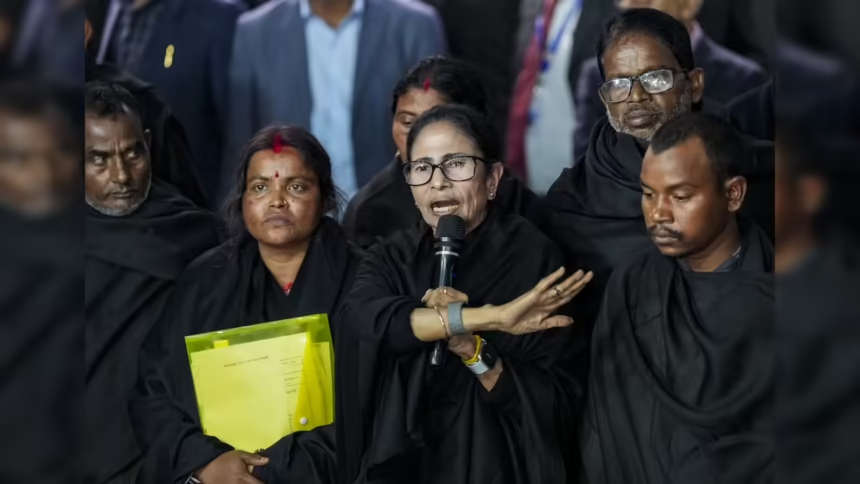
Senior leaders from the Trinamool Congress described the alleged deletion of voter names as a serious democratic concern requiring judicial intervention. Meanwhile, opposition parties and rival political groups strongly rejected accusations suggesting electoral manipulation or deliberate voter exclusion.
Authorities explained that Special Intensive Revision exercises are generally conducted to update electoral rolls, remove duplicate entries, and verify voter eligibility records. Specifically, legal analysts noted that such revisions frequently involve large-scale administrative verification operations before major elections. In addition, election law experts stated that disputes involving voter rolls often become politically sensitive because of their direct impact on electoral participation.
Several political commentators observed that voter registration controversies have increasingly influenced political discourse across multiple Indian states. However, constitutional experts emphasized that courts typically require substantial documentary evidence before intervening in election-related administrative processes. Despite this, the petition has already generated intense political debate across West Bengal and beyond.
Supreme Court Proceedings Closely Watched
The TMC voter revision challenge has also drawn widespread legal attention because the case may address broader constitutional questions involving electoral rights and democratic safeguards. Additionally, senior advocates and constitutional scholars highlighted the potential significance of judicial interpretation regarding voter deletion procedures.
Legal experts explained that the Supreme Court could examine whether procedural fairness, transparency standards, and voter notification systems were properly maintained during the revision exercise. As a result, the proceedings may influence future electoral verification practices and voter protection frameworks nationwide. Furthermore, constitutional analysts noted that judicial scrutiny of electoral processes often shapes institutional accountability standards.
Several governance researchers stated that electoral roll accuracy remains essential for maintaining public confidence in democratic systems. Therefore, the case may generate wider discussion regarding modernization of voter verification and grievance redressal mechanisms.
Meanwhile, political parties across India reportedly continued monitoring the legal proceedings because the outcome could carry national electoral implications. Authorities also stated that court schedules and procedural hearings would determine the next phase of the case.
Election Commission Procedures Under Discussion
Officials confirmed that public debate surrounding the case expanded into broader questions involving electoral administration and revision mechanisms. Additionally, election management specialists highlighted the complexity of maintaining accurate voter databases in densely populated democratic systems.
The TMC voter revision challenge reportedly intensified scrutiny regarding the operational processes used during large-scale electoral roll updates. Consequently, analysts debated issues involving documentation standards, field verification practices, and public notification systems. Furthermore, former election officials stressed the importance of balancing fraud prevention with protection of legitimate voting rights.
Several legal observers noted that electoral commissions worldwide frequently face criticism during voter verification drives because administrative errors can affect public trust. In addition, policy experts emphasized the need for transparent appeals and correction procedures for affected voters.
Earlier, election authorities conducted multiple awareness campaigns encouraging citizens to verify their voter registration status before elections. At the same time, political parties across states increased monitoring of electoral rolls during revision periods.
Opposition And Ruling Parties Exchange Accusations
Authorities stated that political reactions intensified rapidly after the Supreme Court petition became public. Specifically, leaders from various political parties exchanged accusations regarding electoral conduct, administrative neutrality, and democratic fairness.
The TMC voter revision challenge controversy reportedly became one of the most discussed political developments following the 2026 elections. As a result, party spokespersons increased public statements and media appearances connected to the case. Furthermore, political strategists believe the issue may influence future campaign narratives surrounding electoral reform and institutional accountability.
Several opposition groups questioned the credibility of the allegations and defended existing electoral systems. However, Trinamool Congress leaders continued demanding judicial oversight and comprehensive examination of the voter deletion process. In addition, civil society organizations requested transparent investigation mechanisms to maintain public confidence in democratic institutions.
Meanwhile, public debate expanded across television discussions, legal forums, and digital platforms regarding voter rights and election integrity. Authorities confirmed that no changes to official electoral records would occur without due legal process.
Constitutional And Democratic Concerns Raised
Officials explained that the legal dispute may eventually shape wider national discussion regarding democratic participation and constitutional safeguards. Additionally, constitutional scholars highlighted the importance of protecting both electoral integrity and voter inclusion within democratic systems.
The TMC voter revision challenge may also renew demands for improved digital voter databases, transparent revision systems, and stronger legal safeguards against wrongful deletion. Consequently, electoral reform discussions could gain greater prominence in future political and parliamentary debates. Furthermore, governance experts emphasized that public trust in elections depends heavily on administrative transparency and procedural fairness.
Several democratic governance researchers observed that disputes involving voter registration frequently become highly consequential in competitive political environments. Therefore, judicial interpretation in this case may influence future electoral administration standards across India.
Meanwhile, advocacy groups called for expanded voter awareness initiatives and simplified grievance mechanisms for affected citizens. Authorities indicated that the legal process would continue according to constitutional procedures and judicial timelines.
Future Legal Battle Expected To Continue
Government officials confirmed that the Supreme Court proceedings and related political developments remain under close observation nationwide. Specifically, legal experts expect extended hearings and detailed examination of electoral records and administrative procedures.
Experts believe election-related litigation will remain central to India’s evolving democratic and constitutional landscape. Moreover, judicial decisions involving electoral governance frequently carry long-term implications for institutional accountability and political transparency.
The TMC voter revision challenge represents a major legal and political confrontation involving electoral rolls, democratic participation, and constitutional governance in India. Ultimately, officials expect continued judicial scrutiny, political debate, and public attention as the Supreme Court reviews the allegations connected to the 2026 voter revision exercise.
FAQs
What is the TMC voter revision challenge?
The All India Trinamool Congress filed a petition before the Supreme Court of India challenging a Special Intensive Revision of electoral rolls.
Why did TMC approach the Supreme Court?
The party alleged that nearly 90.8 lakh voter names were removed unfairly before the 2026 elections.
Which institution conducted the voter revision process?
The electoral roll revision process falls under the authority of the Election Commission of India.
What concerns has the petition raised?
The petition raised questions regarding voter rights, procedural transparency, and electoral fairness.
Could the case affect future elections?
Yes, legal experts believe the case may influence future electoral verification and voter protection procedures across India.
What does TMC voter revision challenge mean for Indian democracy?
TMC voter revision challenge developments may shape future debates regarding electoral integrity, constitutional safeguards, and democratic accountability.