





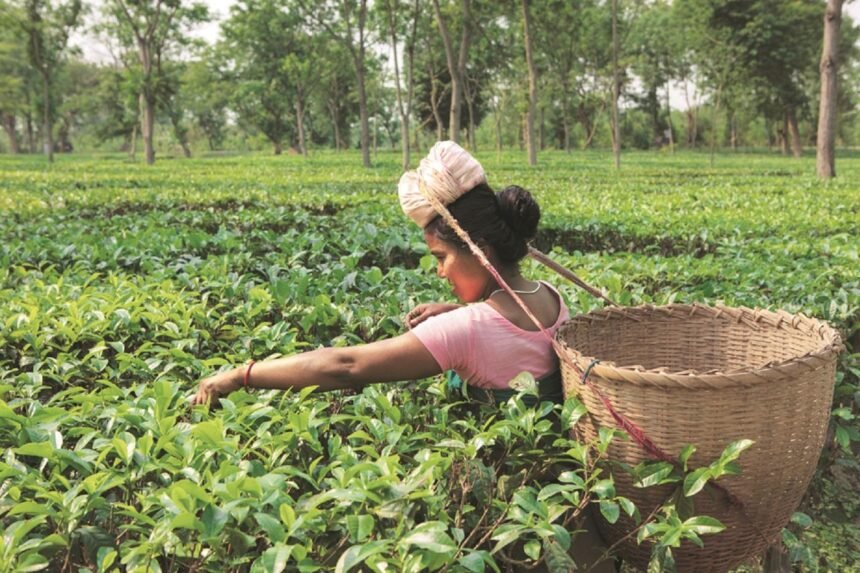
Assam tea auction prices reached record levels after premium tea varieties secured exceptionally high bids during recent trading sessions at the Guwahati Tea Auction Centre. Meanwhile, industry officials and traders stated that strong market demand, improved leaf quality, and growing international interest contributed significantly to the sharp rise in auction values. The development immediately attracted attention across India’s tea industry because Assam remains one of the world’s largest and most influential tea-producing regions. Additionally, plantation owners, exporters, and brokers closely monitored the auction outcomes as indicators of broader market trends within the premium tea segment.
The price surge emerged amid increasing consumer demand for specialty and high-quality tea products in domestic and international markets. Furthermore, industry analysts observed that premium Assam tea continues strengthening its reputation for strong flavor, rich aroma, and distinctive quality characteristics.
Sikkim Rainfall Disrupts Key Highway Connectivity
Mizoram Bamboo Industry Expansion Gets Major Approval
Premium Tea Varieties Secure Exceptional Bids
Tea traders confirmed that several premium tea batches achieved unusually high valuations during the latest auction cycle in Guwahati. Assam tea auction prices therefore became a major talking point within plantation and export sectors.
Meanwhile, brokers explained that buyers showed strong interest in high-grade orthodox and specialty tea varieties produced during the current harvesting season. Additionally, auction participants highlighted that favorable weather conditions and improved cultivation practices contributed to better leaf quality and processing standards.
Industry representatives stated that premium teas from selected estates attracted both domestic buyers and international exporters competing for limited high-quality lots. Furthermore, stronger consumer preference for specialty beverages reportedly increased competition during bidding sessions.
Earlier, premium Assam teas consistently maintained strong market visibility because of their distinctive taste profile and global recognition. Consequently, the latest record-setting bids reinforced optimism regarding continued growth within the luxury tea segment.
At the same time, traders emphasized that auction performance may fluctuate depending on seasonal production and export demand patterns.
Guwahati Tea Auction Centre Remains Industry Hub
The Guwahati Tea Auction Centre continues playing a central role in India’s tea trading ecosystem. Assam tea auction prices therefore hold wider importance for producers, exporters, and commercial buyers across the country.
Meanwhile, officials observed that the auction platform facilitates large-scale tea transactions involving estates from Assam and neighboring tea-growing regions. Additionally, market analysts noted that pricing trends in Guwahati frequently influence broader commercial sentiment within the Indian tea industry.
Several industry experts explained that auction systems provide transparent price discovery mechanisms while connecting growers with national and international buyers. Furthermore, premium tea categories increasingly attracted specialized buyers focusing on quality-oriented consumer markets.
Economic researchers also highlighted the tea sector’s importance for employment, exports, and regional economic stability in Assam. Consequently, auction outcomes often carry significant implications for plantation operations and rural livelihoods.
However, market observers warned that global trade conditions and climate-related production risks may continue influencing future pricing patterns.
Global Demand for Specialty Tea Continues Rising
Industry analysts linked the recent price surge to expanding international demand for premium and specialty tea products. Assam tea auction prices therefore reflected changing consumer preferences within global beverage markets.
Meanwhile, exporters reported growing interest from overseas buyers seeking high-quality orthodox teas with unique regional characteristics. Additionally, specialty tea consumption increased among consumers favoring artisanal beverages and premium agricultural products.
Trade experts observed that international tea markets increasingly reward quality differentiation, sustainable production, and origin-based branding. Furthermore, Assam tea’s global reputation strengthened because of consistent quality standards and established export networks.
Several beverage industry researchers noted that premium tea categories experienced stronger growth compared with mass-market products during recent years. Consequently, producers increasingly focused on quality improvement and value-added branding strategies.
At the same time, exporters emphasized the importance of maintaining international quality certifications and sustainable cultivation standards to remain competitive.
Tea Estates and Growers Welcome Market Momentum
Plantation owners and tea growers expressed optimism following the strong auction performance. Assam tea auction prices therefore generated positive sentiment across major tea-producing districts in the state.
Meanwhile, estate managers stated that higher premium valuations may support reinvestment in plantation maintenance, worker welfare, and modern processing infrastructure. Additionally, small tea growers hoped stronger market conditions would improve long-term financial sustainability within the sector.
Agricultural economists observed that stable premium pricing can strengthen industry confidence and encourage investment in quality-oriented production systems. Furthermore, improved profitability may support innovation involving specialty tea cultivation and advanced manufacturing techniques.
Several tea associations also highlighted the importance of balancing profitability with fair labor practices and sustainable agricultural management. Consequently, discussions surrounding industry modernization and worker welfare gained renewed attention.
However, growers acknowledged that rising operational expenses and climate uncertainty continue creating long-term challenges for the tea sector.
Climate and Production Challenges Remain Concerns
Despite the positive auction results, industry stakeholders continued expressing concern regarding environmental and production-related risks. Assam tea auction prices therefore emerged against a backdrop of ongoing climate and cultivation challenges.
Meanwhile, tea producers noted that irregular rainfall, rising temperatures, and pest-related issues increasingly affected plantation productivity and crop consistency. Additionally, weather instability occasionally disrupted harvesting cycles and leaf quality across several tea-growing regions.
Climate researchers observed that Assam’s tea industry remains highly sensitive to changing environmental conditions because tea cultivation depends heavily on stable rainfall and temperature patterns. Furthermore, sustainability experts encouraged stronger climate adaptation measures involving water management and soil conservation.
Several agricultural specialists emphasized the importance of scientific farming practices and resilient plantation strategies for maintaining long-term production stability. Consequently, climate resilience became an increasingly important discussion within the tea industry.
At the same time, plantation authorities continued investing in technological upgrades and quality-focused cultivation methods.
Assam Tea Strengthens Premium Market Position
The latest auction performance reinforced Assam’s growing position within premium global tea markets. Assam tea auction prices therefore highlighted the increasing commercial strength of specialty tea production from the region.
Meanwhile, branding experts stated that premium Assam teas benefit from strong geographical identity and international consumer recognition. Additionally, luxury beverage markets increasingly valued origin-specific products with authentic production heritage and distinctive flavor profiles.
Trade analysts observed that successful premium branding may create long-term export opportunities and higher value realization for producers. Furthermore, digital commerce and specialty retail expansion reportedly improved market visibility for high-quality Assam teas worldwide.
Several market strategists also emphasized the importance of preserving traditional production expertise while embracing modern marketing and sustainability practices. Consequently, Assam’s tea industry continued evolving toward higher-value and quality-focused commercial models.
At the same time, auction participants remained optimistic regarding future demand trends for premium tea categories.
Conclusion
Assam tea auction prices surged to record levels after premium tea varieties attracted exceptionally high bids during recent trading sessions at the Guwahati Tea Auction Centre. Meanwhile, industry experts linked the strong performance to rising global demand, improved quality standards, and expanding interest in specialty tea products. Plantation owners, exporters, and growers welcomed the market momentum while continuing to monitor climate and production challenges affecting the sector. Ultimately, observers believe Assam’s premium tea industry may further strengthen its global reputation through quality-driven growth and sustainable production strategies.
FAQs
Why did Assam tea auction prices rise?
Strong demand for premium tea varieties and improved quality standards boosted auction prices.
Where were the record tea auctions held?
The auctions took place at the Guwahati Tea Auction Centre in Assam.
What types of tea secured high bids?
Premium orthodox and specialty Assam tea varieties attracted exceptional bids.
Why is Assam tea globally popular?
Assam tea is known for its strong flavor, rich aroma, and high-quality production standards.
Could the price surge help tea growers?
Higher auction values may improve profitability and support plantation investment.
What challenges still affect the tea industry?
Climate change, irregular rainfall, and rising production costs remain major concerns.