





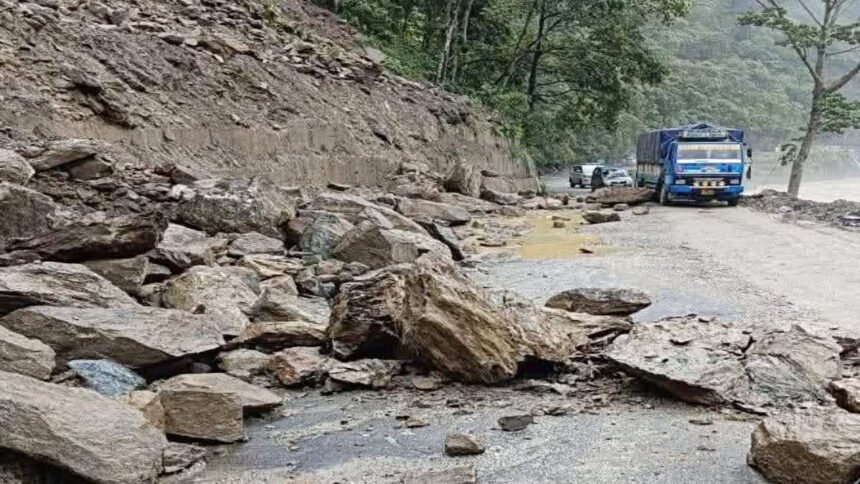
Sikkim highway landslip advisory alerts intensified after heavy rainfall triggered multiple landslips along National Highway 10, disrupting transportation and raising safety concerns across key travel corridors connecting the Himalayan state. Meanwhile, disaster management authorities and district officials stated that continuous precipitation weakened vulnerable hill slopes, causing debris accumulation and intermittent traffic blockages on several stretches of the strategically important highway. The situation immediately affected travelers, transport operators, and local residents because National Highway 10 remains Sikkim’s primary road link with neighboring West Bengal. Additionally, emergency response agencies reportedly accelerated clearance operations and route monitoring as unstable weather conditions continued across the region.
The disruption emerged amid persistent monsoon activity affecting several northeastern and eastern Himalayan states. Furthermore, weather experts warned that continued rainfall may increase the risk of additional landslides, road collapse, and transport interruptions in mountainous areas over the coming days.
Manipur Peace Dialogue Gains Fresh Administrative Focus
Assam Chief Secretary Pushes AI Integration for Better Governance
Heavy Rainfall Triggers Multiple Landslips
Authorities confirmed that intense rainfall caused fresh landslips and debris movement along several sections of National Highway 10. Sikkim highway landslip advisory warnings therefore became critical for travelers and transport services operating in the region.
Meanwhile, officials explained that saturated soil conditions and continuous hill runoff significantly increased slope instability along vulnerable mountain stretches. Additionally, road maintenance teams and disaster response personnel reportedly worked to remove fallen rocks, mud, and debris from affected routes.
Transportation authorities warned commuters to avoid unnecessary travel during periods of intense rainfall and poor visibility. Furthermore, emergency advisories urged drivers to remain cautious while crossing landslide-prone sections of the highway.
Earlier, several Himalayan regions experienced similar monsoon-triggered disruptions because of unstable terrain and recurring weather disturbances. Consequently, the latest landslips renewed public concern regarding road safety and infrastructure resilience in mountain states.
At the same time, local authorities continued monitoring weather forecasts and geological risk zones across affected districts.
National Highway 10 Holds Strategic Importance
The disruption highlighted the critical role of National Highway 10 in maintaining connectivity between Sikkim and the rest of India. Sikkim highway landslip advisory developments therefore carried major logistical and economic implications for the region.
Meanwhile, officials noted that the highway supports passenger movement, supply transportation, tourism activity, and emergency services throughout the state. Additionally, prolonged disruption along the route could affect essential commodity distribution and commercial operations in hill districts.
Infrastructure experts observed that mountain highways in Himalayan regions remain highly vulnerable to landslides during monsoon months because of steep terrain and intense rainfall patterns. Furthermore, climate-related weather variability increasingly complicates infrastructure maintenance and transportation planning in fragile ecological zones.
Several policy analysts emphasized the importance of long-term slope stabilization and resilient engineering solutions for strategic mountain roads. Consequently, discussions regarding infrastructure modernization gained renewed attention following the latest disruption.
At the same time, transport operators closely monitored road clearance updates before resuming regular movement schedules.
Authorities Intensify Emergency Response Operations
Disaster management agencies and road maintenance departments reportedly accelerated emergency operations after the landslides occurred. Sikkim highway landslip advisory measures therefore involved coordinated response efforts across multiple administrative agencies.
Meanwhile, officials stated that earthmoving equipment and emergency personnel were deployed to clear debris and restore partial traffic movement wherever possible. Additionally, local police units monitored vehicle flow and implemented temporary movement restrictions near dangerous stretches.
Authorities emphasized that public safety remains the highest priority during ongoing weather-related disruptions. Furthermore, emergency teams continued assessing slope conditions to identify areas vulnerable to further collapse or falling debris.
Several governance experts noted that rapid response coordination becomes essential in mountainous regions where transportation disruptions can isolate communities quickly. Consequently, district administrations strengthened communication networks and emergency preparedness systems.
At the same time, rescue and medical support teams remained on standby in case of further weather-related incidents.
Tourism and Local Travel Face Major Disruptions
The landslides also affected tourism movement during an active travel period in Sikkim. Sikkim highway landslip advisory warnings therefore created uncertainty for tourists planning visits to the Himalayan destination.
Meanwhile, travel operators reported delays, route diversions, and temporary suspension of transportation services along certain highway stretches. Additionally, hotel operators and tourism agencies closely monitored weather developments while advising travelers to follow official safety instructions.
Tourism experts observed that monsoon-related disruptions frequently affect hill tourism because mountain roads remain highly sensitive to weather instability. Furthermore, visitor safety concerns often influence travel patterns during prolonged rainfall periods.
Several tourism stakeholders emphasized the importance of timely communication and updated travel advisories for maintaining visitor confidence during emergencies. Consequently, authorities increased public information sharing regarding road conditions and weather forecasts.
However, local businesses expressed concern regarding possible economic impact if transport disruptions continue for an extended duration.
Weather Agencies Warn of Continued Rainfall
Meteorological departments indicated that rainfall activity may persist across Sikkim and neighboring Himalayan regions during the coming days. Sikkim highway landslip advisory conditions therefore may remain unstable because of ongoing monsoon influence.
Meanwhile, weather experts warned that additional precipitation could further weaken slopes and increase the likelihood of fresh landslides and flash flooding in vulnerable areas. Additionally, cloudbursts and localized heavy rainfall episodes remain possible across higher elevations and narrow valleys.
Climate researchers observed that Himalayan ecosystems remain particularly sensitive to extreme weather events because of fragile geology and rapid environmental change. Furthermore, rising rainfall intensity linked to climate variability increasingly affects road infrastructure and settlement safety across mountain regions.
Several environmental analysts stressed the importance of integrating climate resilience into long-term transportation and urban planning strategies. Consequently, disaster preparedness and geological monitoring systems gained greater policy significance.
At the same time, residents and travelers continued following official advisories regarding movement restrictions and weather alerts.
Residents Urged to Follow Safety Guidelines
Authorities repeatedly appealed to the public to remain cautious and cooperate with emergency instructions during the ongoing weather situation. Sikkim highway landslip advisory notifications therefore focused heavily on public awareness and preventive safety measures.
Meanwhile, officials advised residents and tourists to avoid traveling through unstable hill sections unless absolutely necessary. Additionally, emergency departments encouraged communities living near vulnerable slopes to stay alert for signs of soil movement or rockfall activity.
Disaster management experts explained that early caution and public cooperation significantly reduce accident risks during monsoon emergencies in mountainous terrain. Furthermore, authorities stressed the importance of avoiding riverbanks, landslide zones, and blocked highway sections during intense rainfall periods.
Several public safety specialists also highlighted the role of timely communication and community-level preparedness in minimizing disaster impact. Consequently, local administrations intensified awareness messaging across vulnerable districts.
At the same time, highway restoration work continued under challenging weather conditions across affected sections.
Conclusion
Sikkim highway landslip advisory warnings intensified after heavy rainfall triggered multiple landslips along National Highway 10, disrupting transportation and increasing public safety concerns across the region. Meanwhile, disaster response teams and road maintenance authorities accelerated clearance operations while monitoring unstable slopes and ongoing rainfall activity. Experts warned that continued precipitation may increase the risk of additional landslides and transportation disruptions in vulnerable Himalayan areas. Ultimately, authorities emphasized that public caution, emergency preparedness, and coordinated response measures remain essential during the evolving monsoon situation in Sikkim.
FAQs
Why was the Sikkim travel advisory issued?
Heavy rainfall triggered landslips and transport disruption along National Highway 10.
Why is National Highway 10 important?
The highway serves as Sikkim’s primary road connection with West Bengal and mainland India.
What caused the landslides?
Continuous rainfall weakened hill slopes and increased soil instability across vulnerable stretches.
Are authorities conducting clearance operations?
Yes, emergency teams and road maintenance personnel are removing debris and monitoring affected areas.
Could more landslides occur in Sikkim?
Weather agencies warned that continued rainfall may trigger additional slope failures and disruptions.
What precautions should travelers follow?
Authorities advised avoiding unnecessary travel and following official safety updates closely.