


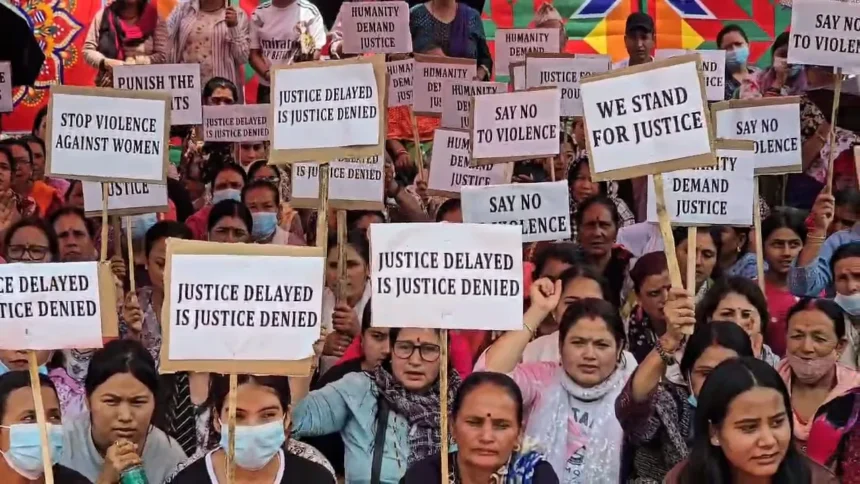
A significant civic mobilisation unfolded as Kangpokpi Women Peace Protest became a key social development following large-scale women-led sit-ins held in Manipur’s Kangpokpi district on 22 May. The peaceful demonstrations were organized to demand legal accountability and justice related to deceased community leaders. The protests highlighted ongoing community concerns and reflected continued civic engagement through non-violent public expression.
Sikkim Judge Elevated to Patna HC Chief Justice
Tripura Advances Cow Distribution Welfare Scheme
Background
Peaceful protests led by women have historically played an important role in social and political movements across Manipur and the wider Northeast region. Such demonstrations often focus on issues of justice, accountability, and community rights.
In this context, Kangpokpi Women Peace Protest reflects the continued use of non-violent collective action by local groups to raise demands for legal clarity and institutional response. Women-led sit-ins are frequently seen as a strong form of civic participation in the region.
Over time, such movements have contributed to broader discussions on governance, justice delivery, and community representation.
Current Update
On 22 May, large groups of women staged peaceful sit-in protests in Kangpokpi district. The demonstrations called for legal accountability and action regarding the circumstances surrounding deceased community leaders.
The Kangpokpi Women Peace Protest remained peaceful throughout the day, with participants emphasizing non-violence and structured civic expression. Organizers stated that the protest aimed to draw attention to unresolved concerns and seek institutional response.
Local administrative authorities monitored the situation to ensure public order and prevent any disruption.
Key Details
The protest has drawn wider attention to ongoing community concerns and renewed calls for transparent legal processes. Moreover, it highlights the growing role of women in leading peaceful civic engagement and public advocacy.
From a governance perspective, Kangpokpi Women Peace Protest emphasizes the importance of constructive dialogue between authorities and community groups to address concerns effectively. In addition, the demonstrations reinforce the need for timely institutional engagement and responsive communication.
Furthermore, peaceful civic participation continues to serve as an important channel for expressing collective concerns within democratic systems. Therefore, observers believe sustained dialogue may help build trust and support more effective outcomes.
As discussions continue, authorities and communities are likely to remain focused on maintaining stability and encouraging lawful engagement.
What Happens Next
Authorities are likely to continue engaging with community representatives to better understand the concerns raised during the demonstrations. At the same time, officials may explore additional dialogue mechanisms to encourage communication and address grievances.
Subsequently, institutions may review concerns through administrative and legal channels where appropriate. In addition, stakeholders may continue discussions to maintain public confidence and encourage peaceful engagement.
The future direction of the Kangpokpi Women Peace Protest will depend on continued communication, institutional responsiveness, and the progress of relevant legal processes.
Conclusion
The women-led sit-ins in Kangpokpi highlight continued civic participation around issues of accountability and justice. Moreover, the demonstrations reflect the role of peaceful public engagement in raising community concerns.
As discussions move forward, Kangpokpi Women Peace Protest continues to demonstrate how organized and peaceful civic action can contribute to democratic expression and public dialogue in Manipur. Ultimately, ongoing engagement between stakeholders will shape future developments and responses.
FAQs
1. What happened in Kangpokpi, Manipur?
Women-led groups organized peaceful sit-in demonstrations demanding legal accountability related to deceased community leaders.
2. Why did the protesters organize the demonstration?
Participants sought justice, transparency, and institutional action regarding their concerns.
3. Where did the protest take place?
The demonstrations took place in Kangpokpi district of Manipur.
4. Who participated in the protest?
Women from the local community and associated groups participated in the peaceful gatherings.
5. What message did the protesters emphasize?
They emphasized accountability, lawful processes, and continued public attention to their demands.
6. What may happen next?
Authorities may continue engagement and review concerns raised during the demonstrations.