



The Taj Pushpabanta Palace project is set to reach a major milestone on June 5 as Union Home Minister Amit Shah is scheduled to attend the Bhumi Pujan ceremony for the transformation of Agartala’s historic Pushpabanta Palace into a luxury heritage hotel. The ambitious redevelopment project aims to preserve the palace’s royal legacy while creating a world-class hospitality destination that could significantly boost tourism and economic growth in Tripura.
CM Launches ₹61 Crore Welfare Projects
Light House Buyers Protest Delays
Amit Shah to Attend Landmark Ceremony
Union Home Minister Amit Shah is scheduled to visit Tripura on June 5 to attend the Bhumi Pujan ceremony marking the next phase of the Pushpabanta Palace redevelopment project. The ceremony will formally launch the transformation of the historic palace into the Taj Pushpabanta Palace, a luxury heritage hotel.
Moreover, the event highlights the growing importance of heritage tourism projects in the Northeast. Through this initiative, authorities aim to preserve a historic landmark while creating a premium tourism destination.
Consequently, the ceremony has generated considerable interest among tourism stakeholders, heritage conservation experts, and local residents.
Historic Palace Enters a New Chapter
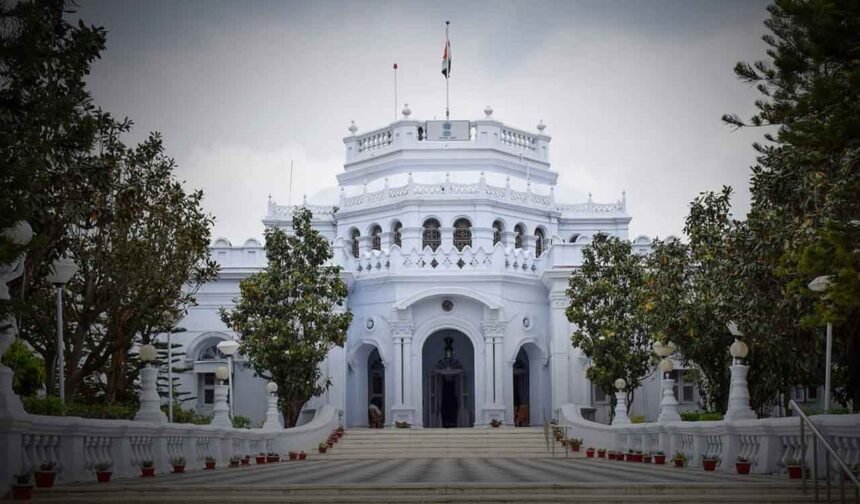
Pushpabanta Palace holds a special place in Tripura’s history. Maharaja Birendra Kishore Manikya built the palace in 1917, and it later served as the official residence of the Tripura royal family before functioning as the Raj Bhavan for several decades.
Furthermore, the palace remains one of Agartala’s most recognizable heritage landmarks. Its rich architectural legacy and historical significance make it an ideal candidate for heritage-based tourism development.
Therefore, the redevelopment project seeks to balance preservation with modernization.
Luxury Heritage Hotel to Boost Tourism
The upcoming hotel is expected to become one of the most prestigious hospitality destinations in Northeast India. According to project details, the property will combine royal architecture with modern luxury amenities and world-class hospitality services.
Additionally, the project will showcase Tripura’s cultural heritage to domestic and international travelers. Heritage hotels often attract tourists seeking unique experiences that blend history, culture, and luxury.
As a result, tourism officials expect the project to strengthen Tripura’s position on India’s tourism map.
Restoration Work Already Underway
Authorities have already initiated retrofitting and restoration work on the historic structure. Project planners are placing special emphasis on preserving the palace’s original character while integrating modern facilities required for a luxury hotel.
Moreover, restoration experts are working to protect the architectural features that define the palace’s historic identity. This approach ensures that future visitors can experience the property’s authentic heritage value.
Consequently, the project supports both conservation and development objectives.
Partnership Between Government and Hospitality Sector
The redevelopment project represents a collaboration between the Government of Tripura and the Taj hospitality brand, part of the Tata Group. Through this partnership, the project aims to bring international hospitality standards to one of Tripura’s most important heritage sites.
Furthermore, public-private partnerships often accelerate tourism infrastructure development by combining government support with industry expertise.
Therefore, the project stands as a notable example of collaborative development.
Royal Experience for Future Visitors
Upon completion, the heritage hotel is expected to feature around 100 luxury rooms, including exclusive royal suites inspired by the grandeur of the Manikya dynasty. Designers plan to incorporate royal aesthetics, traditional motifs, and cultural elements associated with Tripura’s history.
Additionally, guests will experience a blend of heritage architecture and contemporary luxury. Such experiences increasingly appeal to travelers looking for culturally rich destinations.
As a result, the hotel could attract premium tourism segments from across India and abroad.
Economic Benefits for the State
Tourism projects of this scale often generate significant economic benefits. The development is expected to create employment opportunities during both the construction and operational phases.
Moreover, increased tourist arrivals can support local businesses, transport services, handicraft sectors, and hospitality enterprises. These benefits often extend beyond the immediate project area.
Consequently, the initiative could contribute positively to regional economic growth.
Preserving Heritage Through Development
Heritage conservation remains a key component of the project. Rather than replacing the historic structure, developers are restoring and adapting it for modern use while maintaining its cultural significance.
Furthermore, adaptive reuse projects often provide sustainable solutions for preserving historical landmarks. By giving heritage buildings new functions, authorities can ensure their long-term maintenance and relevance.
Therefore, the project combines preservation with practical development goals.
Expected Timeline for Completion
Project sources indicate that the hotel may begin welcoming its first guests by October 2028. During this period, restoration, infrastructure upgrades, and hospitality development activities will continue in phases.
Additionally, officials remain optimistic that the project will emerge as a landmark destination in the Northeast hospitality sector.
As a result, stakeholders are closely monitoring progress as development moves forward.
Looking Ahead
The Bhumi Pujan ceremony on June 5 will formally signal the next stage of development for the Taj Pushpabanta Palace. With strong government support and significant tourism potential, the project is expected to play an important role in shaping Tripura’s future tourism landscape.
Moreover, the initiative demonstrates how heritage conservation and tourism development can work together to create sustainable economic opportunities.
Consequently, the project may become one of the most iconic heritage tourism destinations in Northeast India.
Conclusion
The Taj Pushpabanta Palace redevelopment marks a significant milestone in Tripura’s tourism and heritage conservation journey. With Union Home Minister Amit Shah scheduled to attend the Bhumi Pujan ceremony on June 5, the project is entering a crucial phase of development. By transforming a historic royal palace into a luxury heritage hotel, authorities aim to preserve cultural heritage, attract high-end tourism, and generate long-term economic benefits for the state.
FAQs
When will Amit Shah visit Tripura for the project?
Union Home Minister Amit Shah is scheduled to attend the Bhumi Pujan ceremony on June 5.
What is the Taj Pushpabanta Palace project?
The project aims to transform Agartala’s historic Pushpabanta Palace into a luxury heritage hotel.
Why is Pushpabanta Palace historically important?
The palace served as the residence of Tripura’s royal family and later functioned as the Raj Bhavan.
How many rooms will the hotel have?
The luxury heritage hotel is expected to offer approximately 100 rooms, including royal suites.
When is the hotel expected to open?
Project sources indicate that the property may welcome its first guests by October 2028.