




In a major development on a long-pending legislative issue, the High Powered Committee (HPC) tasked with framing rules for the Arunachal Pradesh Freedom of Religion Act (APFRA), 1978, has submitted its final report to the state government. The committee, headed by retired Justice Brojendra Prasad Katakey, finalized the draft rules after multiple rounds of consultations and stakeholder discussions.
The Act has remained largely inactive for nearly 50 years because the government never notified operational rules. The submission of the report marks a significant step toward implementing the law, which regulates religious conversions carried out through force, inducement, or fraudulent means.
Read More: Tai Tagak Files Rajya Sabha Nomination from Arunachal Pradesh
Key Facts
- Issue: Draft rules for the Arunachal Pradesh Freedom of Religion Act (APFRA), 1978
- Committee Chairman: Justice (Retd.) Brojendra Prasad Katakey
- Report Submitted: June 2026
- Location: Civil Secretariat, Itanagar
- Committee Meetings: Four rounds of deliberations
- Purpose: To frame rules for implementing the APFRA, 1978
- Main Focus: Procedures related to religious conversion, intimation, inquiry, and enforcement
Committee Submits Final Report
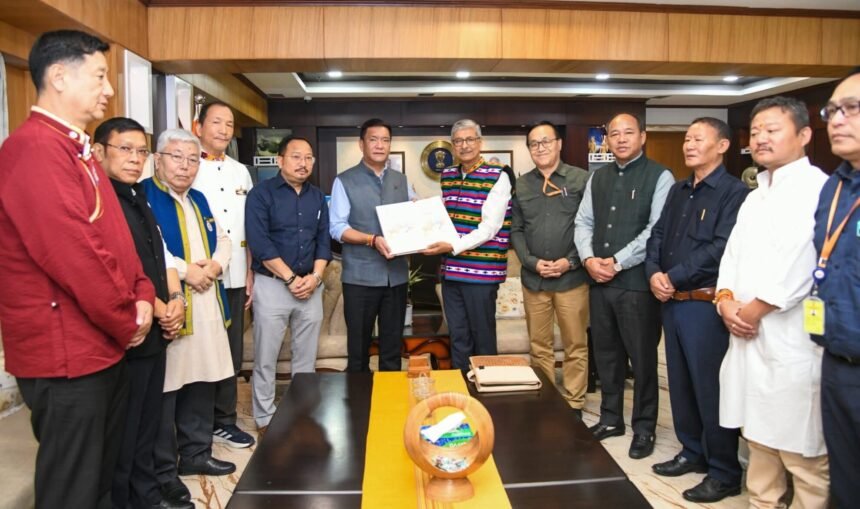
The High Powered Committee officially submitted its final report and recommendations to the Arunachal Pradesh Government on Monday. The committee completed the draft rules after holding its fourth and final meeting on June 4 at the Civil Secretariat in Itanagar.
During the final meeting, members reviewed feedback received from various stakeholders and adopted several amendments before approving the draft. The committee then forwarded its recommendations to the government for further consideration.
Why the Rules Are Important
The Arunachal Pradesh Freedom of Religion Act was enacted in 1978. The law aims to prevent religious conversions carried out through force, inducement, or fraudulent means.
However, the Act remained inactive for decades because the government never framed or notified the rules required for implementation. As a result, authorities could not establish procedures for reporting, verifying, or investigating conversion-related cases.
The committee was tasked with creating detailed operational guidelines covering prior intimation, inquiries, verification procedures, and penalties under the Act.
Stakeholder Consultations and Deliberations
Justice Katakey stated that the committee held four rounds of discussions before finalizing the draft. Members examined suggestions from different groups and made several revisions to ensure comprehensive procedures.
According to the official meeting minutes, the Arunachal Christian Forum (ACF) did not submit any formal proposal during the consultation process. The minutes also noted that ACF Chief Advisor Tarh Miri, who was a member of the committee, did not attend the final meeting.
The committee stated that it made repeated efforts to obtain views from all stakeholders before concluding the drafting process.
Ongoing Debate Over the Act
The APFRA has remained a subject of debate in Arunachal Pradesh for many years. Indigenous faith organizations and several community groups have supported the framing of rules, arguing that they are necessary to preserve traditional cultures and address concerns about demographic changes.
On the other hand, several Christian organizations have opposed the Act. They argue that certain provisions could affect religious freedom guaranteed under Article 25 of the Constitution.
Earlier this month, the Arunachal Christian Forum issued a 15-day ultimatum to the state government, urging it to stop the process of framing rules. The organization warned that implementing the Act could affect religious freedom, social harmony, and peaceful coexistence in the state.
Legal Background
The state government had previously informed the Gauhati High Court’s Itanagar Bench that it was taking steps to frame the rules after Public Interest Litigations sought implementation of the Act. The formation of the committee and submission of its report fulfill part of that commitment.
Question & Answer
Q: What happened in Arunachal Pradesh?
A: The High Powered Committee submitted draft rules for the APFRA, 1978, to the state government.
Q: Why is the development significant?
A: The Act has remained largely inactive for nearly 50 years due to the absence of operational rules.
Q: Who chaired the committee?
A: Retired Justice Brojendra Prasad Katakey chaired the committee.
Q: What does the APFRA aim to regulate?
A: The Act addresses religious conversions carried out through force, inducement, or fraudulent means.
Q: Why is the Act controversial?
A: Supporters view it as a measure to protect indigenous cultures, while critics argue it could affect religious freedom.
Importance of the Location
Arunachal Pradesh is a culturally diverse state in Northeast India, home to numerous indigenous tribes and religious communities. Therefore, debates surrounding religious conversion, cultural preservation, and constitutional rights carry significant social and political importance in the region.
Also Read: Guns N’ Roses to Perform in Guwahati on November 17