




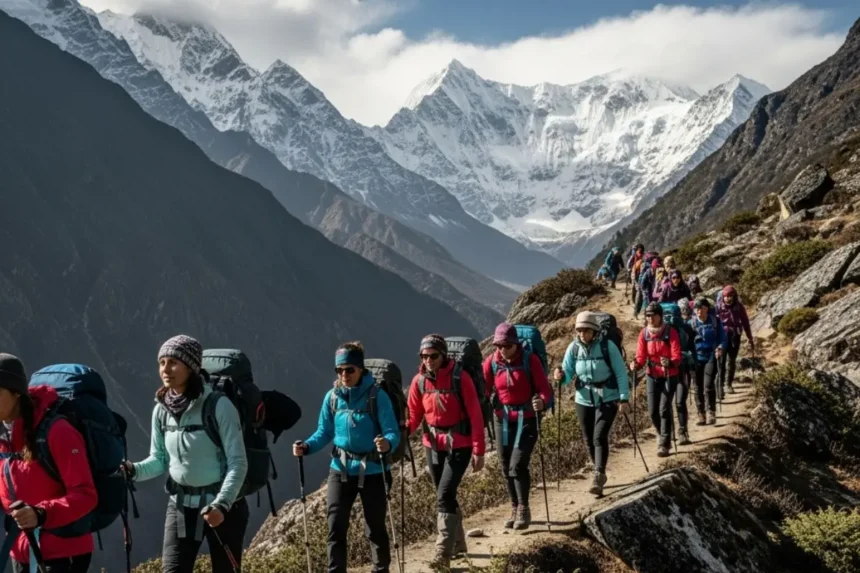
Arunachal Pradesh has introduced new mountaineering rules aimed at improving the safety of high-altitude trekkers and ensuring better regulation of adventure tourism activities. The updated guidelines focus on mandatory permits, trained guides, and enhanced emergency response systems. Moreover, officials stated that the rules are designed to reduce accidents and improve preparedness in remote mountain regions. The move reflects the state’s growing emphasis on safe and sustainable adventure tourism.
Tripura Enters Strategic Collaboration With Central Ministry
Sikkim Governor Flags Off the First Official Batch of Pilgrims for the Kailash Mansarovar Yatra
Strengthening Safety Protocols for High-Altitude Expeditions
Arunachal Pradesh introduces new mountaineering rules to ensure safety of high-altitude trekkers, focusing on stricter safety protocols for expeditions in sensitive terrains. Consequently, all trekking groups will now be required to follow standardized safety procedures.
The new rules mandate proper registration of trekking routes before any expedition begins. Moreover, organizers must submit detailed travel plans and participant lists. Therefore, authorities can monitor movements in real time.
Officials highlighted that Arunachal Pradesh’s rugged terrain poses significant risks to trekkers. Furthermore, unpredictable weather and remote locations increase the chances of emergencies. As a result, structured safety regulations have become essential.
Meanwhile, coordination between tourism and disaster management departments is being strengthened. Consequently, response systems are expected to become faster and more efficient.
Mandatory Guides and Permit-Based Trekking System
The Arunachal Pradesh introduces new mountaineering rules to ensure safety of high-altitude trekkers by making trained guides compulsory for all expeditions. Moreover, unregulated trekking activities will now face strict restrictions. Therefore, professional supervision is being prioritized.
All trekkers are required to obtain official permits before entering designated high-altitude zones. Consequently, unauthorized trekking activities will be reduced. Such measures help maintain better control over sensitive regions.
Furthermore, certified guides will be trained in first aid and survival techniques. As a result, emergency preparedness during expeditions is expected to improve.
Meanwhile, tourism operators will undergo licensing requirements. Similarly, compliance checks will be conducted regularly.
Emergency Response and Rescue Infrastructure Enhancement
Arunachal Pradesh introduces new mountaineering rules to ensure safety of high-altitude trekkers with a strong focus on emergency preparedness. Moreover, response mechanisms are being upgraded in remote trekking areas. Therefore, rescue operations can be executed more efficiently.
Designated emergency contact points will be established along popular trekking routes. Consequently, communication during crises will improve. Such infrastructure is critical in high-altitude environments.
Furthermore, coordination with local rescue teams and paramilitary forces is being enhanced. As a result, evacuation procedures are expected to become faster.
Meanwhile, weather monitoring systems are being integrated into tourism planning. Similarly, early warning alerts will be shared with trekking groups.
Promoting Safe and Sustainable Adventure Tourism
The new regulations aim to promote safe and sustainable adventure tourism in Arunachal Pradesh. Moreover, the state has become a popular destination for trekking and mountaineering enthusiasts. Therefore, balancing tourism growth with safety is essential.
Officials stated that regulated tourism will help protect fragile mountain ecosystems. Consequently, environmental impact from uncontrolled trekking will be reduced. Such measures support long-term sustainability.
Furthermore, the rules are expected to boost confidence among domestic and international tourists. As a result, structured tourism growth may increase.
Meanwhile, awareness campaigns on responsible trekking practices are being planned. Similarly, collaboration with adventure tourism agencies is being strengthened.
Conclusion
Arunachal Pradesh introduces new mountaineering rules to ensure safety of high-altitude trekkers, marking a significant step toward improving adventure tourism safety standards. Moreover, the regulations strengthen permits, guide requirements, and emergency response systems.
The initiative is expected to reduce risks and promote responsible tourism in high-altitude regions. Therefore, it supports both safety and sustainable tourism development.
As Arunachal Pradesh introduces new mountaineering rules to ensure safety of high-altitude trekkers, it underscores the state’s commitment to secure and well-regulated adventure tourism.
FAQs
1. What new rules have been introduced?
New mountaineering and trekking safety regulations.
2. Why were these rules introduced?
To ensure safety of high-altitude trekkers.
3. Are permits required now?
Yes, all trekkers must obtain official permits.
4. Is a guide mandatory?
Yes, trained guides are compulsory for expeditions.
5. What is the main goal?
To promote safe and sustainable adventure tourism.