





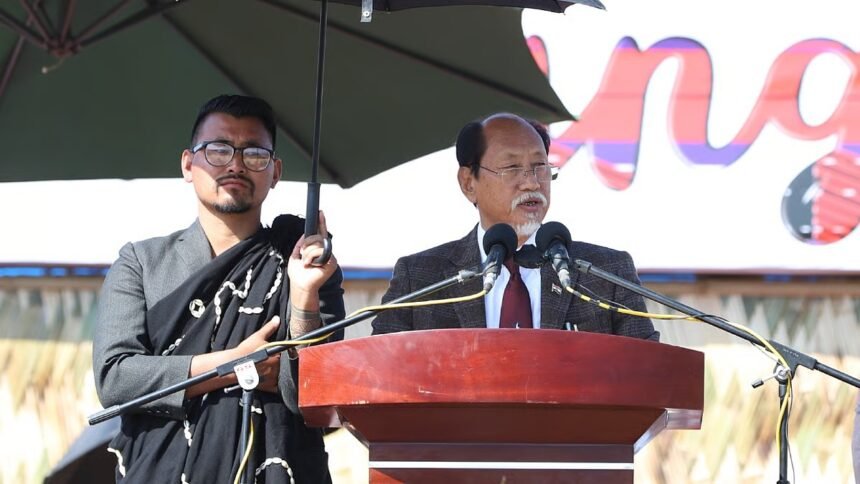
Nagaland Chief Minister Neiphiu Rio reaffirmed the state’s commitment to protecting its indigenous identity, customary laws, and traditional governance during an event in Kohima on Friday. He stressed that Article 371A of the Constitution and the Bengal Eastern Frontier Regulation (BEFR), 1873, remain essential for preserving Naga culture and heritage.
Moreover, Rio called for stronger implementation of the Inner Line Permit (ILP) system through collective cooperation. He said effective enforcement of these legal safeguards will help protect Nagaland’s unique social and cultural identity for future generations.
Read More: Assam Launches Farmer ID Portal for Tea Growers
Key Facts
- Event: Inauguration of Kohima Village Multipurpose Building
- Location: Kohima, Nagaland
- Date: Friday
- Chief Minister: Neiphiu Rio
- Key Focus: Indigenous identity and ILP enforcement
- Legal Safeguards: Article 371A and Bengal Eastern Frontier Regulation (BEFR), 1873
- Objective: Protect Naga customs, traditions, and village governance
Rio Highlights Importance of Constitutional Safeguards
Chief Minister Neiphiu Rio reaffirmed Nagaland’s commitment to protecting its indigenous identity and customary laws during the inauguration of the Kohima Village Multipurpose Building.
He said Article 371A and the Bengal Eastern Frontier Regulation (BEFR), 1873, have helped preserve Naga traditions, customs, and village governance for decades. Therefore, the state must continue to uphold these constitutional and legal protections.
Stronger ILP Enforcement Needed
Rio emphasized that the Inner Line Permit (ILP) system remains a vital mechanism for regulating the entry of non-residents into Nagaland. However, he noted that effective implementation requires the active cooperation of government agencies, local communities, and other stakeholders.
Furthermore, he urged everyone to work together to strengthen ILP enforcement and ensure that the system functions efficiently across the state.
Protecting Naga Heritage
The Chief Minister said preserving Nagaland’s cultural and social fabric remains a top priority. Moreover, he stressed that respecting customary laws and traditional institutions is essential for maintaining the state’s unique identity.
He added that continued implementation of these safeguards will help protect the rights, customs, and heritage of the Naga people while supporting community-based governance.
Commitment to Cultural Preservation
The state government continues to promote policies that safeguard indigenous traditions and constitutional rights. As a result, Nagaland aims to balance development with the preservation of its rich cultural heritage.
Overall, Rio reaffirmed that protecting Naga identity requires consistent enforcement of existing legal provisions and active participation from every section of society.
Frequently Asked Questions
What did Chief Minister Neiphiu Rio announce?
He reaffirmed Nagaland’s commitment to protecting indigenous identity, customary laws, and strengthening the enforcement of the Inner Line Permit (ILP) system.
Where did he make the announcement?
He spoke during the inauguration of the Kohima Village Multipurpose Building in Kohima on Friday.
Why is Article 371A important?
Article 371A protects Naga customary laws, traditions, cultural practices, and village governance under the Indian Constitution.
What is the purpose of the Inner Line Permit (ILP)?
The ILP regulates the entry of non-residents into Nagaland to help preserve the state’s indigenous culture and social structure.
Why did Rio call for stronger ILP enforcement?
He said stronger implementation, supported by collective cooperation, is necessary to safeguard Nagaland’s identity and cultural heritage.
Location Context
Nagaland, a key state in Northeast India, is home to diverse indigenous tribes with distinct traditions and customary governance systems. Therefore, constitutional protections and the Inner Line Permit system play an important role in preserving the state’s unique cultural identity.