





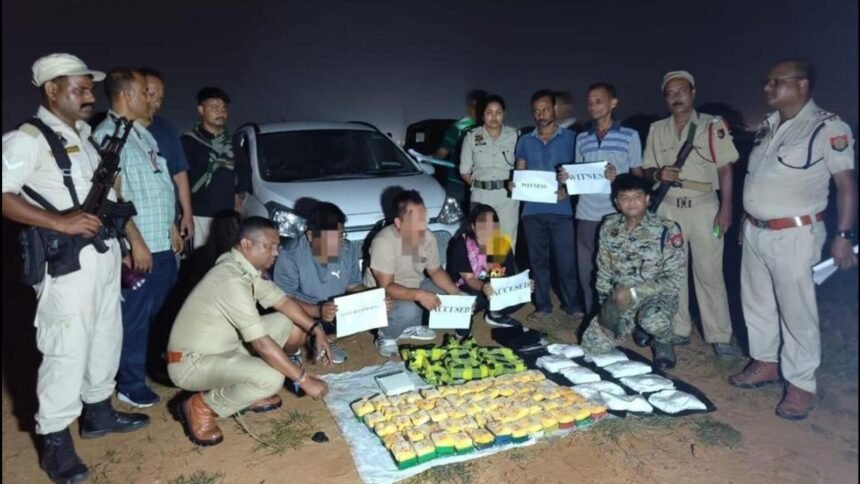
Law enforcement agencies in Mizoram have reportedly intensified their counter-narcotics operations, resulting in the seizure of substantial quantities of illegal narcotic substances allegedly transported through cross-border trafficking networks. The operations form part of ongoing efforts to combat organized drug trafficking, strengthen border security, and disrupt transnational criminal networks operating in the region. Moreover, the latest seizures highlight the strategic importance of Mizoram in broader anti-narcotics enforcement efforts across Northeast India.
AGP Secures Key Positions in Assam Cabinet Expansion
Meghalaya Honeymoon Murder Verdict Upholds Bail
Major Drug Seizures Reported During Counter-Narcotics Operations
Police and security agencies in Mizoram reportedly conducted a series of coordinated operations targeting suspected narcotics trafficking networks. Consequently, authorities intercepted and seized significant quantities of illegal drugs believed to have been transported through international trafficking routes.
According to law enforcement officials, intelligence-based operations and enhanced surveillance mechanisms have played a crucial role in identifying and disrupting trafficking activities. Moreover, authorities emphasized that narcotics smuggling remains a major challenge due to the region’s geographical and cross-border dynamics. Therefore, the latest seizures have attracted considerable public and security attention.
Investigators have reportedly initiated further inquiries to determine the origin, destination, and organizational links associated with the seized consignments. As a result, additional enforcement actions may follow.
Meanwhile, security agencies continue to strengthen monitoring and intelligence coordination.
Transnational Drug Trafficking Remains a Serious Concern
Security experts have repeatedly highlighted the growing threat posed by transnational narcotics trafficking networks operating across international borders. Moreover, organized criminal groups frequently exploit complex geographic and logistical routes to transport illegal substances. Therefore, counter-narcotics operations remain a major security priority.
Analysts noted that combating organized drug trafficking requires extensive intelligence gathering, international cooperation, and coordinated enforcement strategies. Consequently, law enforcement agencies continue to prioritize inter-agency coordination and intelligence sharing. Such efforts contribute to strengthening public safety and national security.
Furthermore, disrupting trafficking networks can significantly weaken organized criminal enterprises and reduce the availability of illicit substances. As a result, governments continue to invest in strengthening anti-narcotics infrastructure and operational capabilities.
Meanwhile, authorities remain focused on identifying broader criminal networks linked to drug trafficking.
Enhanced Border Surveillance Supports Enforcement
The latest seizures also reflect broader efforts to improve border surveillance and strengthen enforcement mechanisms across sensitive regions. Moreover, security agencies have expanded monitoring systems and operational coordination to address evolving trafficking patterns. Therefore, border security remains a central component of anti-narcotics strategy.
Security observers noted that effective counter-narcotics operations often depend on intelligence-led policing, technological surveillance, and regional cooperation. Consequently, authorities have increasingly adopted integrated approaches to combat organized crime. Such strategies support long-term security objectives and institutional effectiveness.
Furthermore, enhanced surveillance capabilities can improve the detection and interception of illegal shipments. As a result, law enforcement agencies continue to prioritize modernization and operational preparedness.
Meanwhile, investigations into the latest seizures remain ongoing.
Public Safety and Drug Control Remain Strategic Priorities
The intensified counter-narcotics operations underscore the broader objective of protecting public health, strengthening law enforcement, and combating organized crime. Moreover, authorities continue to emphasize the importance of sustained enforcement actions and preventive measures. Therefore, anti-drug initiatives remain an important policy priority.
Experts emphasized that addressing narcotics trafficking requires a combination of enforcement, public awareness, rehabilitation, and international cooperation. Consequently, governments continue to pursue comprehensive strategies aimed at reducing drug-related crime and improving community safety. Such approaches contribute to long-term social and economic stability.
Furthermore, the success of anti-narcotics operations can influence broader security and governance outcomes. As a result, authorities remain committed to strengthening enforcement and institutional capacity.
Conclusion
The latest counter-narcotics operations in Mizoram demonstrate the continuing efforts of law enforcement agencies to combat organized drug trafficking and strengthen regional security. Moreover, the seizure of major illegal consignments highlights the importance of intelligence-led operations, border surveillance, and inter-agency cooperation.
As investigations continue and enforcement efforts intensify, authorities are expected to remain focused on dismantling trafficking networks and protecting public safety. Therefore, developments related to anti-narcotics operations will continue to attract significant public and institutional attention.
The latest operations underscore the importance of coordinated enforcement, regional cooperation, and sustained vigilance in combating transnational drug trafficking.
FAQs
1. What action did Mizoram authorities reportedly take?
They conducted counter-narcotics operations that resulted in the seizure of major illegal drug consignments.
2. Why are these operations significant?
They help combat organized crime, strengthen public safety, and disrupt trafficking networks.
3. What challenges do authorities face in combating drug trafficking?
Authorities must address cross-border routes, organized criminal networks, and logistical complexities.
4. How are such operations conducted?
They typically involve intelligence gathering, surveillance, coordinated enforcement, and inter-agency cooperation.
5. What broader objectives do anti-narcotics operations support?
They contribute to public health protection, national security, and law enforcement effectiveness.