




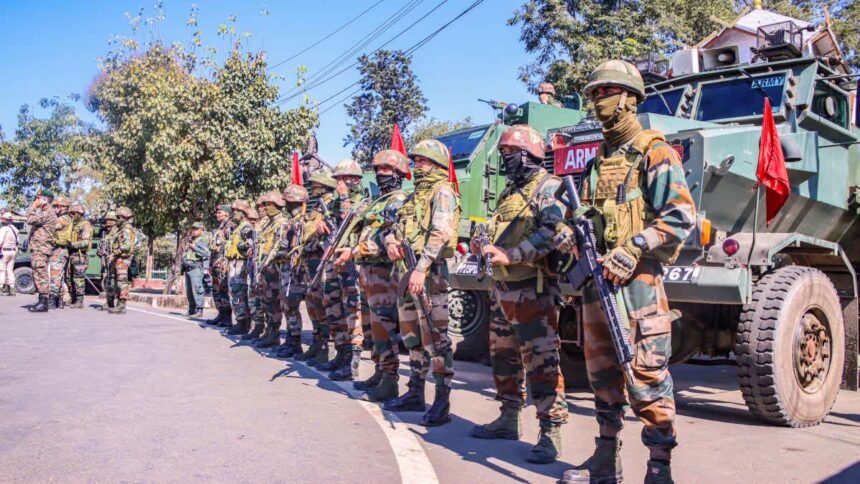
Official security data has revealed a substantial decline in insurgency-related violence across Northeast India, with active violent incidents reportedly falling by nearly 80% over recent years. The significant reduction has been attributed to a combination of enhanced security coordination, peace agreements, border management initiatives, and sustained political engagement. Moreover, the latest figures have renewed discussions regarding the region’s evolving security landscape and long-term peace-building efforts.
Manipur Security Forces Intensify Anti-Extortion Operations, Detain Two Alleged Militant Operatives
Fake Encounter Allegation Sparks Fresh Debate
Official Data Indicates Sharp Decline in Violent Incidents
Government statistics released during recent security assessments indicate that insurgency-related violent incidents across the Northeast have declined by approximately 80% compared to earlier periods of heightened unrest. Consequently, the findings have been viewed as a major indicator of improving security conditions in the region.
According to security officials, the reduction in violence reflects years of coordinated efforts involving security agencies, state governments, and central authorities. Moreover, targeted operations, peace negotiations, and improved intelligence-sharing mechanisms have contributed to the changing security environment. Therefore, the latest data has attracted significant political and strategic attention.
Analysts noted that several northeastern states have experienced sustained improvements in law and order indicators over the past decade. As a result, discussions regarding future security policies and governance reforms have intensified.
Meanwhile, authorities continue to monitor emerging security challenges and assess regional developments.
Peace Agreements and Security Coordination Credited
Security experts have attributed the decline in insurgency-related incidents to a combination of peace accords, enhanced inter-agency cooperation, and sustained counter-insurgency operations. Moreover, improved coordination between state and central institutions has strengthened operational effectiveness. Therefore, policymakers continue to emphasize integrated security approaches.
Political observers noted that multiple peace initiatives and dialogue processes have played an important role in reducing armed conflict across the region. Consequently, governments have increasingly focused on balancing security measures with political engagement and development strategies. Such efforts have contributed to improving regional stability.
Furthermore, investments in infrastructure, governance, and social development have complemented security initiatives. As a result, broader peace-building efforts have gained momentum.
Meanwhile, authorities remain committed to maintaining stability and preventing the resurgence of violence.
Northeast Security Landscape Undergoing Transformation
The reported decline in violent incidents reflects broader changes in the security and political environment of Northeast India. Moreover, policymakers have increasingly emphasized development, connectivity, and institutional strengthening as key components of long-term peace strategies. Therefore, the region’s transformation continues to attract national attention.
Experts observed that sustained reductions in violence can create favorable conditions for economic growth, investment, and social development. Consequently, improving security conditions often have far-reaching implications beyond law enforcement and counter-insurgency operations. Such developments can contribute to long-term regional prosperity.
Furthermore, enhanced border management and regional cooperation have supported efforts to strengthen security frameworks. As a result, policymakers remain optimistic about maintaining the positive trajectory.
Meanwhile, security agencies continue to conduct periodic assessments and strategic reviews.
Long-Term Stability Remains a Strategic Priority
Despite the reported decline in insurgency-related incidents, authorities have emphasized the importance of maintaining vigilance and strengthening institutional capacities. Moreover, long-term peace and stability require sustained efforts involving governance reforms, economic development, and community engagement. Therefore, security preparedness remains an important priority.
Analysts emphasized that peace-building processes are often gradual and require continuous political and administrative commitment. Consequently, governments continue to invest in both security infrastructure and development initiatives. Such approaches aim to strengthen public confidence and institutional resilience.
Furthermore, ongoing dialogue and cooperation among stakeholders are expected to remain essential in preserving regional stability. As a result, security and development policies will likely continue to evolve.
Meanwhile, public and political attention remains focused on the long-term trajectory of Northeast India’s transformation.
Conclusion
The reported 80% decline in insurgency-related violence across Northeast India marks a significant development in the region’s security landscape. Moreover, the reduction reflects the combined impact of security operations, peace initiatives, political engagement, and developmental interventions.
As governments continue to pursue long-term peace and stability objectives, maintaining the gains achieved in recent years will remain a central priority. Therefore, future developments in regional security, governance, and economic growth will continue to attract considerable public and political attention.
The latest data underscores the importance of sustained cooperation, institutional coordination, and strategic planning in shaping the future of Northeast India.
FAQs
1. What do the latest official figures indicate?
Official data reportedly shows an approximately 80% decline in insurgency-related violent incidents across Northeast India.
2. What factors contributed to the decline?
Security operations, peace agreements, improved coordination, and development initiatives have been cited as major factors.
3. Why is the decline significant?
Reduced violence can support political stability, economic growth, and improved governance.
4. Does the decline mean security challenges have ended?
Authorities continue to emphasize the importance of maintaining vigilance and security preparedness.
5. How does improved security affect the region?
It can encourage investment, strengthen governance, and support long-term development.