





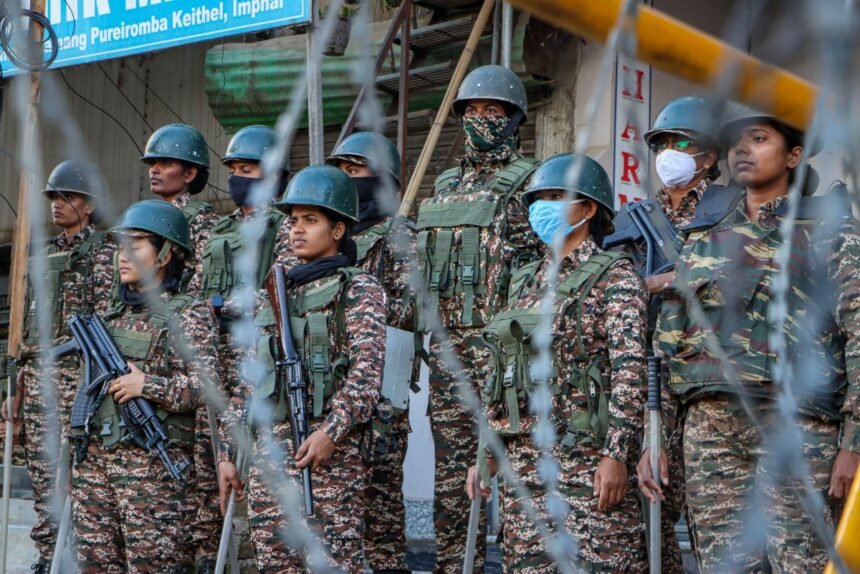
Security agencies operating in Manipur have reportedly intensified coordination efforts to combat cross-border militancy and disrupt illegal arms trafficking routes operating across international boundaries. The enhanced cooperation involves strengthened intelligence-sharing mechanisms, improved operational coordination, and increased monitoring of suspected logistical networks linked to the movement of illicit weapons. Moreover, the latest measures reflect the continued emphasis on maintaining regional security and preventing the spread of illegal arms in India’s northeastern region.
Border Surveillance Strengthened with Accelerated Drone Monitoring
Tawang Isolation Ends After Road Clearance
Security Agencies Intensify Counter-Militancy Coordination
Authorities have reportedly expanded inter-agency cooperation to strengthen counter-militancy operations and improve surveillance of cross-border networks operating near Manipur’s international boundaries. Consequently, security agencies have increased information-sharing and coordinated operational planning to address emerging security challenges.
According to security analysts, cross-border coordination remains a critical component of counter-militancy operations in strategically sensitive regions. Moreover, collaborative security frameworks help agencies respond more effectively to evolving threats and improve operational efficiency. Therefore, the latest developments have attracted significant strategic attention.
Officials familiar with regional security operations emphasized that enhanced coordination mechanisms can strengthen institutional preparedness and improve response capabilities. As a result, operational cooperation among agencies continues to receive priority.
Meanwhile, policymakers and security institutions remain focused on maintaining stability and strengthening border security infrastructure. Consequently, counter-militancy efforts continue to evolve.
Illegal Arms Logistics Networks Under Increased Scrutiny
The intensified operations reportedly focus on identifying and disrupting illegal arms supply chains and logistical networks operating across international routes. Moreover, authorities have prioritized monitoring activities that could facilitate the movement of illicit weapons and related materials. Therefore, enhanced surveillance and intelligence coordination remain central to current security strategies.
Security experts noted that disrupting illegal arms networks requires sustained intelligence gathering, coordinated enforcement efforts, and effective border management practices. Consequently, security agencies regularly review operational strategies and surveillance mechanisms to strengthen enforcement capabilities. Such efforts contribute significantly to regional stability and public safety.
Furthermore, authorities continue to assess logistical vulnerabilities and improve monitoring systems in sensitive areas. As a result, strategic planning and operational preparedness remain important priorities.
Meanwhile, security agencies continue to evaluate emerging challenges and strengthen institutional coordination. Similarly, regional monitoring efforts remain ongoing.
Border Security and Regional Stability Remain Key Priorities
The northeastern region continues to hold strategic importance within India’s broader national security framework. Moreover, maintaining effective border management and preventing illicit cross-border activities remain central objectives for policymakers and security institutions. Therefore, enhanced counter-militancy operations continue to receive significant attention.
Political and security observers noted that coordinated approaches to border security can improve operational outcomes and strengthen regional governance frameworks. Consequently, investments in surveillance, intelligence-sharing, and operational coordination remain important elements of national security planning. Such measures contribute to maintaining peace and institutional stability.
Furthermore, authorities continue to emphasize the importance of balancing security preparedness with long-term regional development objectives. As a result, integrated approaches to security management remain a strategic priority.
Meanwhile, policymakers and security experts continue to monitor developments closely. Similarly, security assessments remain ongoing.
Inter-Agency Cooperation Continues to Expand
The latest counter-militancy initiatives underscore the growing importance of inter-agency collaboration in addressing complex security challenges. Moreover, maintaining effective communication and coordination among multiple institutions remains essential for ensuring operational effectiveness. Therefore, collaborative security frameworks are expected to remain a key focus area.
Experts emphasized that modern security challenges often require coordinated responses involving intelligence agencies, law enforcement institutions, and border management authorities. Consequently, strengthening institutional cooperation remains an important aspect of strategic planning. Such efforts help improve preparedness and enhance operational resilience.
Furthermore, ongoing coordination initiatives are expected to support broader national security objectives. As a result, security agencies continue to prioritize information-sharing and joint operational planning.
Meanwhile, authorities remain committed to strengthening security mechanisms and maintaining regional stability. Similarly, strategic preparedness efforts continue across multiple sectors.
Conclusion
The reported increase in coordination among security agencies in Manipur highlights the continuing importance of counter-militancy operations, border security, and institutional cooperation in addressing cross-border challenges. Moreover, the intensified focus on disrupting illegal arms logistics networks reflects broader efforts to strengthen regional stability and national security.
As security agencies continue to adapt to evolving threats, enhanced intelligence-sharing, operational coordination, and border management strategies are expected to remain central components of security planning. Therefore, developments related to counter-militancy operations and border security will continue to attract strategic attention.
The ongoing initiatives reaffirm the importance of coordinated action, institutional preparedness, and sustained vigilance in safeguarding regional and national security interests.
FAQs
1. What action have security agencies reportedly taken in Manipur?
They have reportedly increased coordination efforts to strengthen counter-militancy operations and disrupt illegal arms networks.
2. What is the focus of the intensified operations?
The operations focus on monitoring and disrupting illegal arms logistics and cross-border trafficking networks.
3. Why is inter-agency coordination important?
It improves intelligence-sharing, operational efficiency, and overall security preparedness.
4. Why is border security a priority in Northeast India?
The region’s geographical location and strategic importance require sustained monitoring and security management.
5. How do counter-militancy operations contribute to regional stability?
They help strengthen public safety, improve security preparedness, and support long-term peace and stability.