





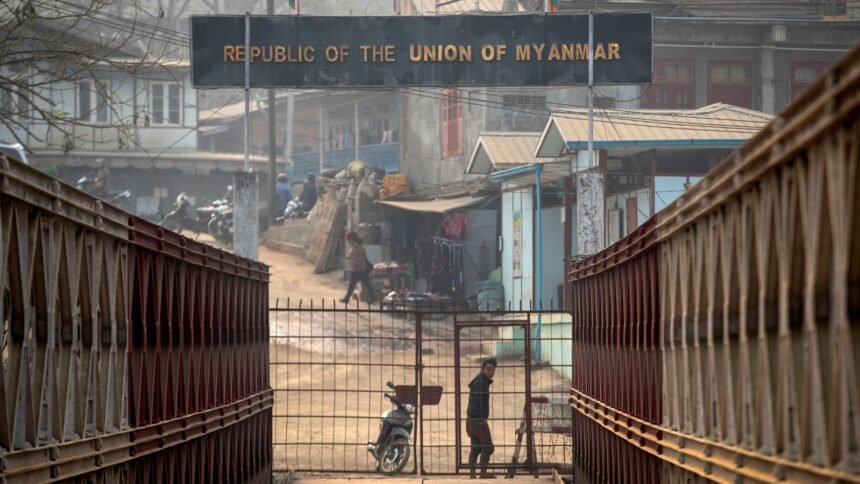
Security authorities have reportedly accelerated the deployment of drone-assisted surveillance systems along the Mizoram-Myanmar border as part of broader efforts to enhance border monitoring, intelligence gathering, and operational preparedness. The move reflects growing emphasis on integrating advanced technologies into border management frameworks to improve situational awareness and strengthen regional security coordination. Moreover, the adoption of drone-based surveillance mechanisms highlights the evolving nature of security operations in India’s northeastern frontier regions.
Nagaland Health Minister Seeks Region-Specific Budget Allocations
Border Outpost Relocation Follow River Erosion
Drone-Assisted Surveillance Protocols Receive Priority
Regional security commanders have reportedly fast-tracked the implementation of drone-assisted monitoring protocols along strategic stretches of the Mizoram-Myanmar border. Consequently, surveillance operations are expected to benefit from enhanced aerial observation and real-time situational assessment capabilities.
According to security analysts, drone technology has increasingly become an important component of modern border management and security operations. Moreover, unmanned aerial systems provide greater operational flexibility and enable authorities to monitor difficult terrain more effectively. Therefore, the latest developments have attracted significant strategic attention.
Officials familiar with border management practices noted that enhanced aerial surveillance can improve coordination among security agencies and support rapid decision-making processes. As a result, technological integration remains a major priority for operational planning.
Meanwhile, security agencies continue to assess emerging challenges and adapt their monitoring strategies accordingly. Consequently, border surveillance capabilities remain under continuous review.
Advanced Technology Expected to Strengthen Border Monitoring
The expanded use of drone-assisted surveillance is reportedly aimed at improving border monitoring efficiency and strengthening intelligence collection capabilities. Moreover, the deployment of advanced technologies can support continuous observation across geographically challenging regions. Therefore, security agencies continue to prioritize technological modernization.
Security experts observed that aerial surveillance platforms provide valuable operational support by enhancing visibility and enabling timely assessments of evolving situations. Consequently, many border management agencies worldwide have increasingly adopted similar technologies. Such systems contribute to strengthening overall preparedness and operational coordination.
Furthermore, authorities continue to evaluate additional technological solutions that can complement existing surveillance frameworks. As a result, modernization efforts remain an important component of long-term security planning.
Meanwhile, inter-agency coordination and operational assessments continue to play a significant role in implementing new technologies. Similarly, strategic reviews remain ongoing.
Mizoram Border Region Holds Strategic Importance
The Mizoram-Myanmar border remains an important area within India’s broader security and border management framework. Moreover, the region’s geographical complexity and strategic significance require sustained monitoring and administrative coordination. Therefore, strengthening surveillance capabilities remains a priority for policymakers and security institutions.
Political and security observers noted that effective border management requires a combination of technological innovation, institutional coordination, and operational preparedness. Consequently, investments in surveillance infrastructure continue to receive attention. Such measures contribute to maintaining stability and enhancing border security management.
Furthermore, authorities continue to emphasize the importance of adapting security frameworks to evolving regional conditions. As a result, modernization initiatives are expected to continue.
Meanwhile, policymakers and security institutions remain engaged in long-term planning and preparedness efforts. Similarly, strategic assessments continue across multiple sectors.
Technology Integration Continues to Shape Security Operations
The acceleration of drone-assisted surveillance protocols highlights the increasing role of advanced technology in contemporary security operations. Moreover, integrating modern surveillance systems into border management strategies remains an important objective for security planners. Therefore, technological innovation is expected to continue influencing future operational frameworks.
Experts emphasized that emerging technologies can improve operational efficiency, enhance situational awareness, and strengthen coordination mechanisms. Consequently, periodic reviews and technological upgrades remain essential components of modern security management. Such initiatives support institutional effectiveness and strategic preparedness.
Furthermore, continued collaboration among security agencies is expected to improve operational outcomes and strengthen border management systems. As a result, technological modernization remains a key focus area.
Meanwhile, authorities continue to monitor developments and evaluate additional operational requirements. Similarly, security preparedness efforts remain ongoing.
Conclusion
The decision to accelerate drone-assisted surveillance protocols along the Mizoram-Myanmar border underscores the growing importance of technological innovation, operational preparedness, and coordinated border management. Moreover, the initiative reflects broader efforts to strengthen surveillance capabilities and maintain regional stability.
As security agencies continue to modernize operational frameworks and adapt to evolving challenges, advanced surveillance technologies are expected to play an increasingly important role. Therefore, developments related to border monitoring and technological integration will continue to attract strategic attention.
The latest measures reaffirm the importance of preparedness, institutional coordination, and technological advancement in safeguarding national security interests.
FAQs
1. What new measure has reportedly been introduced along the Mizoram-Myanmar border?
Authorities have reportedly accelerated drone-assisted surveillance and monitoring operations.
2. Why are drones being used for border surveillance?
Drones can improve monitoring capabilities, enhance situational awareness, and support operational coordination.
3. Why is the Mizoram-Myanmar border strategically important?
The border region holds significant importance due to its geographical location and security considerations.
4. How can technology improve border management?
Advanced technologies can strengthen surveillance, improve coordination, and enhance operational preparedness.
5. Why are surveillance systems regularly upgraded?
Periodic upgrades help security agencies adapt to evolving challenges and maintain effective monitoring capabilities.