





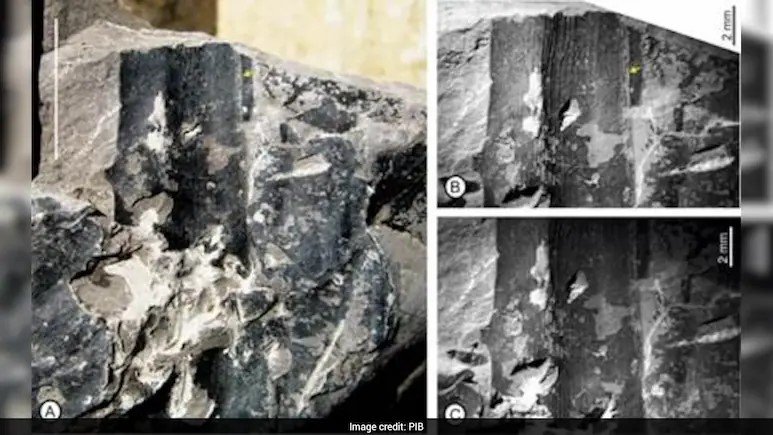
Scientists have uncovered a 24-million-year-old fossil of the Pandanus (Kewra) plant in the Makum area of Assam’s Tinsukia district. Assam Chief Minister Himanta Biswa Sarma announced the discovery on Tuesday and called it a major step toward understanding the state’s ancient floral ecosystem.
The fossil shows that the Pandanus plant reached the Indian subcontinent around 24 million years ago, although its evolutionary lineage dates back nearly 85 million years. As a result, the discovery strengthens Assam’s importance in geological and palaeontological research while offering fresh insights into the region’s prehistoric biodiversity.
Read More: Three KYKL Militants Arrested in Manipur
Key Facts
- Discovery: 24-million-year-old Pandanus (Kewra) fossil
- Location: Makum, Tinsukia district, Assam
- Announced by: Chief Minister Himanta Biswa Sarma
- Plant: Pandanus (Kewra)
- Evolutionary lineage: Around 85 million years
- Scientific importance: Reveals details about Assam’s ancient floral ecosystem
Ancient Fossil Offers Fresh Scientific Evidence
Scientists discovered the ancient Pandanus (Kewra) fossil in the Makum area of Tinsukia district, giving researchers valuable information about Assam’s prehistoric environment.
Soon after the discovery, Chief Minister Himanta Biswa Sarma shared the news on X. He described the fossil as a significant milestone in the study of Assam’s biodiversity and natural history.
According to the Chief Minister, the fossil confirms that the Pandanus plant reached the Indian subcontinent about 24 million years ago. Meanwhile, researchers estimate that the plant’s evolutionary lineage began nearly 85 million years ago, making it one of the oldest surviving plant groups.
Today, the Kewra plant grows across many parts of Assam. Therefore, the fossil helps scientists understand how the species adapted and became an important part of the region’s natural landscape over millions of years.
Why the Discovery Matters
The fossil gives researchers fresh evidence about the vegetation and climate that existed in Assam millions of years ago. In addition, it helps scientists trace the migration and evolution of ancient plant species across the Indian subcontinent.
Furthermore, such discoveries allow researchers to reconstruct prehistoric ecosystems and understand how plants survived major environmental changes. These findings also strengthen knowledge about India’s natural history.
Chief Minister Sarma said Assam still hides many geological treasures beneath its surface. Therefore, scientists expect future explorations to uncover more fossils that could reveal additional chapters of the state’s ancient past.
A Major Boost for Assam’s Geological Heritage
The Makum region has earned recognition for its fossil-rich geological formations. Now, this latest discovery adds another important milestone to Assam’s scientific record.
Moreover, experts believe continued research in the region could uncover more fossils and improve our understanding of prehistoric biodiversity in Northeast India.
Question & Answer
Q1. What happened in Assam?
Answer: Scientists discovered a 24-million-year-old fossil of the Pandanus (Kewra) plant in Makum, Tinsukia district.
Q2. Why is the discovery important?
Answer: It helps researchers understand Assam’s ancient floral ecosystem and the evolution of the Pandanus plant.
Q3. Who announced the discovery?
Answer: Assam Chief Minister Himanta Biswa Sarma announced the discovery on X.
Q4. How old is the Pandanus plant’s evolutionary lineage?
Answer: Scientists estimate that its evolutionary lineage dates back around 85 million years.
Q5. Why does this fossil matter for researchers?
Answer: It provides evidence about ancient vegetation, climate, and plant evolution in the Indian subcontinent.
Location Context
Assam, a key state in Northeast India, has rich biodiversity and fossil-bearing geological formations. Because of this, researchers consider the region an important destination for studying India’s prehistoric ecosystems. Moreover, discoveries like the ancient Kewra fossil strengthen Assam’s reputation as a valuable centre for palaeontological research.
Also Read: Tripura CM Visits DGP Office After Reported Incident