







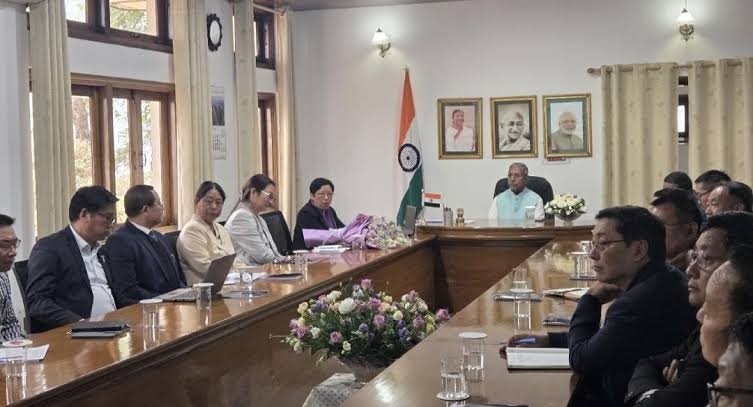
The Traditional Systems Advocacy debate has gained attention after Nagaland Governor Nand Kishore Yadav addressed health and welfare reforms through the lens of indigenous frameworks. The approach highlights the potential role of traditional knowledge, community practices, and local institutions in shaping development policies.
The Traditional Systems Advocacy discussion connects health and welfare planning with Nagaland’s diverse indigenous traditions. Moreover, incorporating locally relevant perspectives can help policymakers understand community needs and improve the reach of public programmes.
Health and welfare reforms often require coordination between government institutions and communities. Therefore, approaches that recognize local practices could complement formal public-service systems when authorities assess their suitability and effectiveness.
The Governor’s remarks also draw attention to the relationship between cultural knowledge and modern governance. Additionally, responsible integration of traditional perspectives can support community participation while maintaining appropriate standards for public health and welfare.
Traditional Systems Advocacy Highlights Indigenous Knowledge
The Traditional Systems Advocacy approach emphasizes the importance of indigenous frameworks in discussions surrounding health and welfare. According to the available information, Governor Nand Kishore Yadav addressed reforms while highlighting these community-based perspectives.
Moreover, indigenous knowledge can provide insight into local traditions, social structures, and community practices. Consequently, policymakers may consider such knowledge when designing programmes intended for specific communities.
However, traditional approaches and modern public services can involve different standards and methods. Therefore, any integration into formal health or welfare programmes requires appropriate evaluation, evidence, and regulatory oversight.
The available information does not identify specific reforms, traditional practices, or government programmes discussed by the Governor.
Traditional Systems Advocacy Connects Culture With Welfare
The Traditional Systems Advocacy discussion also highlights the relationship between cultural identity and welfare delivery. Community participation can help authorities understand how social and cultural factors influence access to public services.
Additionally, locally informed approaches may help government programmes communicate more effectively with communities. This can improve awareness and encourage participation in welfare initiatives.
At the same time, health programmes must maintain appropriate professional and safety standards. Meanwhile, traditional knowledge can complement public-health efforts where experts establish that particular practices are safe and effective.
The available information does not indicate that the government has formally adopted a specific indigenous health system. Therefore, the Governor’s remarks should be understood as an advocacy and policy discussion rather than confirmation of a new statewide framework.
Traditional Systems Advocacy Could Influence Future Policy
The Traditional Systems Advocacy approach could contribute to future discussions about culturally responsive governance in Nagaland. Policymakers may examine how indigenous perspectives can inform welfare planning while maintaining established standards.
Moreover, community institutions can play an important role in communicating government initiatives and identifying local priorities. Consequently, stronger engagement could help authorities design programmes that better reflect regional circumstances.
Any policy integration would require consultation with communities, healthcare professionals, administrators, and other relevant stakeholders. Similarly, evidence-based evaluation would remain important when considering traditional practices within formal health systems.
Further policy announcements could clarify whether the Governor’s remarks will lead to specific programmes or institutional changes. Therefore, the discussion remains an evolving part of Nagaland’s broader health and welfare policy debate.
Conclusion
The Traditional Systems Advocacy debate has gained attention after Nagaland Governor Nand Kishore Yadav addressed health and welfare reforms using indigenous frameworks.
Furthermore, incorporating local perspectives could strengthen community engagement when authorities design public programmes. However, any role for traditional practices in formal health systems should follow appropriate evidence, safety standards, and professional oversight.
Overall, the Traditional Systems Advocacy discussion highlights the potential value of indigenous knowledge in culturally responsive governance while emphasizing the need for responsible policy integration.
FAQs
1. What is the latest Traditional Systems Advocacy development?
The Traditional Systems Advocacy update concerns Governor Nand Kishore Yadav’s discussion of health and welfare reforms through indigenous frameworks.
2. Who addressed the issue?
Nagaland Governor Nand Kishore Yadav addressed the role of indigenous frameworks in health and welfare discussions.
3. What are indigenous frameworks?
They can include locally developed knowledge, community practices, cultural institutions, and traditional approaches relevant to specific communities.
4. Does this mean Nagaland has adopted a new traditional health system?
The available information does not confirm the adoption of a new statewide health system.
5. Why is community participation important?
Community participation can help policymakers understand local needs and design public programmes that are more culturally relevant and accessible.

