





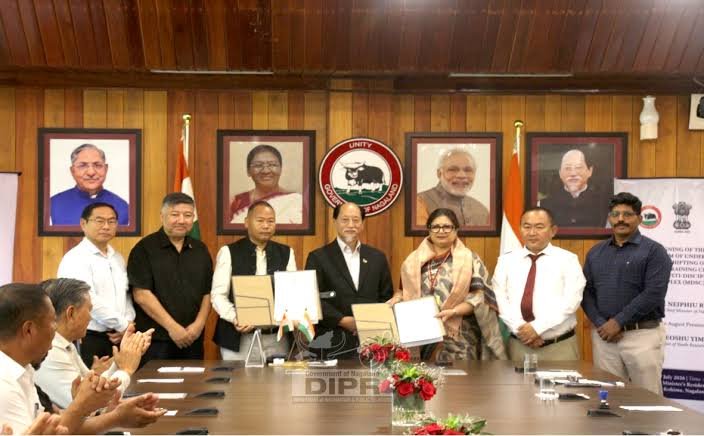
The Infrastructure Upgrades initiative in Nagaland has advanced after the state signed a memorandum of understanding to relocate a major Sports Authority of India training centre to Dimapur. The move aims to strengthen sports infrastructure and improve access to structured training facilities for athletes.
The Infrastructure Upgrades plan could enhance Dimapur’s position as an important sports and training hub in the state. Moreover, relocating a major training facility can create opportunities for athletes to access better infrastructure, coaching, and organized development programmes.
Sports infrastructure plays an important role in identifying and developing emerging talent. Therefore, a dedicated training centre can support athletes who seek professional pathways across different sporting disciplines.
The MoU also represents a step toward greater cooperation between the state government and sports authorities. Additionally, the relocation could support wider efforts to expand sports participation and athlete development in Nagaland.
Infrastructure Upgrades Advance With SAI Centre Relocation
The Infrastructure Upgrades effort gained momentum after Nagaland signed an MoU concerning the relocation of a major Sports Authority of India training centre to Dimapur.
Moreover, the relocation can bring specialized training opportunities closer to athletes based in and around the region. Consequently, improved access to facilities could encourage greater participation in organized sports.
The Sports Authority of India operates training and development programmes aimed at supporting athletes across the country. Furthermore, the presence of a major centre can strengthen the local sports ecosystem by connecting athletes with professional training structures.
The available information does not specify the centre’s current location, the disciplines covered, the relocation timeline, or the estimated investment involved in the move.
Infrastructure Upgrades Could Strengthen Athlete Development
The Infrastructure Upgrades initiative could provide athletes with improved opportunities for training and development in Dimapur. A major sports centre can offer structured programmes and facilities that complement existing state-level sports initiatives.
Additionally, centralized training facilities can help athletes access specialized coaching and competitive preparation. This support can become particularly valuable for young athletes seeking to progress toward higher levels of competition.
The relocation may also create opportunities for local sports organizations and educational institutions to engage with the centre. Meanwhile, stronger coordination among government bodies, coaches, and sports administrators can improve the effectiveness of athlete-development programmes.
The available information does not confirm when the relocated facility will begin operations in Dimapur. Therefore, the MoU marks an important administrative step rather than the completion of the relocation.
Infrastructure Upgrades Highlight Dimapur’s Sporting Potential
The Infrastructure Upgrades project could contribute to Dimapur’s development as a regional sports hub. The city’s connectivity and existing infrastructure can provide a practical base for a major training facility.
Moreover, the presence of a national-level sports centre can encourage young people to explore organized athletics and competitive sports. Consequently, the initiative could have benefits beyond professional athletes.
A successful relocation will depend on suitable facilities, funding, operational planning, and coordination between the concerned authorities. Similarly, maintaining high-quality training standards will remain important once the centre becomes operational.
The MoU signals institutional support for strengthening sports infrastructure in Nagaland. Therefore, subsequent implementation steps will determine the project’s long-term impact.
Conclusion
The Infrastructure Upgrades initiative has moved forward after Nagaland signed an MoU to relocate a major Sports Authority of India training centre to Dimapur.
Furthermore, the project could strengthen athlete development, expand access to structured training, and enhance Dimapur’s role in Nagaland’s sports ecosystem. The eventual benefits will depend on timely relocation and effective operation of the facility.
Overall, the Infrastructure Upgrades initiative highlights Nagaland’s efforts to expand sports infrastructure and create stronger development opportunities for athletes.
FAQs
1. What is the latest Infrastructure Upgrades development?
The Infrastructure Upgrades update concerns Nagaland’s signing of an MoU to relocate a major SAI training centre to Dimapur.
2. What does SAI stand for?
SAI stands for the Sports Authority of India, the national organization responsible for supporting sports development and athlete training.
3. Why is the centre being relocated to Dimapur?
The available information does not provide the specific reasons for the relocation.
4. Has the relocation been completed?
No. The MoU represents an administrative step toward relocation, while the completion timeline remains unspecified.
5. How could the centre benefit Nagaland athletes?
The centre could provide access to structured training, coaching, facilities, and development opportunities for athletes.