


Meghalaya Deputy Chief Minister Sniawbhalang Dhar has urged the Voice of the People Party (VPP) to choose dialogue instead of proceeding with its planned Secretariat march. The appeal comes as political tensions rise over the issues behind the proposed protest.
Dhar’s intervention highlights the government’s preference for negotiations to address the concerns raised by the opposition party. Meanwhile, the scheduled march has kept pressure on the administration to respond to the VPP’s demands.
Inter-State Boundary Vigil: Border State CMs Schedule Reviews
Government Seeks Dialogue With VPP
Deputy CM Dhar’s appeal comes as the VPP prepares for a march toward the state Secretariat. The government has urged the party to use discussions and established channels to raise its concerns.
Moreover, dialogue could provide an opportunity for both sides to clarify their positions without disrupting government operations. The approach could also help prevent tensions from escalating around the proposed demonstration.
The VPP, however, has continued to push its political demands through public mobilisation. Therefore, the government’s response to those demands could determine whether the planned protest proceeds as scheduled.
Secretariat March Creates Political Pressure
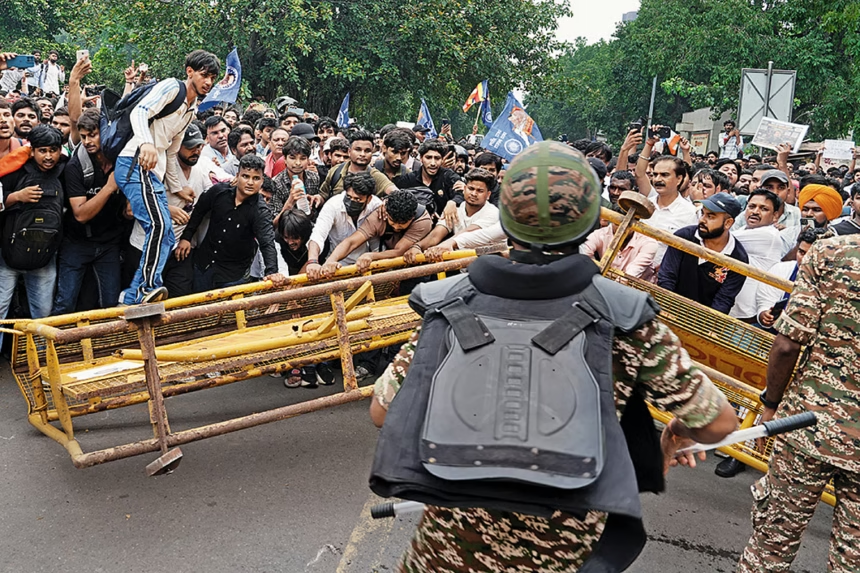
The proposed Secretariat march has added another layer to Meghalaya’s political debate. Public demonstrations often allow opposition parties to draw attention to issues they consider important.
Additionally, a march toward the administrative headquarters can attract significant public and political attention. Consequently, authorities must balance the right to peaceful protest with the need to maintain public order and uninterrupted government services.
Dhar’s call for dialogue suggests that the government wants to address the dispute through political engagement. Nevertheless, the VPP’s response will remain important in determining the next stage of the confrontation.
Dialogue Could Ease Meghalaya Political Tensions
The appeal for dialogue provides an opportunity for the government and VPP to address their differences through direct engagement. Such discussions could help both sides identify areas of disagreement and possible solutions.
Furthermore, negotiations can allow political parties to present detailed demands and receive formal responses from the administration. This process can also reduce uncertainty surrounding future protests.
The effectiveness of dialogue will depend on whether both sides participate constructively. Therefore, continued communication could play an important role in preventing the dispute from developing into a prolonged political confrontation.
Conclusion
Deputy Chief Minister Sniawbhalang Dhar has urged the VPP to choose dialogue over its scheduled Secretariat march, highlighting the Meghalaya government’s preference for negotiations.
The proposed protest remains a significant political development as the opposition party continues to press its demands. However, meaningful discussions between the government and VPP could provide a path toward resolving their differences while maintaining public order.
FAQs
1. What did Deputy CM Dhar ask the VPP to do?
Dhar urged the VPP to pursue dialogue instead of proceeding with its planned Secretariat march.
2. What is the VPP planning?
The Voice of the People Party has scheduled a march toward the Meghalaya Secretariat over its political demands.
3. Why is dialogue important?
Dialogue can allow both sides to address disagreements through negotiations while reducing the possibility of tensions escalating.
4. Could the Secretariat march still take place?
That depends on the VPP’s response to the government’s appeal and any subsequent discussions.
5. Who is Sniawbhalang Dhar?
Sniawbhalang Dhar serves as Meghalaya’s Deputy Chief Minister and has called for negotiations to address the current political disagreement.