

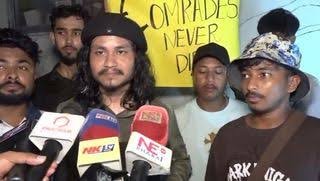
Pranab Doley has become the focus of a fresh artistic protest at Dibrugarh University, where artist Marshall Baruah used painting to raise a call for his release and the protection of Kaziranga. The artwork carried the message “Free Pranab Doley, Save Kaziranga”, linking the activist’s detention with wider concerns over conservation and land rights.
The protest comes amid continued debate over Doley’s detention under the National Security Act (NSA). The indigenous rights activist has been opposing a proposed luxury hotel project near Kaziranga National Park and Tiger Reserve, while authorities have cited public order and security concerns for the preventive detention.
Pranab Doley becomes the subject of protest art
At Dibrugarh University, Baruah turned a painting into a public expression of solidarity. Rather than using a conventional protest banner, the artist used visual art to draw attention to Doley’s case and the environmental concerns surrounding Kaziranga.
The message connects two issues that have featured prominently in the ongoing dispute: Doley’s detention and questions over development around the protected area. The painting also reflects Baruah’s wider use of public art during environmental and social protests in Assam.
Baruah is known for creating artwork during protests over tree felling and environmental issues. In 2024, he was arrested during demonstrations against proposed tree cutting in Guwahati after creating graffiti linked to the campaign.
Why Pranab Doley is in detention
Doley, convenor of the Greater Kaziranga Land and Human Rights Protection Committee, was arrested in July in connection with a case linked to protests against a proposed luxury hotel project near Kaziranga.
A sessions court granted him bail on July 29. However, the Assam government invoked the NSA against him the following day, allowing his detention to continue. The government said the move was based on concerns related to public order and state security.
The case has attracted criticism from civil society groups and rights organisations. More than 60 organisations later called for the withdrawal of the NSA detention order and Doley’s release. They also sought greater transparency over land allotments and proposed tourism projects around Kaziranga.
Dispute over development near Kaziranga
Doley and other activists have opposed the proposed luxury tourism project at Inglay Pathar, near the Kaziranga National Park and Tiger Reserve. Supporters of the campaign have raised concerns about land rights, community livelihoods and the possible environmental impact of development in the area.
The proposed project has therefore become part of a broader debate over how tourism should expand around protected landscapes. While development can support the regional economy, activists have argued that affected communities must have a meaningful role in decisions involving their land.
Pranab Doley protest gains wider support
The campaign for Doley’s release has continued beyond the university campus. On August 22, opposition parties, civil society organisations and land rights groups held a protest in Guwahati demanding his release and withdrawal of the NSA detention.
Earlier, rights groups and international organisations also expressed concern over his continued detention. The calls have added pressure to a debate that now involves questions of indigenous rights, environmental protection and the limits of preventive detention.
The developments have also kept attention on Kaziranga, a UNESCO World Heritage Site and one of Assam’s most important protected areas. The park is internationally known for its one-horned rhinoceros population, making conservation concerns central to discussions about large-scale development nearby.
Art keeps the Kaziranga debate visible
Baruah’s Dibrugarh University painting has added a different dimension to the continuing campaign around Pranab Doley. By combining a demand for his release with a call to protect Kaziranga, the artwork places individual rights and environmental concerns within the same public conversation.
For supporters, the painting provides a peaceful way to keep the issue visible. For authorities, however, Doley’s detention remains connected to public order concerns arising from the cases against him.
As the legal and political debate continues, the artwork ensures that the questions surrounding Doley, community rights and Kaziranga remain part of public discussion. The latest protest also shows how artists and civil society groups are using creative expression to engage with contentious issues in Assam.