







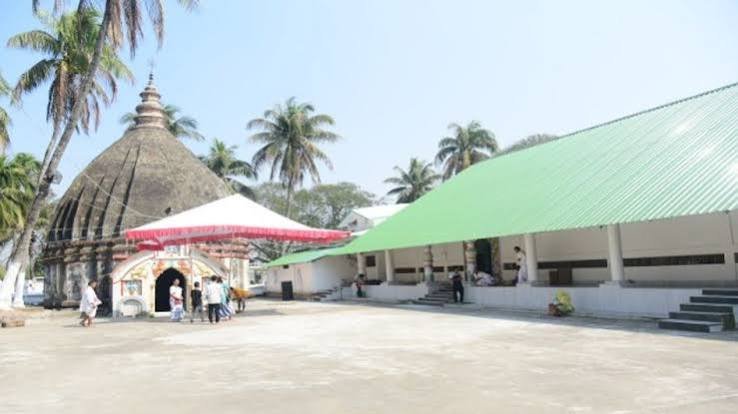
Chamaria Satra in Assam, one of the state’s oldest centres of Neo-Vaishnavite faith, is facing a serious conservation challenge as its historic main monastery building reportedly sinks and allows rainwater to enter.
Devotees and local residents have urged the Archaeology Department and other authorities to intervene, assess the structure and take steps to prevent further deterioration. The demand comes amid concerns that continued neglect could put the heritage building at risk.
Chamaria Satra’s historic legacy
Chamaria Satra, also known as Sri Sri Bar Vishnu Than, was established in 1588 at Chamaria in Kamrup district. The Assam government describes it as one of the oldest satras in the state, highlighting its importance as a religious and cultural site.
The present main monastery building dates to 1771, according to a report on the current condition of the structure. It was built during the reign of Ahom king Swargadeo Lakshmi Singha. The institution has since remained an important centre for religious observances and traditions linked to Assam’s Neo-Vaishnavite heritage.
The site continues to draw devotees for major religious programmes. In February this year, its four-day Tirobhav Tithi Mahotsav for Borbishnu Ata attracted devotees from several parts of Assam, underlining its continuing cultural role.
Chamaria Satra shows signs of deterioration
According to the Satra management, the main monastery has started sinking into the ground. Rainwater is also reportedly entering the building through the roof, while parts of the northern side have deteriorated.
The management has said that no major repair work has been carried out on the main monastery since 1940. If these conditions continue, the structure could face further damage, particularly during periods of heavy rain.
However, the reported problems need a professional structural assessment before the extent of the danger can be established. Conservation experts can determine whether the building requires stabilisation, roof repairs, drainage work or other measures.
Devotees seek Archaeology Department intervention
Devotees and residents are now seeking direct intervention from the Archaeology Department. They want an expert inspection and a scientifically planned conservation programme rather than piecemeal repairs.
The Satra management has also alleged that the Archaeology Department had advised its committee several years ago not to undertake independent repair work on the historic structure. This claim has not, in the available report, been accompanied by a fresh public response from the department.
Therefore, the immediate concern is to establish the building’s structural condition and identify the appropriate conservation method. Any intervention will need to protect the historic character of the monastery while addressing safety and water-related damage.
Chamaria Satra and Assam’s wider heritage
The condition of the historic site has significance beyond the building itself. Satras have played a major role in preserving Assam’s religious practices, performing arts, literature and community traditions.
The Assam government’s official tourism information records the site’s establishment in 1588 and identifies it as a notable heritage destination in Kamrup. The place has also featured in recent cultural and religious events, showing that it remains an active institution rather than a monument of the past.
Moreover, official heritage records and historical research underline the wider importance of the Chamaria area. Protecting the main monastery would therefore help preserve both a place of worship and a physical link to Assam’s long religious history.
Chamaria Satra needs conservation now
For Chamaria Satra, the priority now is a timely and expert assessment of the historic building. A clear conservation plan could help determine the work needed to stabilise the structure, stop water ingress and prevent avoidable damage.
Devotees are seeking action before the reported deterioration becomes more severe. At the same time, any restoration should follow accepted heritage principles and respect the building’s historical character.
Overall, Chamaria Satra remains an important part of Assam’s cultural landscape. A coordinated response from the authorities, conservation specialists and Satra management could help protect the historic structure for devotees and future generations.
The next step will be to determine the building’s actual structural condition and the conservation measures required. Until such an assessment is completed, the reported warning signs underline the need for authorities to treat the matter with care and urgency.