





Mizo woman Meriam L Hrangchal has been allowed to challenge the constitutional validity of amendments to Mizoram’s marriage, divorce and inheritance law before the Gauhati High Court.
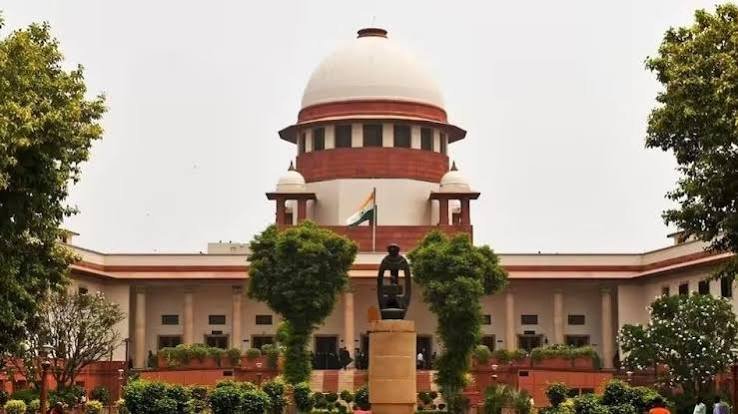
The Supreme Court declined to examine the plea directly but gave Hrangchal liberty to approach the high court. A three-judge bench headed by Chief Justice Surya Kant said the jurisdictional High Court was the appropriate forum for the challenge.
The Supreme Court’s direction
The Supreme Court passed the direction on August 24 while hearing Hrangchal’s petition. The bench also included Justices Joymalya Bagchi and V Mohana.
The petitioner had approached the apex court under Article 32 of the Constitution. However, the judges said there was no need for her to travel to Delhi when a high court with jurisdiction over Mizoram was available.
The court also took note of concerns about the atmosphere at the Aizawl Bench. It allowed the petitioner to approach the Principal Bench of the Gauhati High Court, subject to the Chief Justice’s approval, according to reports on the proceedings.
What the Mizo woman is challenging
The Mizo woman is challenging amendments made through the Mizo Marriage and Inheritance of Property (Amendment) Act, 2026. The amendments modify provisions of the Mizo Marriage, Divorce and Inheritance of Property Act, 2014.
Her petition alleges that the changes discriminate against Mizo women who marry non-Mizo men. It also claims that the amendments may affect the legal and community status of their children.
One key challenge concerns Section 2. According to the plea, the amended provision applies the law to marriages where both spouses are Mizo or where the husband is Mizo. The petitioner argues that this creates unequal treatment because a Mizo woman marrying a non-Mizo man may fall outside the statutory framework.
Concerns over the definition of Mizo
The Mizo woman has also questioned the amended definition of “Mizo” under Section 3(m). The petition says the revised provision places greater emphasis on birth and paternal lineage.
According to the challenge, this approach could weaken the independent identity of Mizo women who marry outside the community. It may also create uncertainty for children of such marriages in matters linked to inheritance and tribal recognition.
These are claims made by the petitioner and have not been judicially determined. The Gauhati High Court will have to examine the constitutional questions if the petition is filed there.
Property and inheritance rights
The Mizo woman’s challenge also covers provisions dealing with matrimonial and personal property. The petition questions Section 25, which provides for a 50 per cent share in matrimonial property for women.
The plea also raises concerns over changes to Section 26(1), including the removal of an explicit safeguard concerning a woman’s personal property. The petitioner argues that the amendments could affect women’s proprietary and inheritance interests.
At the same time, the amended law contains other reforms. Reports on the legislation say it prohibits polygamy and introduces changes concerning inter-community marriages and women’s property rights.
Why the Gauhati HC hearing matters
The Supreme Court’s order does not decide whether the amended law is constitutional. Instead, it shifts the next stage of the legal challenge to the Gauhati High Court.
For the Mizo woman, the decision provides a route to pursue the constitutional challenge within the judicial system that has jurisdiction over Mizoram. The high court may now consider the disputed provisions, the constitutional arguments and the alleged impact on women and children.
The case could also bring wider attention to the balance between customary law, community identity and constitutional equality. However, those issues will be decided only after the high court considers the petition and the responses from the concerned authorities.
Next legal step
The Mizo woman can now approach the Gauhati High Court with her challenge to the 2026 amendments. The Supreme Court’s decision leaves the substantive questions open for examination at the high court level.
The proceedings may determine how the amended provisions apply to inter-community marriages and whether the disputed rules meet constitutional protections. Until a court rules on those issues, the allegations in the petition remain challenges rather than established findings.