







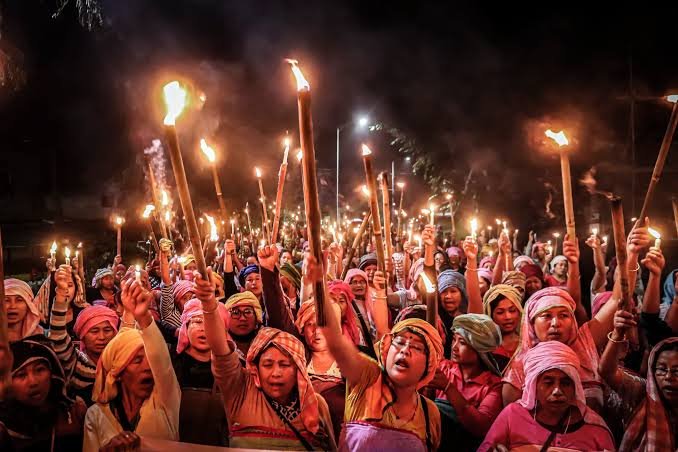
The debate over social media provocations has intensified in the Northeast as concerns over online content, public order and freedom of expression continue to intersect with wider community tensions. In Manipur, the Global Naga Forum has appealed to Governor Nand Kishore Yadav and Chief Minister Yumnam Khemchand Singh to review an FIR reportedly linked to social-media expressions by Naga educator, musician and rights activist Ambrose D. Kamei.
The forum has not questioned the state’s authority to act when online activity genuinely violates the law. However, it has argued that authorities should apply criminal law fairly and consistently while protecting constitutional principles. The development comes amid continuing concerns about misinformation, provocative narratives and community mistrust in Manipur.
Tripura Village Poll Candidate Intimidation Allegations Raise Election Concerns
Social Media Provocations Raise Fresh Questions in Manipur
The current social media provocations debate centres on an FIR reportedly registered against Ambrose D. Kamei in connection with his online expressions. The Global Naga Forum said the case deserves examination by the state’s highest constitutional authorities and called for fairness, restraint and due process.
According to the forum, public statements should be assessed within the constitutional framework governing freedom of speech and expression. It also argued that the circumstances surrounding a statement should be considered before authorities determine whether criminal proceedings are necessary.
The GNF specifically questioned what it described as selective action. It pointed to the wider period of ethnic conflict in Manipur, during which individuals and groups from different communities have made strong or provocative statements directed at other communities, governments and security agencies. These comparisons represent the forum’s position and should not be treated as an official finding that other alleged violations were ignored.
Furthermore, the forum said that inconsistent enforcement could deepen existing mistrust. It therefore appealed to the Governor and Chief Minister to personally examine the circumstances surrounding the FIR and ensure that the matter receives an objective assessment.
The issue consequently extends beyond one individual case. It raises a broader question about how governments can respond to potentially harmful online material without unnecessarily restricting legitimate political or social expression.
Authorities Face Challenge of Balancing Law and Expression
The controversy highlights the difficult balance between public order and freedom of expression. Governments have a responsibility to respond when online material genuinely threatens public safety, promotes unlawful activity or contributes to communal hostility. At the same time, criticism of governments, institutions or public policies does not automatically amount to a criminal offence.
The Global Naga Forum acknowledged this distinction in its appeal. The organisation said it recognised the state’s responsibility to maintain public order and take legal action where a genuine violation of law occurs. However, it questioned whether criminal proceedings in the Kamei case were necessary and proportionate.
That distinction becomes particularly important in a conflict-affected environment. Online statements can travel rapidly across communities and may influence public perceptions. Therefore, authorities must examine context, authenticity and potential impact before drawing conclusions about individual posts.
Meanwhile, law enforcement agencies also have to deal with deliberately misleading material. In May 2026, Nagaland Police warned residents against forwarding unverifiable information, rumours and provocative social-media content amid concerns that tensions in neighbouring Manipur could affect Nagaland. Police said deliberate or irresponsible dissemination of fake news or inflammatory material could invite legal action under applicable laws.
The Nagaland advisory demonstrates that authorities in the region already regard digital information as a public-order concern. However, such measures also require careful implementation so that efforts to prevent misinformation do not become a substitute for lawful assessment of legitimate expression.
Digital Information Becomes a Public-Order Concern
The importance of responsible digital communication has grown alongside the widespread use of social-media platforms. Messages, photographs, videos and claims can reach large audiences almost instantly. Consequently, inaccurate or misleading information can spread faster than authorities can verify it.
Nagaland Police previously warned citizens that artificially generated content could make the creation of misleading narratives easier. The advisory asked people to verify information before sharing it and urged residents to report suspicious activity to police or the Police Headquarters.
Peren district authorities also issued a separate June 2026 advisory on responsible social-media use. The Deputy Commissioner warned against spreading unverified information that could create social disharmony. The advisory specifically asked people not to create, circulate or promote material that could incite communal tension, violence, hatred or enmity.
The authorities cited applicable provisions of the Information Technology Act, the Bharatiya Nyaya Sanhita and other relevant laws. Therefore, the regional approach combines public awareness with the possibility of legal action where authorities establish a violation.
However, the Manipur controversy shows why enforcement must remain transparent. If communities believe that authorities apply legal provisions differently to different groups, the resulting mistrust can undermine the very public-order objectives that the measures seek to protect.
Reconciliation Remains Central to the Debate
The current discussion takes place against a backdrop of continuing ethnic divisions and political disagreements in Manipur. Consequently, the handling of online speech can have implications beyond individual criminal proceedings.
The Global Naga Forum argued that the state’s response should contribute to confidence-building rather than further alienation. It therefore connected its request for review with the broader need for dialogue and reconciliation.
The forum’s appeal does not amount to a judicial determination about the FIR. Nor does it establish whether the reported social-media expressions violated any law. Those questions remain matters for the appropriate legal and investigative processes.
Nevertheless, the controversy demonstrates why clear communication from authorities can matter during periods of heightened tension. When officials explain the legal basis for action and apply established procedures consistently, they can reduce speculation and improve public confidence.
Moreover, digital platforms require users to exercise responsibility. Citizens can help limit the spread of rumours by checking information before sharing it and by avoiding material that could provoke hostility between communities. At the same time, authorities must ensure that legitimate criticism and political discussion remain distinguishable from unlawful incitement.
The balance is therefore not simply between unrestricted online speech and censorship. Instead, it involves applying existing law carefully, protecting public safety and preserving constitutional rights. This approach can help prevent social media provocations from becoming another source of tension in an already sensitive environment.
Conclusion
The debate over social media provocations in Manipur highlights the difficult relationship between online expression, public order and community reconciliation. The Global Naga Forum has asked Governor Nand Kishore Yadav and Chief Minister Yumnam Khemchand Singh to review an FIR reportedly connected with Ambrose D. Kamei’s social-media expressions and ensure fairness and due process.
At the same time, police and district authorities across the region have warned citizens against misinformation, rumours and inflammatory digital material. The challenge now lies in ensuring that legitimate expression and unlawful content are treated differently, while enforcement remains consistent and transparent.
FAQs
What are the current concerns about social media provocations in Manipur?
The concerns involve the potential for misinformation, provocative statements and inflammatory content to worsen existing community tensions, alongside questions about how authorities apply criminal law to online expressions.
Who asked the Manipur Governor and Chief Minister to review the FIR?
The Global Naga Forum appealed to Governor Nand Kishore Yadav and Chief Minister Yumnam Khemchand Singh to examine the circumstances surrounding the FIR against Ambrose D. Kamei.
Does the GNF oppose legal action over online content?
No. The organisation said it recognises the state’s responsibility to act when a genuine violation of law occurs. Its concern focuses on fairness, proportionality and consistent application of the law.
Why are social-media posts considered a public-order concern?
Online information can spread rapidly and, when false or inflammatory, may contribute to panic, mistrust or community tension. Nagaland Police has previously warned citizens against forwarding unverifiable and provocative material.
What is the broader issue behind the controversy?
The broader issue involves balancing public safety and lawful enforcement with constitutional protections for freedom of expression, while ensuring that government action does not deepen existing mistrust between communities.