






The Churachandpur District Medical Facility network is receiving renewed attention as Manipur works to improve healthcare access in remote and underserved areas. The state has acknowledged difficulties in deploying medical personnel to some peripheral locations, while recent measures include mobile medical units equipped with doctors, nurses, medicines and first-aid supplies.
The focus comes amid continuing pressure on healthcare services across the hill districts. Moreover, Churachandpur has a sizeable network of primary and peripheral health facilities that remains important for bringing basic medical care closer to rural communities.
Tripura Village Poll Candidate Intimidation Allegations Raise Election Concerns
Churachandpur District Medical Facility Network Faces Rural Staffing Needs
The Churachandpur District Medical Facility system includes district-level and peripheral healthcare services serving communities across the district. According to Manipur’s 2025-26 administrative report, Churachandpur had seven rural Community Health Centres and 50 rural Primary Health Centres as of March 1, 2026.
The scale of this network highlights the importance of maintaining adequate medical personnel outside the main district headquarters. Rural facilities often provide the first point of contact for patients who may otherwise have to travel considerable distances for treatment.
However, the state continues to face a shortage of specialist doctors for district hospitals and Community Health Centres. The Directorate of Health Services has acknowledged that specialist availability remains a major challenge for deployment beyond the state’s tertiary medical institutions.
This shortage makes staffing decisions particularly significant. Consequently, strengthening peripheral facilities requires not only infrastructure but also a reliable workforce capable of providing regular services.
The issue has become more visible during the current period because healthcare workers may also face difficulties travelling to some areas. In the Manipur Assembly, Chief Minister Yumnam Khemchand Singh said doctors had been reluctant to go to Moreh because of the prevailing unrest. He also said only one doctor from Churachandpur had agreed to go there.
Mobile Medical Units Extend Healthcare Toward Remote Areas
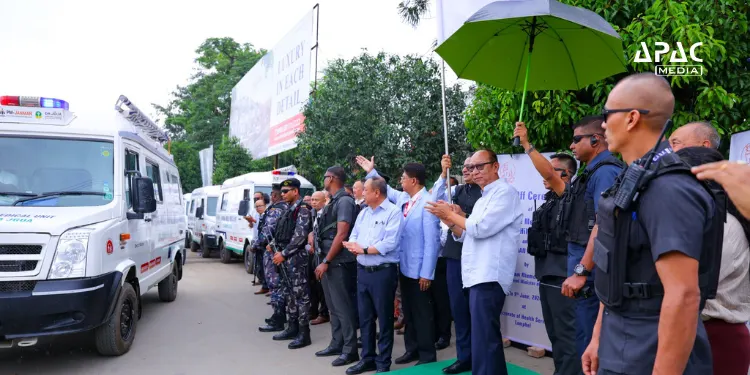
To improve access in difficult-to-reach areas, the Manipur government has launched 30 mobile medical units across interior hill regions. The Chief Minister said each unit includes a doctor, a nurse, first-aid equipment and medicines.
The mobile-unit model provides an additional way to deliver healthcare where permanent staffing remains difficult. Rather than relying entirely on fixed facilities, medical teams can travel to communities that have limited access to hospitals and health centres.
Furthermore, the state has provided 33 ambulances, with particular attention to pregnant women and emergency transportation needs. These services can help connect patients in remote locations with higher-level healthcare facilities when local treatment is insufficient.
The approach is especially relevant for a district with a large rural health infrastructure. The government’s administrative data shows that Churachandpur has numerous rural PHCs, while the Family Welfare Department also identifies PHC facilities such as Thanlon and Singngat within the district.
Meanwhile, the state continues to maintain specialist and medical services at Churachandpur District Hospital. The government’s empanelled-provider information lists medical officers and specialists at the district hospital as well as medical officers at peripheral facilities.
Together, fixed facilities and mobile services can create a broader healthcare network. However, their effectiveness ultimately depends on regular staffing, medicine availability, transport and timely referral arrangements.
Health Pressures Increase Demand for Local Medical Services
The need for accessible healthcare has become particularly important as Churachandpur has recently dealt with several public-health concerns. In late August, the district administration convened an emergency meeting after reports of suspected dengue, typhoid, flu-like illnesses and concerns surrounding hand, foot and mouth disease, particularly among children.
Deputy Commissioner Krishna Kumar directed health and education officials to intensify awareness activities in villages, schools and colleges. The administration also called for stronger preventive measures to respond to the reported health concerns.
Preventive healthcare therefore remains an important part of the district’s medical response. Community-level awareness, early detection and timely referral can reduce pressure on larger hospitals.
Recent health outreach has also included emergency assistance in areas where access to immediate medical care can be challenging. For example, an Assam Rifles medical team recently provided emergency treatment to a snakebite victim before referral to Churachandpur District Hospital.
Such incidents demonstrate the importance of maintaining functioning referral links between remote communities, peripheral health facilities and the district hospital.
Moreover, the district’s official health infrastructure is supported by government-empanelled facilities. Churachandpur District Hospital and Singngat PHC are among the public facilities listed under the state’s empanelled hospital network.
Broader Healthcare Expansion Remains Underway
The state’s healthcare strategy extends beyond immediate rural staffing and mobile services. The Chief Minister has announced plans for five superspecialty hospitals equipped with CT-scan facilities as part of broader efforts to improve healthcare capacity.
Churachandpur is also part of the state’s longer-term medical education and infrastructure planning. The 2026-27 Manipur budget documents include provisions connected with the establishment of Churachandpur Medical College.
A medical college can potentially strengthen the local healthcare ecosystem by linking medical education, clinical services and specialist capacity. Nevertheless, the development of such infrastructure is a longer-term process and should not be confused with immediate staffing requirements at rural facilities.
The state’s existing health manpower situation shows why both approaches are necessary. The Directorate of Health Services reports a concentration of doctors at the two major tertiary institutions in Imphal, alongside an acute shortage of specialists available for district hospitals and Community Health Centres.
Therefore, rural healthcare improvement requires a combination of measures. These include recruiting and retaining medical personnel, improving working conditions, supporting mobile outreach, maintaining ambulances and strengthening referral networks.
The government also needs to ensure that deployment policies account for the realities of remote and conflict-affected areas. In locations where doctors are reluctant to serve because of security concerns, administrative and logistical support can become as important as the formal posting order itself.
The broader objective remains equitable healthcare access. For Churachandpur’s rural communities, that means ensuring that health services remain available closer to where people live rather than requiring every patient to travel to the district headquarters.
Conclusion
The Churachandpur District Medical Facility network remains central to efforts to improve healthcare access across rural Manipur. Current evidence shows that the state is using mobile medical units, ambulances and existing PHC and CHC infrastructure to extend services into interior areas.
At the same time, specialist shortages and difficulties in deploying doctors to some locations remain significant challenges. Therefore, sustainable improvement will require a combination of stronger rural staffing, mobile outreach, referral services and long-term medical infrastructure development.
FAQs
What is the Churachandpur District Medical Facility network?
It refers broadly to the district’s healthcare system, including the district hospital and rural PHCs and CHCs serving communities across Churachandpur. Official data recorded seven rural CHCs and 50 rural PHCs as of March 1, 2026.
Are medical teams being deployed to remote areas?
Manipur has launched 30 mobile medical units for interior hill areas. Each unit includes a doctor, nurse, first-aid equipment and medicines.
What staffing challenges does Manipur face?
The Directorate of Health Services has reported an acute shortage of specialist doctors for district hospitals and Community Health Centres, creating challenges for deployment outside the state’s major tertiary institutions.
Which health facilities serve rural Churachandpur?
The district has numerous rural PHCs and CHCs. Government listings include facilities such as PHC Thanlon and PHC Singngat, alongside Churachandpur District Hospital.
Is Churachandpur receiving longer-term medical infrastructure investment?
Yes. Manipur’s 2026-27 budget documents include provisions connected with the establishment of Churachandpur Medical College, while the state is also pursuing broader healthcare infrastructure expansion.