





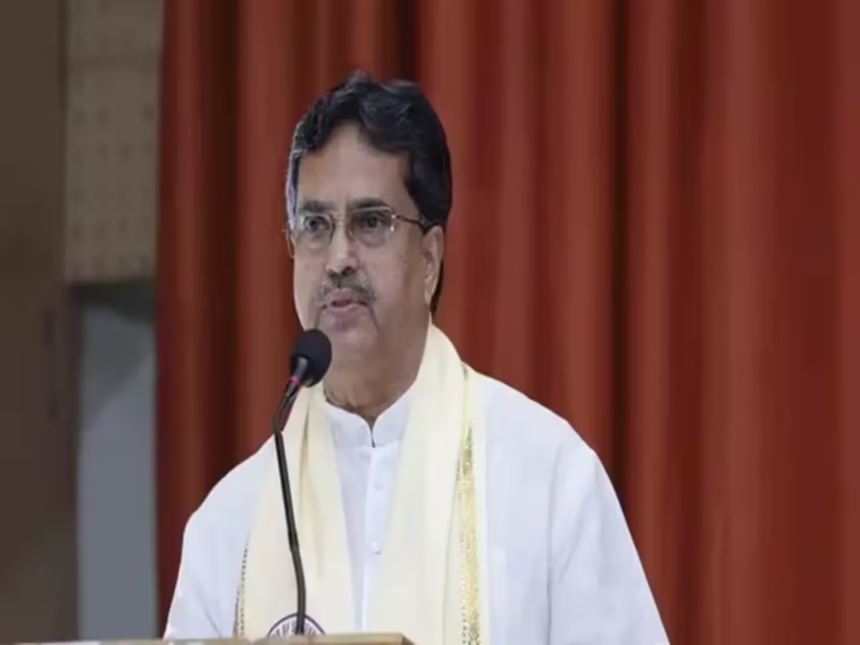
Tripura is preparing to expand access to advanced medical treatment within the state as the government works to strengthen specialised healthcare facilities. Chief Minister Prof. Dr. Manik Saha has pushed for the introduction of advanced transplant services, including bone marrow treatment and corneal transplantation. The move could help patients access complex procedures closer to home and reduce dependence on treatment outside Tripura.
Guwahati online gaming network raid yields key evidence now
Advanced Medical Facilities Planned Under Health Expansion
The plan for Advanced Medical Facilities Planned in Tripura forms part of the state government’s broader effort to improve specialised healthcare. In recent years, the government has focused on strengthening hospitals, expanding specialist services and developing facilities that can handle complex medical conditions.
Moreover, Tripura has already taken steps toward expanding transplant-related services. Kidney transplantation has been introduced at GB Pant Hospital, while authorities have also discussed expanding the range of transplant procedures available in the state. Consequently, the government now wants to build capacity for other specialised treatments.
Health officials have also emphasised the importance of improving hospital infrastructure alongside medical services. This includes laboratories, critical-care facilities, trained medical personnel and technical support. Therefore, introducing advanced procedures will require coordinated improvements across several parts of the healthcare system.
The proposed expansion is particularly significant for patients who currently need to travel outside the state for highly specialised treatment. By developing such facilities locally, Tripura can potentially make treatment more accessible while reducing the logistical and financial difficulties associated with travelling to other states.
Bone Marrow Transplant Facility Gets Priority
Bone marrow transplantation has emerged as an important area of focus for the Tripura government, particularly because of the state’s efforts to improve treatment for patients with blood disorders such as thalassemia.
The government had already indicated its intention to introduce bone marrow transplant services in Tripura. In July 2025, Chief Minister Manik Saha said the Health Department was considering introducing the service in the near future. At the time, the government highlighted bone marrow transplantation as an effective treatment option for severely affected thalassemia patients.
Furthermore, the plan moved closer to implementation in 2026. In June, Health Secretary Kiran Gitte inspected the Atal Bihari Vajpayee Regional Cancer Centre in Agartala and directed officials to begin work on operationalising a Bone Marrow Transplant unit at the earliest, following directions from the Chief Minister.
The proposed facility is expected to strengthen the Regional Cancer Centre’s ability to provide specialised treatment. Officials also discussed the introduction of ICU services at the centre, along with improvements in manpower and technical support.
Meanwhile, Tripura has continued efforts to strengthen thalassemia awareness and diagnosis. A February 2026 programme in Agartala also highlighted the government’s plan to establish a Bone Marrow Transplant Centre and the importance of HLA testing for donor matching.
Therefore, the bone marrow initiative is not simply a new announcement but part of a continuing healthcare expansion. The government has been moving from planning toward developing the infrastructure and operational capacity needed for the service.
Eye and Corneal Transplant Services Also Targeted
The government’s wider transplant strategy also includes eye-related services. However, the term “eye transplantation” generally refers in practice to procedures involving donated corneal tissue rather than transplantation of the entire eye. This distinction is important when discussing the planned service.
In August 2026, Tripura Health Secretary Kiran Gitte said the state would strengthen organ donation and transplantation services through awareness campaigns, capacity building and expanded facilities. He said Tripura had already carried out kidney transplantation and was working toward additional transplant services.
Gitte also said the state would soon establish an eye bank at IGM Hospital in addition to the existing facility at GB Hospital. He further indicated that Tripura would undertake more work related to corneal transplantation.
This development could strengthen the state’s ophthalmic care network. An eye bank can support the collection, preservation and availability of donated corneal tissue, while trained ophthalmic teams can perform appropriate transplantation procedures for eligible patients.
Additionally, the government has already announced the establishment of a 100-bed Regional Institute of Ophthalmology in Agartala. The facility forms part of a broader effort to expand specialised eye care infrastructure in Tripura.
As a result, the eye-care initiative involves more than a single procedure. It combines institutional infrastructure, eye banking, specialist services and transplantation capacity. Therefore, the proposed expansion could create a stronger foundation for advanced ophthalmic treatment in the state.
Healthcare Infrastructure Builds Toward Greater Self-Reliance
The proposed transplant services fit into a larger strategy aimed at making Tripura’s healthcare system more self-reliant. The state has already expanded specialist availability and upgraded hospitals, while officials continue to work on additional medical infrastructure.
In August 2025, the government handed appointment letters to 45 specialist doctors and said further recruitment would follow. Health Secretary Kiran Gitte stated that 215 doctors would be recruited to address shortages, while district and sub-divisional hospitals had already undergone modernisation efforts.
Furthermore, the state has sought technical assistance from major medical institutions. In June 2025, AIIMS Director Dr. M. Srinivas said AIIMS would support Tripura in improving medical services and medical education at AGMC and GBP Hospital. The discussions covered infrastructure, healthcare management and the advancement of super-speciality services.
The government has also expanded hospital capacity. In May 2025, Chief Minister Saha highlighted the increase in beds at GBP Hospital to 1,413 and said further expansion was planned. He also pointed to kidney transplant services and the proposed Regional Institute of Ophthalmology as important developments in the state’s healthcare sector.
Moreover, the Regional Cancer Centre’s planned Bone Marrow Transplant unit adds another layer to this expansion. The centre already has advanced diagnostic and treatment equipment, while authorities have stressed the need for reliable maintenance, technical manpower and specialist support.
Taken together, these initiatives indicate a gradual expansion from basic and secondary healthcare toward more specialised treatment. However, the successful introduction of advanced transplant services will depend on trained specialists, appropriate infrastructure, donor availability, laboratory support, infection-control systems and long-term operational capacity.
Conclusion
Advanced Medical Facilities Planned in Tripura reflect the government’s continuing effort to strengthen specialised healthcare within the state. The proposed bone marrow transplant facility at the Regional Cancer Centre and the planned expansion of corneal and eye-related services could improve access to complex treatment for eligible patients.
Moreover, these initiatives build on kidney transplantation, specialist recruitment, hospital modernisation and cooperation with institutions such as AIIMS. Therefore, the developments represent a broader attempt to reduce dependence on healthcare facilities outside Tripura while improving the state’s capacity to deliver advanced medical care.
FAQs
What advanced medical facilities are planned in Tripura?
Advanced Medical Facilities Planned include bone marrow transplant services and expanded eye-related transplant facilities, alongside broader specialised healthcare improvements.
Where is the bone marrow transplant facility being developed?
The proposed Bone Marrow Transplant unit is being developed at the Atal Bihari Vajpayee Regional Cancer Centre in Agartala. Health officials have been directed to work toward operationalising the facility.
Is Tripura already conducting kidney transplants?
Yes. Tripura has already introduced kidney transplantation services at GB Pant Hospital, while the government is working to expand transplant capabilities further.
What eye-care facilities are being planned?
The government has announced plans for a 100-bed Regional Institute of Ophthalmology in Agartala. Officials have also discussed strengthening eye banking and corneal transplantation services, including a planned eye bank at IGM Hospital.
Why are bone marrow transplant services important for Tripura?
Bone marrow transplantation can provide an important treatment option for patients with certain serious blood disorders, including eligible cases of thalassemia. Establishing the service locally could also reduce the need for patients to travel outside the state for specialised treatment.