




NITI Aayog member Joram Aniya has called for greater scientific and technological support to preserve indigenous knowledge systems in Northeast India. Speaking at a lecture in Imphal on Monday, Aniya said traditional practices should not remain only as cultural heritage. Instead, researchers should study, document and improve useful practices through modern science.
She highlighted the Apatani agricultural system of Arunachal Pradesh as an example of sustainable traditional farming. The lecture also focused on biodiversity conservation, traditional resource management and the need to pass indigenous knowledge to future generations.
Read More: Arunachal Pradesh Conducts First Kidney Transplant
Key Facts
- Location: Takyel, Imphal, Manipur
- Speaker: NITI Aayog member Joram Aniya
- Organiser: Institute of Bioresources and Sustainable Development (IBSD)
- Main topic: Indigenous knowledge and sustainable development
- Example discussed: Apatani agricultural system of Ziro, Arunachal Pradesh
- GI tag initiative: Two Manipur black rice varieties
- Publication released: Compendium on medicinal plants from the Zingiberaceae family
Joram Aniya Calls for Scientific Support
NITI Aayog member Joram Aniya has urged researchers to use modern science to support and sustain traditional knowledge systems.
She made the remarks during a lecture on indigenous knowledge systems organised by the Institute of Bioresources and Sustainable Development (IBSD) at Takyel in Imphal.
Aniya said traditional practices should not simply remain as cultural heritage. Instead, scientists should study these practices and identify ways to make them useful for future generations.
Traditional Knowledge Supports Agriculture
Aniya explained that communities have developed detailed knowledge of agriculture and natural resources through generations of observation.
For example, villagers traditionally observe flowering plants, fruiting patterns and changes in weather to determine agricultural cycles.
However, changing lifestyles now threaten the continuation of many such practices. Younger people increasingly move away from villages for education and employment.
As a result, communities face difficulties in maintaining traditional agricultural systems and related infrastructure.
Apatani Farming System Highlighted
Aniya highlighted the Apatani agricultural system of Ziro in Arunachal Pradesh as an example of traditional knowledge working alongside biodiversity.
The system combines paddy cultivation with fish farming. Farmers also grow crops such as millet along field bunds.
According to Aniya, the system shows how agriculture, biodiversity and traditional practices can work together.
However, maintaining such systems requires considerable labour. She also pointed to challenges involving the upkeep of agricultural structures, including field bunds.
Science Can Strengthen Traditional Practices
Aniya called for scientific and technological interventions to address these challenges without destroying traditional systems.
She said biotechnology could help reduce soil erosion and improve soil and water conservation. At the same time, researchers should protect the biodiversity already present in traditional farming systems.
The objective, she stressed, should remain supporting traditional systems rather than replacing them.
Indigenous Knowledge and Biodiversity Conservation
Aniya also discussed traditional community-based systems for regulating hunting and managing natural resources.
She said such practices could provide useful lessons for modern biodiversity conservation efforts.
According to her, researchers should document and scientifically test indigenous knowledge instead of dismissing it as folklore.
At the same time, scientists should consider knowledge passed down through generations when developing solutions for local communities.
Link With Viksit Bharat 2047
Aniya linked the preservation of indigenous knowledge with the broader Viksit Bharat 2047 goal.
She encouraged researchers and scientific institutions to explore ways to protect traditional knowledge and biodiversity while making these systems relevant to younger generations.
She said modern research can play an important role in connecting traditional practices with future development needs.
IBSD Highlights Northeast Bioresource Work
BRIC-IBSD director (additional charge) Nanaocha Sharma said the institute continues to work on the conservation and sustainable use of bioresources in Northeast India.
He also said the institute had filed applications for GI tags for two varieties of black rice from Manipur.
The GI initiative could help identify and protect region-specific agricultural products while supporting their recognition and sustainable use.
Compendium on Medicinal Plants Released
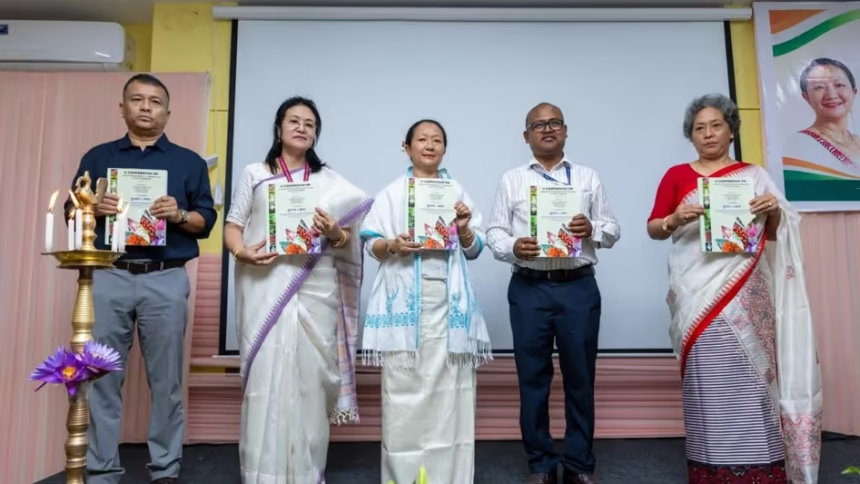
The lecture also featured the release of a compendium covering medicinal plants belonging to the Zingiberaceae family found across Northeast India.
The publication adds to efforts to document the region’s rich plant resources and traditional knowledge associated with medicinal plants.
Questions and Answers
What did Joram Aniya say in Imphal?
She called for scientific research and technology to support traditional knowledge systems and make them relevant for future generations.
Which traditional farming system did she highlight?
She highlighted the Apatani agricultural system of Ziro in Arunachal Pradesh.
Why are traditional practices facing challenges?
Younger generations are increasingly moving to towns and cities for education and employment, reducing the workforce available to maintain traditional systems.
What did BRIC-IBSD announce?
The institute said it had filed for GI tags for two varieties of black rice from Manipur.
What was released during the programme?
A compendium on medicinal plants from the Zingiberaceae family found in Northeast India was released.
Location Context
Imphal is the capital of Manipur and an important centre for research, education and cultural studies in Northeast India. The region has diverse indigenous knowledge systems linked to agriculture, biodiversity, medicinal plants and natural resource management.
Also Read: Chakma council now sets NEP 2027-28 rollout