

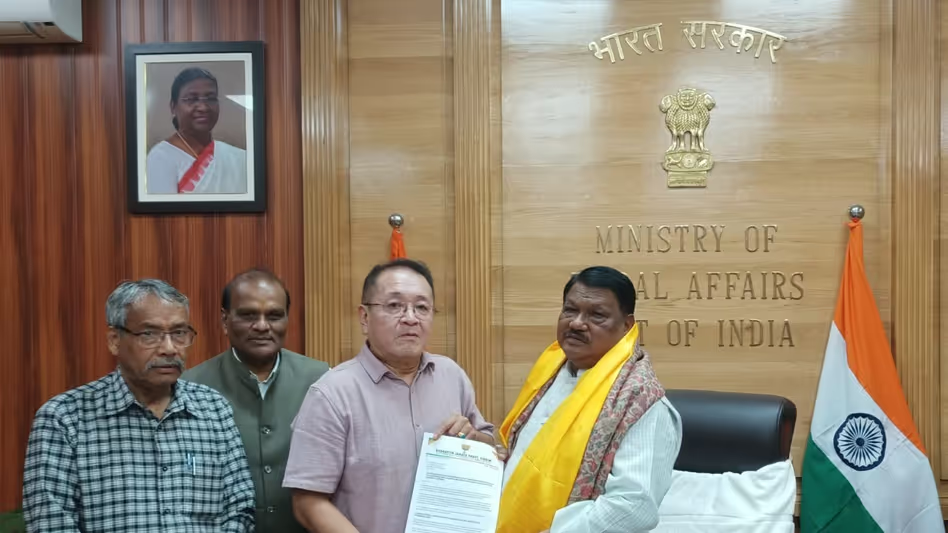

The BJP Sikkim ST Morcha has approached the Central Government to address three long-pending demands concerning Scheduled Tribe communities in Sikkim. On November 21, ST Morcha president Karma Sonam Bhutia met Union Tribal Affairs Minister Jual Oram in New Delhi and submitted a detailed representation. The demands include constitutional recognition for Bhutia, Lepcha and Limboo languages, reservation of seats for Limboo-Tamang communities in the Sikkim Legislative Assembly, and inclusion of 12 left-out communities in the Scheduled Tribe list.
During the meeting, Bhutia highlighted the importance of these demands for protecting indigenous identity, cultural heritage and constitutional rights. Meanwhile, Union Minister Jual Oram reportedly responded positively and assured that the issues would receive further consideration.
Read More: Manipur Cherry Blossom Festival 2026 Begins in Senapati
Key Facts About the Sikkim Tribal Demands
- Organisation: BJP Sikkim Scheduled Tribe (ST) Morcha
- Representative: Karma Sonam Bhutia
- Union Minister: Jual Oram, Union Tribal Affairs Minister
- Meeting date: November 21
- Meeting location: New Delhi
- First demand: Include Bhutia, Lepcha and Limboo languages in the Eighth Schedule.
- Second demand: Reserve seats for Limboo-Tamang communities in the Sikkim Legislative Assembly.
- Third demand: Include 12 left-out communities in the Scheduled Tribe list.
- Government response: The Union Minister reportedly assured further consideration.
BJP Sikkim ST Morcha Seeks Centre’s Intervention
During the meeting in New Delhi, Karma Sonam Bhutia presented the three demands before Union Tribal Affairs Minister Jual Oram.
He explained how these long-pending issues affect the cultural identity, constitutional rights and political aspirations of Sikkim’s indigenous communities.
Furthermore, Bhutia stressed the need for Central Government intervention to address the concerns. He urged the Union Minister to consider the representation and take appropriate steps through the relevant constitutional and administrative processes.
The ST Morcha believes that addressing these demands would strengthen the recognition and representation of indigenous communities across the state.
1. Demand for Eighth Schedule Recognition of Three Languages
One of the major demands concerns the inclusion of Bhutia, Lepcha and Limboo languages in the Eighth Schedule of the Indian Constitution.
These languages represent important parts of Sikkim’s linguistic and cultural heritage. However, their absence from the Eighth Schedule remains a concern for communities seeking greater constitutional recognition.
The ST Morcha believes that inclusion would strengthen language preservation and encourage future generations to maintain their traditional languages.
Moreover, constitutional recognition could support greater institutional attention towards linguistic and cultural development.
2. Limboo-Tamang Communities Seek Assembly Seat Reservation
The second demand concerns political representation for the Limboo-Tamang communities in the Sikkim Legislative Assembly.
The representation highlights the need to address their long-standing demand for reserved seats in the state legislature.
According to the ST Morcha, stronger political representation would help these communities raise their concerns and participate more effectively in democratic decision-making.
Additionally, the organisation wants the Central Government to examine the matter and take appropriate action.
3. Inclusion of 12 Left-Out Communities in the Scheduled Tribe List
The third demand seeks the inclusion of 12 left-out communities from Sikkim in the Scheduled Tribe list.
The issue has remained important for communities seeking recognition under the constitutional framework governing Scheduled Tribes.
Karma Sonam Bhutia reportedly highlighted the need to examine their concerns and address the matter through the appropriate government channels.
Furthermore, the ST Morcha believes that resolving this issue would help fulfil the aspirations of communities seeking official recognition.
Jual Oram Responds Positively to the Representation
Union Tribal Affairs Minister Jual Oram reportedly responded positively during the meeting.
He assured Karma Sonam Bhutia that the three issues would be taken forward for favourable consideration.
However, the meeting did not result in any formal announcement confirming the acceptance or implementation of the demands.
Meanwhile, the BJP Sikkim ST Morcha thanked the Union Minister for his time and consideration. The organisation also reaffirmed its commitment to pursuing the demands until the concerned authorities address them.
Why These Three Demands Matter for Sikkim
Sikkim has a diverse indigenous population with distinct languages, traditions and cultural identities. Therefore, constitutional recognition and political representation remain important issues for several communities.
The inclusion of languages in the Eighth Schedule could strengthen linguistic preservation. Similarly, Assembly seat reservation could address political representation concerns.
In addition, the proposed inclusion of 12 left-out communities in the ST list remains a significant demand for those seeking constitutional recognition.
These issues also reflect wider discussions across Northeast India about indigenous identity, cultural preservation and constitutional rights.
Questions and Answers
1. Who met Union Tribal Affairs Minister Jual Oram?
Karma Sonam Bhutia, president of BJP Sikkim ST Morcha, met the Union Minister in New Delhi.
2. When did the meeting take place?
The meeting took place on November 21.
3. Which languages does the ST Morcha want included in the Eighth Schedule?
The organisation has demanded the inclusion of Bhutia, Lepcha and Limboo languages.
4. What is the demand concerning Limboo-Tamang communities?
The ST Morcha seeks reservation of seats for Limboo-Tamang communities in the Sikkim Legislative Assembly.
5. How many left-out communities does the organisation want included in the ST list?
The representation seeks the inclusion of 12 left-out communities from Sikkim.
6. What did Jual Oram say about the demands?
According to the ST Morcha, the Union Minister responded positively and assured further consideration of the issues.
Conclusion
The BJP Sikkim ST Morcha’s meeting with Union Tribal Affairs Minister Jual Oram has brought three important demands concerning the state’s indigenous communities to the Centre’s attention. However, the demands still require further examination and formal decisions from the concerned authorities.
As Sikkim continues to preserve its diverse cultural and linguistic heritage, these issues remain significant for indigenous communities across the Himalayan state and the wider Northeast region.
Also Read: Tripura ULB Polls: 4,545 Personnel Deployed