




A goods train derailment on Assam’s Lumding–Badarpur hill section disrupted railway connectivity to Barak Valley and neighbouring states. The incident led to the cancellation of 14 passenger trains and stranded hundreds of passengers, including 194 schoolchildren travelling to Mizoram. Railway authorities arranged alternative transport for the students while restoration work continued.
635-Member Assam Delegation Heads to Delhi for Bhupen Hazarika Centenary
Indian Army and NFR Sign New Rail Logistics Pact at Narangi Cantonment
Lumding–Badarpur Train Derailment Disrupts Northeast Railway Connectivity
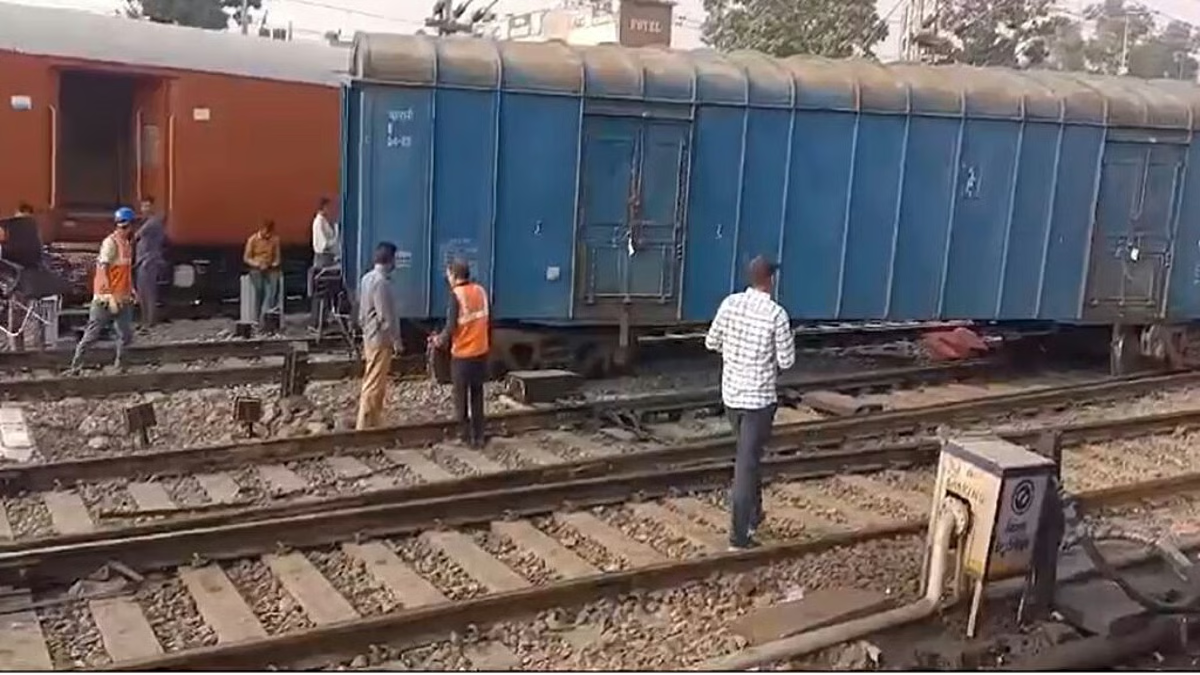
Train services on the Lumding–Badarpur hill section of the Northeast Frontier Railway (NFR) faced major disruption following a goods train derailment on November 27, 2026.
The incident occurred between Bandarkhal and Damchera railway stations under the Lumding Division. Wheels of a loaded wagon reportedly came off the tracks while the train was moving through the section.
The derailment disrupted the single-line railway route connecting Assam’s Barak Valley with other parts of the country. Consequently, passengers travelling between southern Assam, Tripura and Mizoram faced significant inconvenience.
Railway authorities cancelled 14 passenger trains scheduled for November 28 and 29. Several other services also faced journey restrictions and short-termination.
Among those affected were 194 schoolchildren travelling towards Sairang in Mizoram. They became stranded at Lumding railway station after their scheduled train services were cancelled.
194 Schoolchildren Stranded at Lumding Station
The disruption affected a group of 194 schoolchildren travelling to Sairang in Mizoram.
The students were unable to continue their journey by train because of the cancellation of services along the affected route. Their situation required special arrangements from the railway authorities.
The Northeast Frontier Railway arranged buses to transport the children from Lumding to Silchar in southern Assam. From Silchar, they were scheduled to board a special train to continue their journey to Sairang.
Railway officials also arranged meals for the stranded students. They received dinner, breakfast and lunch while waiting for alternative transportation.
The arrangements aimed to reduce the inconvenience caused by the sudden disruption. The special transport plan also helped the students continue their journey despite the interruption to regular railway services.
Northeast Frontier Railway Begins Track Restoration
Following the derailment, railway personnel began restoration work on the affected section.
NFR Chief Public Relations Officer Kapinjal Kishore Sharma said restoration activities were progressing. However, he cautioned that the difficult terrain could delay the process.
The Lumding–Badarpur route passes through challenging hilly terrain. This makes railway maintenance and restoration operations more demanding.
Since the affected section operates as a single line, disruption can interrupt train movement in both directions. Railway teams therefore need to clear the affected track and ensure its safety before normal services resume.
As of Saturday evening, November 28, railway authorities had not announced a confirmed timeline for restoring regular operations.
Fourteen Passenger Trains Cancelled
The derailment resulted in the cancellation of 14 passenger trains scheduled for November 28 and 29.
Twelve services scheduled for Saturday, November 28, were cancelled. Two additional services scheduled for Sunday, November 29, were also withdrawn.
The cancellations affected passengers travelling across Assam and neighbouring northeastern states.
The cancelled trains included:
| Train service | Scheduled date |
|---|---|
| Agartala–SMVT Bengaluru Express | November 28 |
| Silchar–Guwahati Express | November 28 |
| Agartala–Deoghar Express | November 28 |
| Silchar–New Tinsukia Express | November 28 |
| Sairang–Guwahati Express | November 28 |
| Rangiya–Silchar Express | November 28 |
| Narangi–Agartala Express | November 28 |
| Agartala–Narangi Express | November 28 |
| Silchar–Rangiya Express | November 28 |
| Guwahati–Dullavcherra Express | November 28 |
| Guwahati–Silchar Express | November 28 |
| New Tinsukia–Silchar Express | November 29 |
| Dullavcherra–Guwahati Express | November 29 |
The reported total is 14 cancelled services; the list above contains the 13 services individually identified in the available report.
The disruption also affected some long-distance trains. Certain services were short-terminated, meaning they could not complete their scheduled journeys.
Some Long-Distance Trains Short-Terminated
Apart from cancellations, the derailment forced changes to the routes of other passenger trains.
The Rani Kamlapati–Agartala Express and Narangi–Agartala Express were short-terminated at New Haflong. Their onward journeys towards Agartala were cancelled.
An initial railway bulletin also mentioned short-termination arrangements for the Sealdah–Sabroom Kanchanjungha Express and Poorvottar Sampark Kranti Express at Lumding. However, these trains did not appear in the subsequent bulletin described in the November 29 report.
Passengers were advised to check updated railway announcements before travelling. Such changes are important because a train may operate on part of its route while the remaining section stays cancelled.
Railways Arrange Help Desks, Food and Refunds
The Northeast Frontier Railway (NFR) introduced several passenger assistance measures after the disruption.
For example, railway officials set up help desks at several stations to guide affected passengers. They also helped travellers claim refunds for cancelled tickets.
Meanwhile, railway staff distributed food packets and drinking water to passengers. These arrangements supported people who could not continue their journeys as scheduled.
NFR also organised special assistance for the 194 schoolchildren stranded at Lumding.
Such measures become particularly important during major railway disruptions. Families, students and long-distance travellers often need immediate information and alternative transportation.
Why the Lumding–Badarpur Railway Section Is Important
The Lumding–Badarpur hill section serves as a crucial railway corridor in Northeast India.
It connects Assam’s Barak Valley with other parts of the country. In addition, the route supports rail connectivity to Tripura, Mizoram and Manipur.
The railway line passes through the hilly terrain of Dima Hasao district. These geographical conditions make it an important yet challenging route.
Disruptions along this corridor affect more than passenger movement. Railways also transport essential commodities, including foodgrains, fuel and construction materials.
Consequently, interruptions can create wider logistical challenges for communities and businesses across the region.
Restoration Timeline Remains Uncertain
Railway teams continued restoration work following the derailment. However, the difficult terrain prevented officials from confirming when regular services would resume.
Therefore, passengers travelling through the affected corridor should monitor official NFR updates. Checking train status before departure can also help travellers avoid unexpected delays and cancellations.
Reports available at the time did not establish the exact cause of the wagon derailment.
Railway authorities must complete restoration work and safety checks before they resume normal train movement on the affected section.
Conclusion
The goods train derailment on the Lumding–Badarpur hill section disrupted railway connectivity to Assam’s Barak Valley and neighbouring northeastern states. As a result, NFR cancelled 14 passenger trains and affected hundreds of travellers.
The disruption left 194 Mizoram-bound schoolchildren stranded at Lumding. To help them, NFR arranged buses to Silchar and a special train onward to Sairang. Railway officials also provided meals for the students.
Meanwhile, restoration teams continued their work despite the difficult terrain. Overall, the incident highlights the importance of the Lumding–Badarpur corridor for passenger travel and essential goods transportation across Northeast India.
Frequently Asked Questions (FAQs)
1. Where did the goods train derail in Assam?
The derailment occurred between Bandarkhal and Damchera railway stations on the Lumding–Badarpur hill section under the Northeast Frontier Railway’s Lumding Division.
2. When did the Assam goods train derailment occur?
The incident occurred on Friday night, November 27, 2026.
3. How many passenger trains did NFR cancel following the derailment?
NFR cancelled 14 passenger trains scheduled for November 28 and 29.
4. How many schoolchildren did the disruption leave stranded at Lumding station?
The disruption left 194 schoolchildren travelling towards Sairang in Mizoram stranded at Lumding.
5. How did the Railways help the stranded students?
NFR arranged special buses to take the students from Lumding to Silchar. From there, they were scheduled to board a special train to Sairang.
6. Which railway section did the derailment disrupt?
The derailment disrupted the single-line Lumding–Badarpur hill section of the Northeast Frontier Railway.
7. Why is the Lumding–Badarpur railway route important?
The route connects Barak Valley and neighbouring northeastern states, including Tripura, Mizoram and Manipur, with the rest of the country.
8. Has normal railway service resumed on the affected section?
As of the latest report on November 29, railway authorities had not confirmed when normal services would resume.
9. What assistance did the Railways provide to affected passengers?
NFR set up help desks, facilitated ticket refunds and distributed food packets and drinking water. It also arranged alternative transportation for the stranded schoolchildren.