







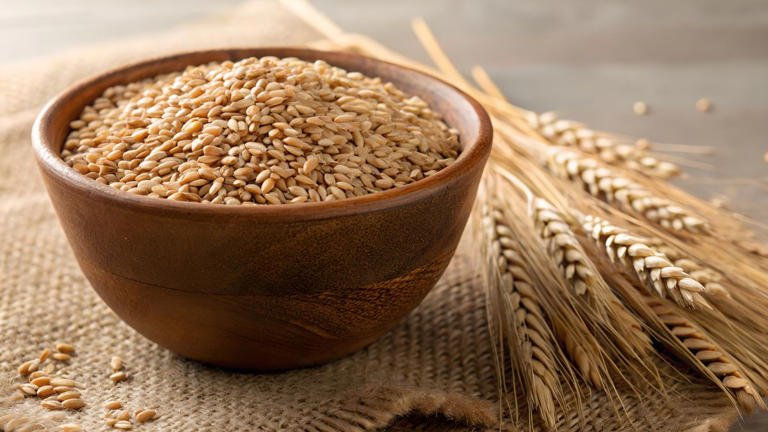
While many people recognize Punjab as a whole for its farming, the city of Ludhiana specifically carries the title of the Wheat Granary of India. This recognition is not just due to the vast fields surrounding the city. Instead, it comes from Ludhiana’s central role in the collection, storage, and distribution of wheat across the entire nation.
Read More: Manipur Security Operations: Massive Crackdown on Drugs and Militancy
The Epicenter of the Green Revolution
The history of the Wheat Granary of India began in the 1960s. During this time, India faced severe food shortages. To solve this, the government introduced the Green Revolution. Ludhiana became the testing ground for this movement. Scientists introduced high-yielding variety (HYV) seeds and modern irrigation techniques to local farmers.
Consequently, wheat production in the region skyrocketed. The city quickly transformed from a local market into a national hub. Because of these advancements, India moved from being a food-importing country to a self-sufficient one. Today, Ludhiana remains a symbol of that agricultural victory.
Why Ludhiana is the Ultimate Wheat Hub
Several factors contribute to Ludhiana’s status as the Wheat Granary of India. First, its geographic location is perfect for farming. The city sits on fertile alluvial plains formed by the Sutlej River. This rich soil, combined with an extensive canal system, provides the ideal environment for a bumper wheat crop every year.
Furthermore, Ludhiana is home to the Punjab Agricultural University (PAU). This institution is one of the best in Asia for farming research. The university develops new seeds and teaches farmers scientific methods to increase their yield. Therefore, the city is not just a place where wheat is grown; it is a center of excellence for agricultural technology.
Key Reasons for the Title:
- Massive Storage: The city has some of the largest government granaries and warehouses in the country.
- Grain Markets: Ludhiana hosts major mandis (markets) where thousands of tons of wheat are traded daily during the harvest season.
- Logistics Hub: Its well-connected rail and road networks allow wheat to reach far-off states like Kerala and West Bengal quickly.
- High Productivity: The districts surrounding Ludhiana often record the highest wheat yield per hectare in India.
Supporting National Food Security
The importance of the Wheat Granary of India extends to every Indian household. Much of the wheat collected in Ludhiana goes to the central pool. From there, the government distributes it through the Public Distribution System (PDS). This ensures that affordable food grain reaches millions of people under various welfare schemes.
Moreover, the city acts as a buffer against food inflation. By maintaining large stocks of wheat, Ludhiana helps stabilize market prices when there is a shortage elsewhere. This makes the city a vital pillar of India’s economic stability. Without the constant flow of grain from this region, maintaining national food reserves would be a massive challenge.
Conclusion: A Legacy of Abundance
In conclusion, Ludhiana truly deserves its name as the Wheat Granary of India. Through hard work and innovation, it has become the most important link in India’s agricultural chain. From the fields of the Green Revolution to modern scientific labs, the city continues to lead the way in feeding the nation.
As farming technology evolves, Ludhiana is also adapting. Farmers are now moving toward sustainable practices to protect the fertile soil for future generations. This ensures that the “Granary” will remain full for many years to come, continuing its legacy of prosperity and abundance.
Read More: PM Modi Assam Visit 2026: A Landmark Push for Infrastructure

