





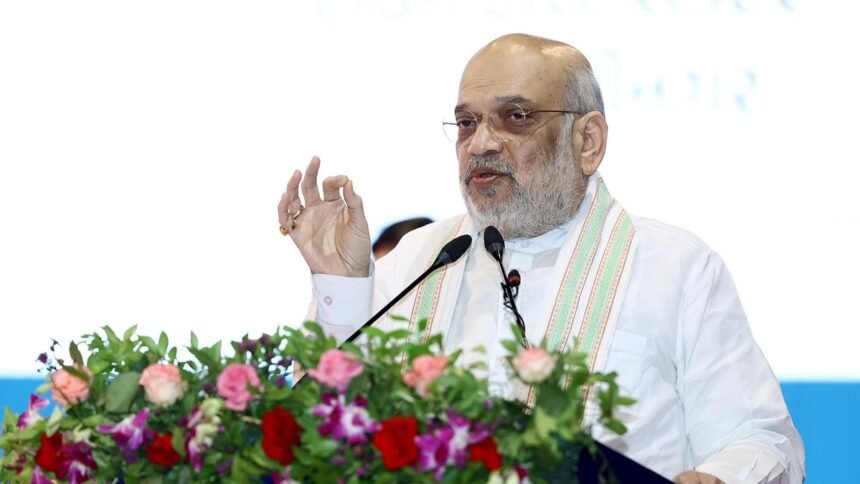
The Manipur security review Amit Shah meeting held in New Delhi represents one of the most significant high-level security assessments conducted in recent times for the northeastern state. Union Home Minister Amit Shah chaired the meeting to evaluate the overall security situation in Manipur and review ongoing stabilization measures. The meeting comes at a crucial time when the state continues to require sustained monitoring, coordination, and strategic intervention from central and state agencies to maintain law and order and ensure long-term peace.
The focus of the meeting was not limited to immediate security concerns but extended to broader governance, intelligence coordination, and long-term peace-building efforts in the region.
Anandanagar Thefts Spark Outrage as Repeated Burglaries Raise Security Concerns in Tripura
Detailed Security Assessment
During the Manipur security review Amit Shah meeting, officials presented a detailed breakdown of the security situation across multiple districts of Manipur. Intelligence inputs, field reports, and updates from security forces were carefully analyzed. The review included assessments of vulnerable regions, deployment efficiency, and coordination between central armed forces and state police.
Senior officials highlighted sensitive zones where additional vigilance is required and where security operations need reinforcement. The discussion also included an evaluation of existing operational strategies and whether they are effectively addressing ground realities.
The Home Minister emphasized that security planning must be proactive rather than reactive, ensuring that emerging threats are identified early and neutralized before escalation.
Intelligence Coordination and Ground Reports
A major part of the Manipur security review Amit Shah meeting focused on intelligence coordination between multiple agencies. Officials from central intelligence units and paramilitary organizations shared detailed inputs regarding recent developments on the ground.
These reports covered movement patterns in sensitive regions, local-level tensions, and potential risk factors that could impact stability. The importance of real-time intelligence sharing was strongly emphasized to ensure timely response and effective deployment.
The meeting also reviewed communication gaps between agencies and explored methods to strengthen data-sharing systems for improved operational coordination.
Focus on Stability in Manipur
The security review placed significant emphasis on restoring and maintaining stability in Manipur. The government reiterated its commitment to ensuring peace in the region through both security enforcement and administrative support.
Discussions included rehabilitation efforts for affected communities, restoration of essential services, and strengthening governance in remote and sensitive areas. Officials stressed that long-term peace can only be achieved through a combination of security action and development-focused initiatives.
The Home Minister directed agencies to ensure that peace-building efforts are implemented alongside security operations.
Deployment and Operational Strategy
Another key aspect of the Manipur security review Amit Shah meeting was the evaluation of deployment strategies of central armed forces. The effectiveness of paramilitary presence in maintaining order and preventing escalation of tensions was thoroughly reviewed.
Officials analyzed troop deployment patterns, rapid response mechanisms, and logistical support systems. The need for better coordination between different security units was highlighted to ensure operational efficiency in crisis situations.
The meeting also focused on strengthening quick reaction teams and improving area domination strategies in vulnerable zones.
Administrative and Civil Support Measures
In addition to security-related discussions, the Manipur security review Amit Shah meeting also examined administrative challenges in affected districts. Officials discussed the status of essential public services such as healthcare, education, and local governance.
The importance of maintaining uninterrupted administrative functioning was emphasized. Efforts to restore normalcy in disrupted regions were reviewed, along with strategies to improve government outreach in remote areas.
The meeting highlighted the need for stronger coordination between civil administration and security forces to ensure effective governance.
Long-Term Peace Strategy
The Manipur security review Amit Shah meeting also focused on long-term strategies aimed at ensuring lasting peace in the state. These included infrastructure development, community engagement programs, and strengthening institutional frameworks.
The government emphasized that sustainable peace requires not only security enforcement but also social and economic development. Officials discussed plans for rebuilding trust within communities and improving civic participation in governance processes.
The long-term strategy aims to create a stable environment where development and security progress together.
Conclusion
The Manipur security review Amit Shah meeting chaired by Union Home Minister Amit Shah in New Delhi reflects the central government’s continued focus on stabilizing Manipur. Through detailed assessment of security conditions, intelligence coordination, and administrative measures, the meeting reinforced a comprehensive approach to restoring peace and ensuring long-term stability in the state of Manipur.