




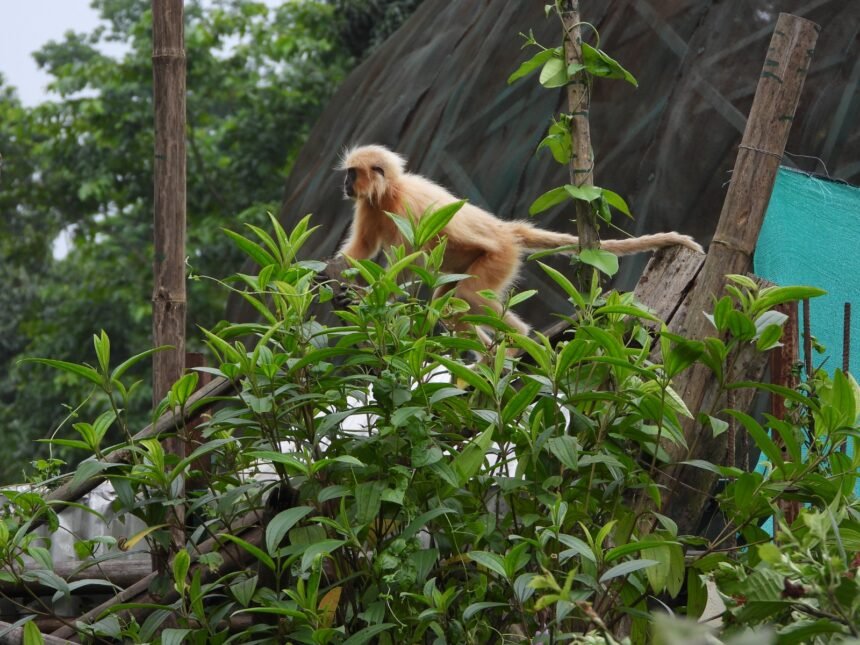
Assam has achieved a major wildlife conservation milestone by releasing seven endangered Golden Langurs into Sikhna Jwhwlao National Park. Authorities rescued the primates during a large anti-wildlife trafficking operation in Chirang district and later rehabilitated them under expert supervision.
Forest Minister Jayanta Mallabaruah announced the successful release and praised the combined efforts of forest officials, wildlife experts, police personnel, and local communities. The development highlights Assam’s strong commitment to protecting endangered species and combating wildlife crime across the state.
Read More: Assam Issues Flood Alert After Arunachal Flash Floods
Key Facts
- Species: Endangered Golden Langur
- Number Released: 7
- Location: Sikhna Jwhwlao National Park, Assam
- Rescue Operation: Conducted by Assam Police STF and local police
- Rescue Site: Sidli, Chirang district
- Suspects Arrested: 9
- Foreign National Arrested: 1 Bangladeshi national
- Protected Area: More than 316 sq km
- Conservation Area: Part of the Manas Biosphere Reserve
Assam Marks Major Wildlife Conservation Success
Assam strengthened its wildlife conservation efforts by successfully releasing seven endangered Golden Langurs into Sikhna Jwhwlao National Park. The release followed a rescue and rehabilitation programme that authorities carried out after uncovering an alleged wildlife trafficking network.
Forest Minister Jayanta Mallabaruah announced the achievement and described it as a proud moment for the state. Moreover, he credited forest officials, veterinary teams, law enforcement agencies, and local communities for making the operation successful.
STF Busts Wildlife Trafficking Network
The rescue operation began when the Special Task Force (STF) of Assam Police received intelligence about illegal wildlife trafficking activities in Chirang district.
Acting swiftly, STF personnel and local police intercepted suspected traffickers along National Highway-27 in Sidli. As a result, authorities rescued eight Golden Langurs and arrested nine individuals allegedly involved in an international wildlife trafficking network.
Additionally, investigators identified one of the arrested suspects as a Bangladeshi national. Consequently, the arrests highlighted the serious cross-border challenges associated with wildlife crime.
Experts Rehabilitate Rescued Langurs
Following the rescue, veterinary teams and wildlife experts provided intensive care to the rescued primates. They closely monitored the animals’ health, behaviour, and adaptation skills before considering their return to the wild.
Unfortunately, one of the rescued langurs died despite continuous medical attention. However, the remaining seven animals recovered successfully. Therefore, experts approved their reintroduction into their natural habitat after completing all necessary health assessments.
Sikhna Jwhwlao National Park Provides Ideal Habitat
The released langurs now live in Sikhna Jwhwlao National Park, which stretches across Chirang and Kokrajhar districts in the Bodoland Territorial Region of Assam.
Furthermore, the park forms an important part of the Manas Biosphere Reserve and serves as a critical habitat for the endangered Golden Langur. The protected area covers more than 316 square kilometres and supports several rare and threatened wildlife species.
Because of its rich biodiversity, the park plays a vital role in preserving wildlife populations and maintaining ecological balance in the region.
Government Reaffirms Zero-Tolerance Policy
Minister Mallabaruah said the successful release sends a strong message to wildlife traffickers and poachers. According to him, Assam will not allow criminals to exploit or destroy the state’s biodiversity.
Moreover, he reaffirmed the government’s commitment to protecting wildlife and preserving natural habitats. He also emphasized that authorities will continue strengthening anti-poaching measures and conservation initiatives across the state.
As a result, conservation agencies expect stronger protection for endangered species and greater public awareness about wildlife crime.
Why Golden Langurs Matter
Golden Langurs rank among India’s most endangered primates and mainly inhabit parts of Assam and neighbouring Bhutan. Their striking golden coat and limited distribution make them one of the region’s most unique wildlife species.
However, habitat loss, illegal wildlife trade, and human activities continue to threaten their survival. Therefore, conservation efforts such as rescue operations, habitat protection, and rehabilitation programmes remain essential for securing their future.
Questions and Answers
What happened in Assam?
Authorities released seven endangered Golden Langurs into Sikhna Jwhwlao National Park after rescuing and rehabilitating them.
Where did officials rescue the langurs?
The STF and local police rescued the animals during an anti-trafficking operation in Sidli, Chirang district.
How many people did police arrest?
Police arrested nine suspects, including one Bangladeshi national.
Why is Sikhna Jwhwlao National Park important?
The park provides a crucial habitat for Golden Langurs and forms part of the Manas Biosphere Reserve.
Why are Golden Langurs endangered?
Habitat loss, illegal wildlife trafficking, and human activities threaten their survival.
What message did the government give?
The Assam government reiterated its zero-tolerance policy against poaching and wildlife trafficking.
Regional Context
Assam and the wider Northeast region contain some of India’s richest biodiversity hotspots. Therefore, wildlife conservation projects in the region hold national and international significance.
Furthermore, protected areas such as Sikhna Jwhwlao National Park help safeguard endangered species and preserve fragile ecosystems. Consequently, successful conservation efforts in Assam contribute to broader environmental protection goals across Northeast India.