



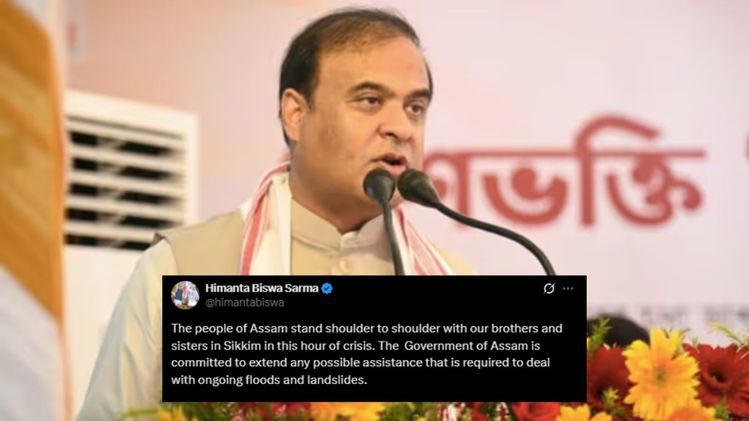
Amid the devastating floods and landslides in Sikkim and Bengal, Assam Chief Minister Himanta Biswa Sarma has extended his government’s full support to both states. The disaster, triggered by continuous heavy rainfall, has displaced thousands, washed away bridges, and severely affected road connectivity. The Assam government’s proactive approach underlines the importance of inter-state cooperation during humanitarian crises.
Sarma said Assam stands in solidarity with its neighbours during this challenging period. He added that all necessary assistance, including rescue teams and relief materials, will be made available to help the affected regions. His assurance brought relief to both Sikkim and Bengal administrations as they continue their battle against widespread destruction.
Read More: Kaziranga Names Newborn Elephant Calf ‘Mayabini’ in Tribute to Zubeen Garg
Coordinated Action for Immediate Relief
In his statement, Himanta Biswa Sarma highlighted the urgency of collaborative efforts. He directed Assam’s disaster management and home departments to remain on high alert and coordinate with counterparts in neighbouring states. The Chief Minister emphasised that cooperation among eastern and northeastern states is crucial to reduce loss of life and property.
Teams from the State Disaster Response Force (SDRF) have been mobilised near vulnerable border areas to assist in rescue operations if required. Furthermore, medical teams, supply trucks carrying food, and emergency shelters have been readied across strategic locations. Sarma’s move reflects his commitment to ensuring swift and effective relief measures.
The Assam government has also offered logistical support, particularly in areas bordering Sikkim and North Bengal, where floods have disrupted movement. Trucks carrying essential commodities like rice, drinking water, and medicines have been dispatched to assist those stranded.
Floods and Landslides Wreak Havoc
Over the past few days, Sikkim has faced one of the worst natural calamities in recent memory. Torrential rainfall caused flash floods in several districts, damaging houses, schools, and public infrastructure. Similarly, parts of North Bengal witnessed swollen rivers, landslides, and power outages that left many areas cut off from the mainland.
In response, the Assam CM extended condolences to the families who lost their loved ones. He assured that his government would help in every possible way, especially in restoring connectivity and providing medical care. According to local authorities, floodwaters have already submerged large stretches of farmland, while the rising water levels in major rivers threaten nearby settlements.
Sarma pointed out that such disasters show the growing need for long-term environmental planning. He stressed the importance of sustainable water management and early warning systems to prevent similar tragedies.
Assam’s Preparedness and Regional Cooperation
Assam itself faces annual floods, making the state experienced in managing large-scale emergencies. Drawing from this experience, Sarma instructed his officials to share best practices and coordinate with neighbouring governments. Assam’s flood management units have been put on standby to deploy manpower, equipment, and boats if the situation worsens.
The Chief Minister also spoke with the Chief Ministers of Sikkim and West Bengal to discuss immediate support. He assured that Assam’s resources, including disaster response personnel and helicopters, are available if needed. This gesture of regional solidarity reinforces the strong ties among northeastern states.
Moreover, Assam’s health department is preparing to send medical units to assist in flood-affected zones. The state government also plans to contribute funds for rebuilding damaged infrastructure. Sarma said the combined effort of neighbouring states can make a significant difference in tackling disasters effectively.
Humanitarian Assistance and Future Planning
To ensure timely relief, Assam’s government has launched a special monitoring cell that tracks updates from Sikkim and Bengal. The Chief Minister stated that such monitoring will help in better decision-making and resource allocation. Volunteers and non-governmental organisations have also been urged to come forward and support the initiative.
Local communities near the Assam-Sikkim border have already begun providing shelter to stranded travellers. Their efforts reflect the region’s culture of compassion and unity. Sarma acknowledged their contribution and appealed for continued cooperation as authorities work to restore normalcy.
The Chief Minister reiterated that floods and landslides are recurring challenges in the Himalayan and sub-Himalayan regions. Therefore, proactive planning and climate-resilient infrastructure are vital. He said Assam will push for a collective regional strategy involving all northeastern states to address disaster risks and promote environmental stability.
Assam CM Extends Support with Compassion
As the crisis unfolds, Assam’s leadership continues to display empathy and quick action. Himanta Biswa Sarma’s decision to extend help underscores the importance of standing together during adversity. His appeal for regional collaboration aims to build stronger disaster response systems in the future.
Through coordinated relief, resource sharing, and compassionate governance, Assam’s example sets a benchmark for disaster management in India’s northeast. The Chief Minister’s assurance brings hope to affected communities, reminding everyone that resilience and solidarity can overcome even the harshest challenges.