





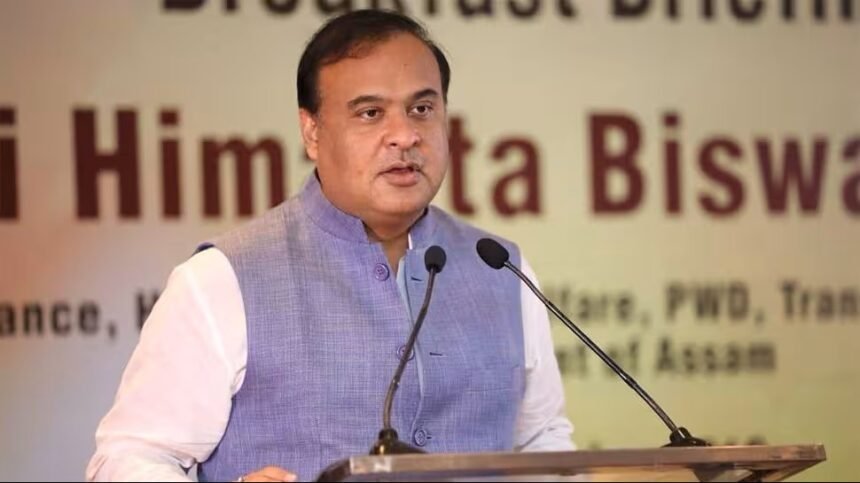
Chief Minister Himanta Biswa Sarma has recently claimed that the CAA impact in Assam is minimal. Opposition leaders, however, strongly disagree. They argue that the Centre’s latest notification of the Act’s rules undermines the Assam Accord and risks altering the state’s demographic balance. Let me walk you through the two sides of this debate.
Read More: Jaishankar urges stronger India-EU ties after meeting German minister
Himanta Biswa Sarma’s view
The chief minister told reporters that fears of a large influx of new citizens under CAA were overstated. According to him, only a very small number of people have applied for citizenship through the Act in Assam. He insisted that the numbers prove critics exaggerated their claims.
Sarma also said that CAA was never meant to change Assam’s demography. Instead, it was designed as a humanitarian measure for minorities from neighboring countries. He stressed that those who qualify under the Act are few, and their applications do not disturb the state’s population balance. In his words, the real CAA impact in Assam is negligible.
Opposition’s sharp response
The Opposition, however, painted a very different picture. Parties like Congress, AIUDF, and regional outfits argued that the Centre ignored Assam’s special context. They reminded people that the Assam Accord fixed 1971 as the cut-off date for identifying foreigners.
By setting 2014 as the cut-off for CAA, they said, the Centre has gone back on its promise. Even if the number of applicants is small today, they believe the move sets a dangerous precedent. They described it as a betrayal of the sacrifices made during the anti-foreigner agitation. To them, the CAA impact in Assam cannot be measured only in numbers—it is also about protecting identity and culture.
The core of the controversy
The law, passed in 2019, allows non-Muslim migrants from Bangladesh, Pakistan, and Afghanistan who entered India before December 31, 2014, to apply for citizenship. The Centre has always presented it as a humanitarian step.
But in Assam, critics see it as a violation of the spirit of the Assam Accord. For many, the 1971 deadline symbolized a hard-won agreement after years of agitation. Changing that timeline, they argue, erases the very essence of the accord. This explains why protests against CAA remain strong in the state, even if the actual applicants are few.
Government’s defense
The BJP leadership has defended the Act firmly. Sarma explained that Assam must see the larger national perspective. He argued that India cannot ignore the plight of minorities persecuted in neighboring countries. According to him, the law strikes a balance between humanitarian duties and local concerns.
He also stressed that opponents are misleading people. By pointing out the small number of applicants, Sarma said fears of mass settlement were unfounded. For the government, the true CAA impact in Assam lies in correcting misinformation rather than changing demography.
Opposition campaigns on the ground
Despite these assurances, opposition leaders have launched fresh campaigns against the law. Congress has been organizing meetings with students and civil society groups to highlight the dangers they see in CAA. The All Assam Students’ Union (AASU), which played a leading role in the 1980s anti-foreigner agitation, remains firmly opposed.
Their argument is simple: numbers may be low today, but the law opens the door for more in the future. They believe this could gradually alter Assam’s social fabric. They are determined to make this a key electoral issue.
Political implications
Observers believe the CAA debate is no longer just about citizenship applications. It has turned into a battle of narratives. For the BJP, defending the Act is about upholding a national vision. For the opposition, resisting it is about safeguarding Assamese identity.
The CAA impact in Assam is therefore both symbolic and political. The BJP hopes people will trust its data and focus on development. The opposition hopes resentment over the law will energize voters and weaken BJP’s hold.
Public opinion
As elections approach, the big question is how the public views the law. Many residents remain skeptical, even if they acknowledge the number of applicants is small. The opposition continues to fuel these doubts, while the BJP tries to shift attention toward governance and welfare.
For now, it seems the debate will remain alive. The government will need to prove that the Act does not affect Assam’s demography. Opposition groups will try to show that the symbolic damage is already done. The CAA impact in Assam will remain central to political campaigns in the months ahead.
Looking ahead
In closing, this issue is likely to dominate Assam’s political landscape well into the next polls. The BJP believes people will eventually accept that the impact is limited. The opposition, however, is betting on continued resistance.
What becomes clear is that the CAA debate is far from over. It has become a defining theme in Assam’s politics, shaping alliances, protests, and campaign strategies. The real test will come when voters decide which narrative they find more convincing.
Read More: Tripura tribals face eviction, says Pradyot