




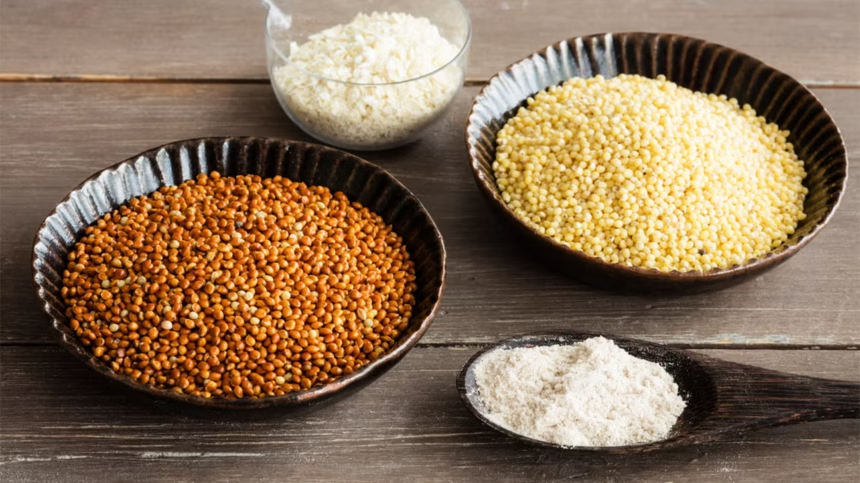
A New Mission to Bring Back an Ancient Supergrain
In a strategic push for better nutrition and sustainable agriculture, Assam has launched its Millet Mission, targeting 25 districts across the state. The mission, inspired by India’s declaration of 2023 as the International Year of Millets, aims to revive forgotten grains, improve farmers’ income, and tackle malnutrition at the grassroots level.
The launch comes at a time when millets are regaining popularity due to their resilience, affordability, and high nutritional value.
Why Millets Matter More Than Ever
Unlike rice and wheat, millets are naturally drought-resistant, require fewer inputs, and grow well in marginal soils — which makes them perfect for many northeastern hill regions. More importantly, they are packed with iron, calcium, protein, and fiber, making them essential for fighting malnutrition, especially among children and pregnant women.
Additionally, millets help reduce the carbon footprint of farming. Since they use less water and fertilizer, they align well with the government’s climate-smart agriculture agenda.
How the Assam Millet Mission Works
The Millet Mission is designed as a multi-pronged campaign. Here’s how it’s being rolled out:
- Seeds and Training: The agriculture department is distributing high-yielding millet seeds and providing farmers with hands-on training.
- Procurement Assurance: Farmers are guaranteed a minimum support price (MSP) for millets, ensuring a steady income.
- Mid-Day Meals Integration: Millets will be added to government school meal plans to boost children’s nutrition.
- Local Processing Units: Small-scale units are being set up to process and package millet flour, snacks, and breakfast mixes.
“This initiative is not just agricultural — it’s social, economic, and nutritional,” said Atul Bora, Assam’s Agriculture Minister.
Target Districts and Implementation Timeline
The mission initially covers 25 districts, including Baksa, Darrang, Barpeta, and Goalpara, where traditional millet cultivation was once common but has declined in recent decades.
Here’s a quick timeline:
- Q3 2025: Seed distribution and training sessions
- Q4 2025: First harvest and pilot school meal program
- 2026 onward: Expansion to all 35 districts and export-oriented processing
Each district will also set up community-level grain banks to store millets for lean periods.
Economic Boost for Tribal and Women Farmers
The Millet Mission is also a livelihood opportunity. Tribal farmers, many of whom already have traditional knowledge of millet farming, are being re-engaged. Additionally, Self Help Groups (SHGs) led by rural women are being trained to process and market millet products under state nutrition schemes.
With the government supporting both cultivation and distribution, the millets grown in Assam could soon be seen in urban health stores and international markets.
Reviving Nutrition with Culture
By focusing on millets, Assam is not just reviving a crop — it is reviving a tradition. These grains were once staples in Assamese households and part of tribal festivals and rituals. Through the Millet Mission, the state is reconnecting its food systems to heritage and health.
Read more: Dibang Hydropower Project Launched in Arunachal to Power Northeast’s Green Growth