


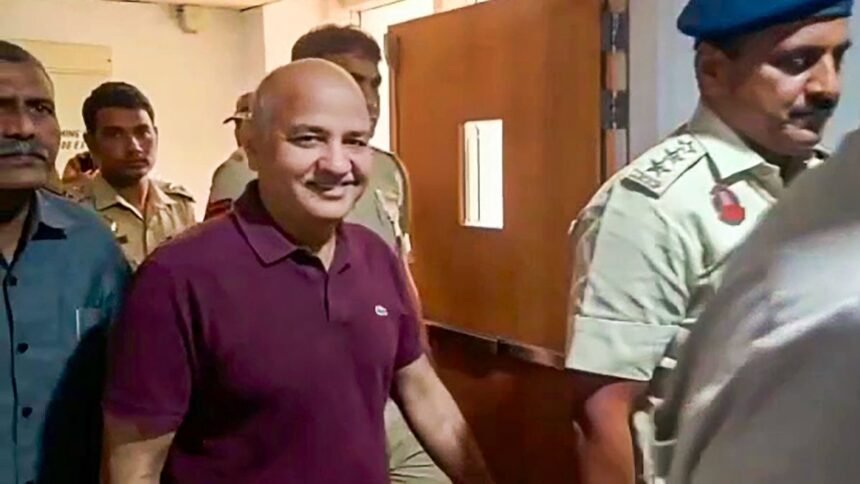
In a significant development, the Central Bureau of Investigation (CBI) has submitted a second supplementary charge sheet against five individuals in the Delhi excise policy scam case. Among those named in the charge sheet is former deputy chief minister of Delhi, Manish Sisodia. The CBI filed the charge sheet before a special court in Delhi, marking a notable step in the ongoing investigation.
The individuals named in the supplementary charge sheet are Rajesh Joshi, the director of Chariot Productions Media Pvt Ltd, along with two of his employees, Damodar Prasad Sharma and Prince Kumar. Additionally, Arvind Kumar Singh, the creative head of India Ahead News, and Chanpreet Singh Rayat, an Aam Aadmi Party (AAP) volunteer, have also been included in the charge sheet.
The Delhi excise policy scam case has garnered considerable attention due to its implications for the political landscape. Manish Sisodia, who served as the deputy chief minister of Delhi, finds himself embroiled in the controversy. The allegations against him and the other accused involve fraudulent activities related to the excise policy implemented in the city.
The CBI’s decision to file a second supplementary charge sheet signifies the agency’s ongoing efforts to thoroughly investigate the matter and bring all involved individuals to justice. The case is being closely monitored by both the media and the public, given the prominence of the accused and the potential ramifications for the political climate.
While the specifics of the charges mentioned in the supplementary charge sheet have not been disclosed, it is expected that the document outlines the roles and alleged wrongdoings of each of the accused individuals. The charges are likely to pertain to various offenses related to the Delhi excise policy scam, which could include corruption, fraud, and abuse of power.
Rajesh Joshi, Damodar Prasad Sharma, and Prince Kumar, employees of Chariot Productions Media Pvt Ltd, have been linked to the scam, suggesting their involvement in fraudulent activities surrounding the excise policy. Arvind Kumar Singh, the creative head of India Ahead News, and Chanpreet Singh Rayat, an AAP volunteer, are also named in the charge sheet, indicating their alleged roles in the illicit operations.
The inclusion of Manish Sisodia in the supplementary charge sheet raises significant questions about his involvement in the scam. As a prominent figure in Delhi’s political landscape, Sisodia’s implication adds a new dimension to the case. The investigation will likely delve into his role in the excise policy and determine the extent of his alleged complicity.
As the case progresses, it is crucial to ensure a fair and transparent investigation, respecting the principles of natural justice and due process. The court will play a vital role in examining the evidence presented by the CBI and evaluating the culpability of the accused individuals. The public’s confidence in the judicial system relies on the thoroughness and impartiality of the proceedings.
The filing of the second supplementary charge sheet indicates that the CBI is diligently pursuing all leads and evidence related to the Delhi excise policy scam case. The agency’s commitment to unearthing the truth and holding those responsible accountable is paramount. The allegations made against the accused individuals, including Manish Sisodia, highlight the importance of combating corruption and upholding the integrity of public office.
As the legal proceedings unfold, the Delhi excise policy scam case will continue to be closely followed by the media and the public. The outcome of the investigation and subsequent trial will have significant implications for the political landscape and public perception of those involved. The case serves as a reminder of the importance of maintaining ethical conduct and transparency in governance.